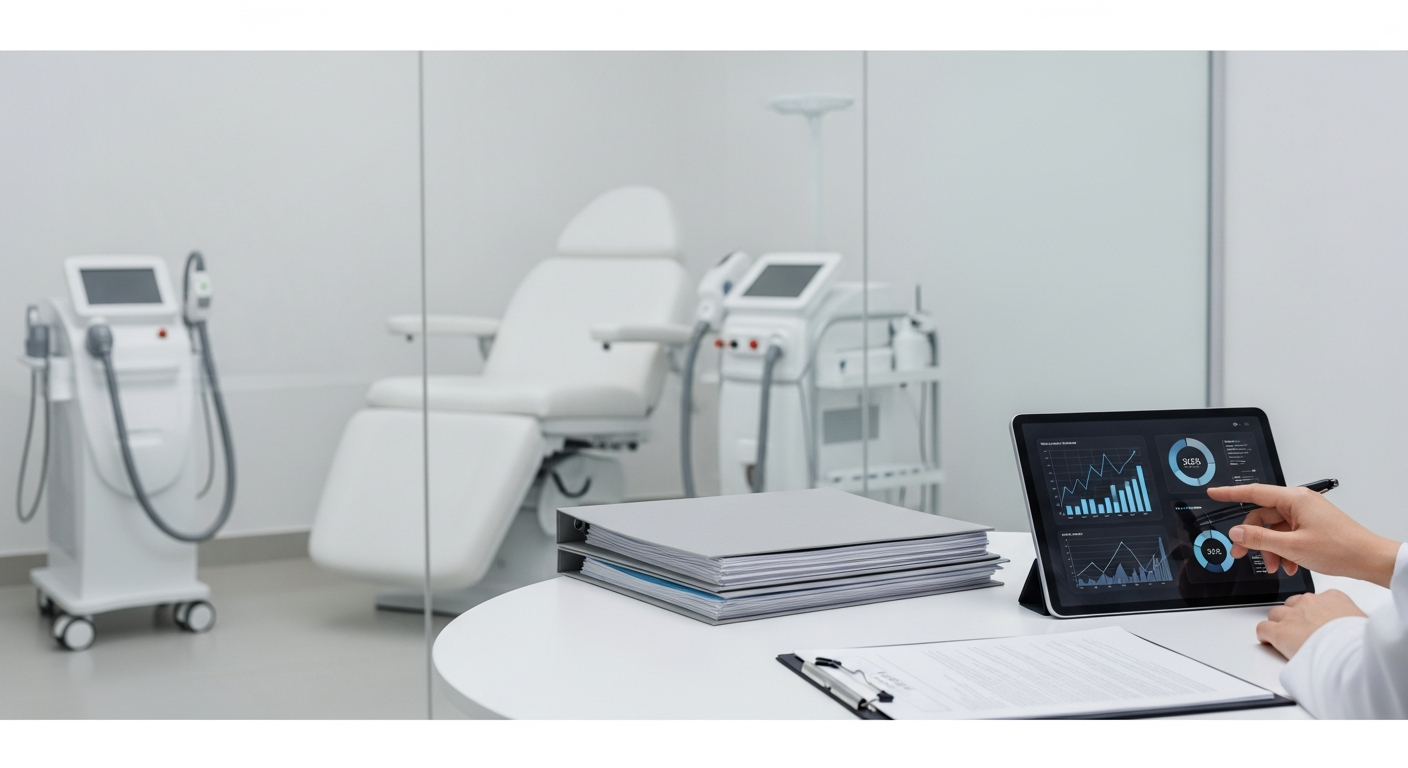
U.S. Med Spa Industry Statistics and Market Analysis
U.S. med spa industry statistics reveal a market surpassing $17 billion in 2023, with a projected compound annual growth rate (CAGR) of 14.97% through 2030. This growth is sustained by high demand for non-surgical aesthetic procedures, primarily neurotoxins and dermal fillers, and increasing institutional investment across the United States.
U.S. Med Spa Market Valuation and Economic Growth
The U.S. med spa sector remains one of the fastest-growing segments within the broader domestic healthcare and wellness economy. Current data indicates that the average med spa generates approximately $1.9 million in annual revenue, though top-quartile facilities exceed $4 million.
Private equity involvement has intensified, shifting the market toward consolidated Management Service Organization (MSO) models. These structures allow for centralized administrative functions while maintaining clinical autonomy at the individual facility level.
Investment trends show a preference for multi-site operators that demonstrate high patient retention rates. Data suggests that repeat clients account for over 65% of total revenue in established med spa environments.
High-Volume Treatment Trends and Procedure Data
Injectable Procedures: Neurotoxins and Fillers
Neurotoxins remain the primary revenue driver in the U.S. med spa industry, accounting for the highest volume of annual procedures. Clinical data shows a consistent year-over-year increase in toxin units administered per patient visit.
Dermal fillers follow closely, with market data indicating a diversification in application areas, including jawline contouring and temple volumization. Statistics show that the average patient age for first-time injectables is trending lower, specifically within the 25–34 demographic.
Energy-Based Devices and Body Contouring
Laser hair removal and intense pulsed light (IPL) therapies continue to provide stable foundational revenue for most med spa facilities. Technological advancements in multi-platform devices have increased the efficiency of these services.
Non-invasive body contouring, including cryolipolysis and muscle stimulation, has seen a 20% increase in utilization rates over the last 24 months. These treatments often command higher price points and offer significant margins due to lower consumable costs.
Clinical Safety and Complication Rate Analysis
As procedure volume increases, the industry has placed greater emphasis on clinical outcome data and adverse event tracking. Statistical analysis shows that complications in med spa settings remain low, typically under 1% for injectable treatments.
The most common reported complications include localized bruising, edema, and vascular occlusion, though the latter remains rare. Facilities utilizing ultrasound-guided injections report a measurable decrease in vascular-related adverse events.
Standardizing clinical protocols and maintaining rigorous staff training are identified as the primary factors in minimizing risk. Data-driven med spas are increasingly implementing digital health records to better track longitudinal patient outcomes.
Regulatory Landscape and Compliance Trends
The U.S. med spa industry is currently experiencing a period of heightened regulatory scrutiny at the state level. State medical boards are increasingly refining definitions regarding the “practice of medicine” in aesthetic contexts.
Key regulatory shifts focus on physician supervision requirements and the specific scope of practice for mid-level providers. Several states have recently updated mandates regarding “good faith exams” (GFE) prior to the administration of prescription-based treatments.
Compliance data suggests that facilities with clear, documented medical director oversight are less likely to face administrative sanctions. Professional liability insurance providers are also tightening requirements for med spa coverage based on these regulatory updates.
Market Development and Ownership Insights
The geographic distribution of med spas is shifting from high-density metropolitan areas to suburban markets. This migration follows population trends and the increasing normalization of aesthetic procedures among broader socioeconomic groups.
Single-owner facilities still comprise the majority of the market, but the percentage of franchise-owned locations is rising. Statistics show that franchised models often benefit from standardized operational data and collective bargaining for consumables.
Future market development is expected to focus on the integration of wellness services, such as IV hydration and hormone replacement therapy. This diversification aims to increase the average lifetime value of the patient by addressing comprehensive aging concerns.
