Med Spa Risk Management and Liability Protection
Med spa risk management is a strategic framework used by aesthetic clinics to identify, evaluate, and mitigate potential legal and clinical liabilities. This process involves implementing standardized informed consent protocols, rigorous incident reporting systems, and comprehensive medical recordkeeping to protect providers and owners from malpractice claims or regulatory scrutiny.
Establishing Robust Informed Consent Protocols
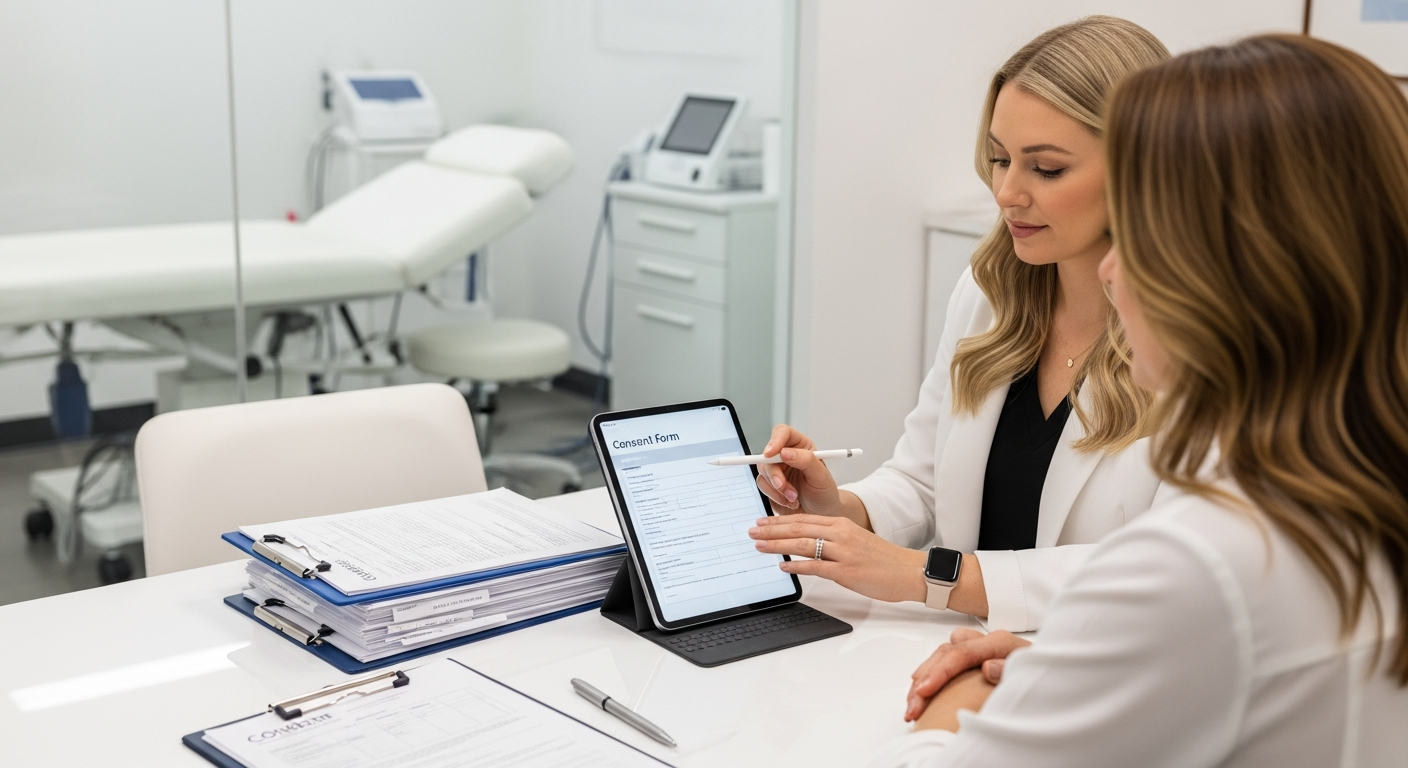
Informed consent is a foundational element of med spa risk management that goes beyond a simple signature.
It functions as a documented conversation where the provider explains the specific risks and benefits of a treatment.
This process must detail potential adverse outcomes and alternative options available to the patient.
To reduce liability, consent forms should be procedure-specific rather than generic templates.
Every patient must have the opportunity to ask questions and receive clear answers in plain language.
This documentation serves as evidence that the patient voluntarily assumed the known risks of the aesthetic procedure.
Standardizing Medical Recordkeeping for Compliance
Consistent recordkeeping is the most effective defense in any regulatory audit or liability claim.
Every patient chart must include a detailed history, current medications, and a specific treatment plan.
Accurate documentation allows any qualified provider to understand the exact parameters used during a session.
Standardized records must also include high-quality, consistent clinical photography for every patient.
Before-and-after photos provide objective evidence of treatment outcomes and help manage patient expectations.
Maintaining these records in a secure, organized system ensures compliance with state-specific medical board requirements.
Implementing Effective Incident Reporting Systems
A formal incident reporting system allows a med spa to track and analyze any deviations from expected outcomes.
This includes tracking minor skin irritations as well as more significant complications like burns or vascular occlusions.
Internal reporting creates a paper trail that demonstrates the clinic is proactive about patient safety.
All staff members should be trained to identify and report incidents immediately to the medical director.
The reporting process should include the date of the event, the provider involved, and the immediate corrective actions taken.
Analyzing these reports helps identify patterns and prevents future occurrences through updated operational safeguards.
Managing Adverse Treatment Outcomes
When an adverse outcome occurs, the primary goal is to prioritize patient safety and mitigate further damage.
Prompt and empathetic communication with the patient is essential for maintaining the professional relationship.
The medical director must be involved in creating a clinical resolution plan for any significant complication.
Documentation during an adverse event must be exceptionally detailed and factual.
Providers should record all follow-up appointments, instructions given to the patient, and the patient’s adherence to those instructions.
Properly managing the aftermath of a complication can prevent a clinical issue from escalating into a legal dispute.
Liability Reduction Through Operational Safeguards
Reducing liability requires a structured framework of operational safeguards that govern daily clinic activities.
This includes verifying that all providers are operating strictly within their legal scope of practice.
Standardized treatment protocols must be reviewed regularly by the medical director to reflect current safety standards.
Clear delegation guidelines must be documented to show how the medical director supervises non-physician providers.
Ensuring that every treatment follows a physician-approved protocol minimizes the risk of unauthorized practice of medicine.
Consistent adherence to these safeguards creates a culture of safety that naturally reduces the likelihood of litigation.
