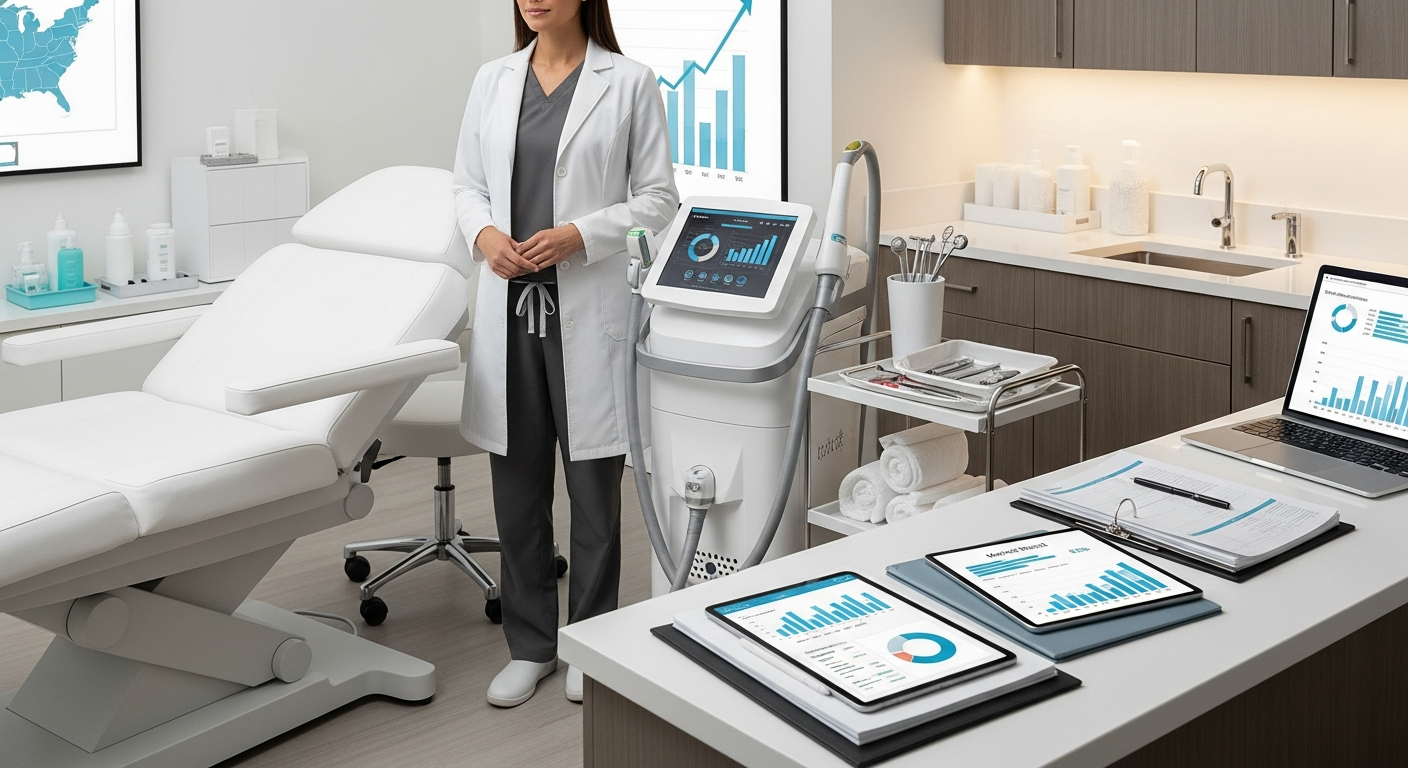
U.S. Med Spa Industry Statistics and Clinical Trends
U.S. med spa industry statistics define a market valued at approximately $19 billion in 2024, characterized by a compound annual growth rate (CAGR) of 10% to 15%. This data reflects increasing consumer demand for non-invasive aesthetic procedures, significant private equity investment, and a tightening regulatory environment focused on clinical safety and practitioner oversight.
Market Valuation and Financial Projections
The U.S. med spa sector continues to outperform broader healthcare service categories. Recent financial data suggests the average med spa generates between $1.5 million and $2.5 million in annual revenue.
Investment trends show a shift toward consolidation. Private equity firms are increasingly acquiring independent clinics to create regional or national brands, aiming for standardized operational efficiency and higher profit margins.
Revenue per square foot has become a critical metric for investors. High-performing facilities currently average $600 to $1,000 per square foot, driven by high-margin injectable treatments and advanced laser services.
Procedure Volume and Treatment Growth Trends
Med spa industry statistics indicate that non-surgical treatments dominate the aesthetic landscape. Injectables remain the primary revenue driver for most domestic facilities, accounting for nearly 40% of total service volume.
Neurotoxins and Dermal Fillers
Utilization of botulinum toxin and hyaluronic acid fillers continues to rise annually. Data shows a significant increase in preventative treatments among the 25–34 age demographic, often referred to as “prejuvenation.”
Energy-Based and Body Contouring Procedures
Laser hair removal, skin resurfacing, and non-invasive fat reduction represent the second largest growth segment. Technological advancements have reduced treatment times, allowing for higher patient throughput and improved clinic utilization rates.
Clinical Safety and Complication Rate Analysis
As the industry expands, clinical outcome data is under increased scrutiny. While the majority of procedures are successful, complication rates remain a critical data point for operational stability and risk management.
Adverse events in the med spa industry are most frequently associated with improper injector technique or inadequate patient screening. Industry-wide data suggests a minor complication rate of less than 2% for most non-invasive procedures.
Vascular occlusions from dermal fillers and skin burns from energy-based devices are the most significant clinical risks. Clinics with standardized safety protocols and on-site medical directors report significantly lower incident rates and better long-term patient retention.
Regulatory Trend Shifts in the United States
The regulatory landscape for U.S. med spas is undergoing significant changes. State medical boards are increasingly refining the definition of “medical procedures” to ensure stricter oversight of aesthetic treatments.
Many states are enforcing “Corporate Practice of Medicine” (CPOM) doctrines more aggressively. These regulations require med spas to be owned by licensed physicians or professional corporations to ensure clinical decisions are not influenced by non-medical owners.
Supervision requirements for mid-level practitioners, such as Nurse Practitioners and Physician Assistants, are also tightening. Proper documentation of Good Faith Exams (GFE) is now a mandatory focus for regulatory compliance and insurance eligibility.
Market Development Insights for Investors
Profitability in the U.S. med spa market is increasingly tied to patient lifetime value (LTV) rather than single-transaction volume. Subscription-based models and memberships are becoming standard tools for stabilizing monthly recurring revenue.
Labor costs represent the largest operational expense, typically ranging from 30% to 45% of gross revenue. Retaining skilled clinical staff is cited as the primary challenge for med spa owners seeking to maintain service quality and safety standards.
Geographic data indicates high market saturation in urban centers like Miami, Los Angeles, and New York. Consequently, investors are now identifying significant growth opportunities in “second-tier” markets and affluent suburban corridors.
