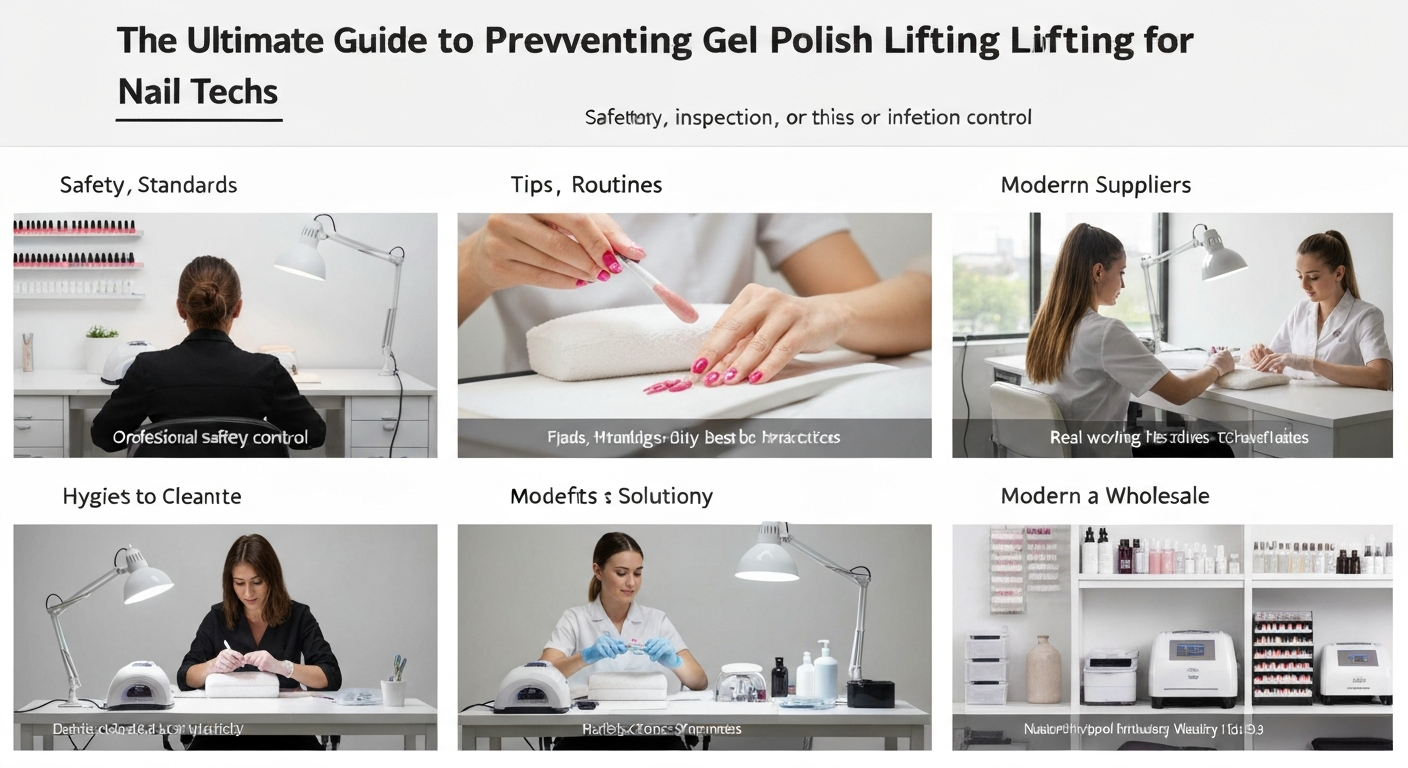
The Ultimate Guide to Preventing Gel Polish Lifting for Nail Techs
For any professional nail technician, nothing is more frustrating than a client returning with lifted gel nails after only a few days.
Lifting not only damages your professional reputation but also costs you time and money in free repairs.
Understanding the chemistry of adhesion and refining your prep routine are the keys to long-lasting gel manicures.
Understanding Why Lifting Happens
Lifting occurs when the bond between the natural nail plate and the artificial product is compromised.
This separation creates a pocket where water and bacteria can get trapped, potentially leading to “greenies” (pseudomonas).
While client lifestyle plays a role, the majority of lifting issues stem from improper preparation or application errors.
Step 1: Pterygium Removal is Non-Negotiable
The number one cause of lifting is applying product over the pterygium (dead skin on the nail plate).
Many technicians mistake the eponychium (living skin) for the cuticle, leaving invisible tissue on the nail.
You must ensure the nail plate is 100% free of dead skin tissue before applying any base coat.
Tools for Precision Prep
Use a stainless steel pusher to gently lift the eponychium and expose the cuticle area.
For dry manicures or Russian manicures, a fine-grit diamond flame bit is essential for exfoliating the lateral folds.
Always dust thoroughly with a stiff manicure brush to remove debris from the sinuses of the nail.
Step 2: Surface Texture and Shine Removal
Gel product needs a textured surface to grab onto; a glass-smooth nail will repel the base coat.
Gently buff the natural nail using a 180 to 240-grit buffer or sponge file to remove the surface shine.
Do not over-file. You only need to disrupt the surface keratin layers, not thin the nail plate.
Step 3: Chemical Preparation and Dehydration
Oil and moisture are the enemies of gel adhesion.
Even if the nail looks dry, natural oils can seep back onto the plate within minutes.
Scrub the nail plate vigorously with 99% Isopropyl Alcohol or a specialized cleanser using a lint-free wipe.
Using Bonders and Primers
Apply a pH dehydrator to strip remaining moisture from the nail plate layers.
Follow with a nail primer. For most gel systems, an acid-free primer acts as double-sided sticky tape.
Use primer sparingly; flooding the nail with primer can actually reduce adhesion.
Step 4: The Danger of Flooding the Cuticle
If your gel base or color touches the skin, it will lift as soon as the skin moves or produces oil.
You must leave a tiny margin (hairline gap) between the product and the proximal nail fold.
If you accidentally touch the skin, clean it immediately with a cleanup brush dipped in alcohol before curing.
Step 5: Thin Application Layers
Thick layers of gel polish do not cure properly, leading to uncured product in the center.
This under-curing causes the product to pull away from the nail plate (shrinkage) and eventually lift.
Apply two to three very thin coats rather than one thick coat for optimal polymerization.
Step 6: Capping the Free Edge
Daily wear and tear usually starts at the free edge of the nail.
Sealing the free edge wraps the gel around the tip, creating a stronger structure that resists chipping.
Ensure you cap the free edge with the base coat, color coats, and the top coat.
Step 7: Check Your Curing Lamp
Even the best application technique fails if your equipment is not up to standard.
Weak bulbs or the wrong wavelength for your specific gel brand will result in service breakdown.
Ensure your lamp is clean and that clients are placing their hand correctly, with the thumb cured flat.
Summary Checklist for Retention
- Exfoliate: Remove all dead tissue from the nail plate.
- Dehydrate: Remove all oils and moisture thoroughly.
- Prime: Use the correct bonding agent for your system.
- Control: Keep product off the skin and side walls.
- Seal: Cap the free edge on every layer.
Mastering these protocols will significantly increase your retention rates and client satisfaction.
When you focus on the health of the natural nail and precise application, lifting becomes a problem of the past.
