Med Spa Infection Control and Clinical Safety Standards
Med spa infection control refers to the systematic application of sanitation, disinfection, and sterilization protocols designed to prevent the spread of pathogens during aesthetic treatments. These practices align with OSHA standards and include rigorous hand hygiene, personal protective equipment usage, and the comprehensive decontamination of clinical environments to ensure client and staff safety.
OSHA-Aligned Sanitation Practices for Med Spas
Maintaining a clean facility requires adherence to federal safety guidelines. OSHA standards mandate that every med spa implements a written exposure control plan.
This plan identifies potential risks and outlines the steps necessary to mitigate bloodborne pathogen exposure. Regular training ensures all team members remain compliant with safety laws.
Personal Protective Equipment (PPE) Usage
Clinical staff must use appropriate barriers during treatments to prevent fluid transmission. This includes gloves, masks, and eye protection tailored to specific med spa procedures.
Gloves must be changed between every client and after touching any non-sterile surfaces. Proper PPE disposal is critical for maintaining a sterile treatment environment.
Hand Hygiene Protocols
Proper handwashing remains the foundation of infection prevention in any clinical setting. Staff should wash hands with soap and water before and after every patient contact.
When hands are not visibly soiled, alcohol-based hand rubs serve as an effective alternative. Consistent hygiene prevents the transfer of microorganisms across the med spa facility.
Sterilization Standards for Reusable Instruments
Any tool that penetrates the skin or contacts mucous membranes requires high-level sterilization. This process eliminates all forms of microbial life, including resistant spores.
Monitoring systems must be used to verify that sterilization equipment functions correctly. Detailed logs help track every cycle for internal compliance and safety auditing.
Autoclave and High-Level Disinfection
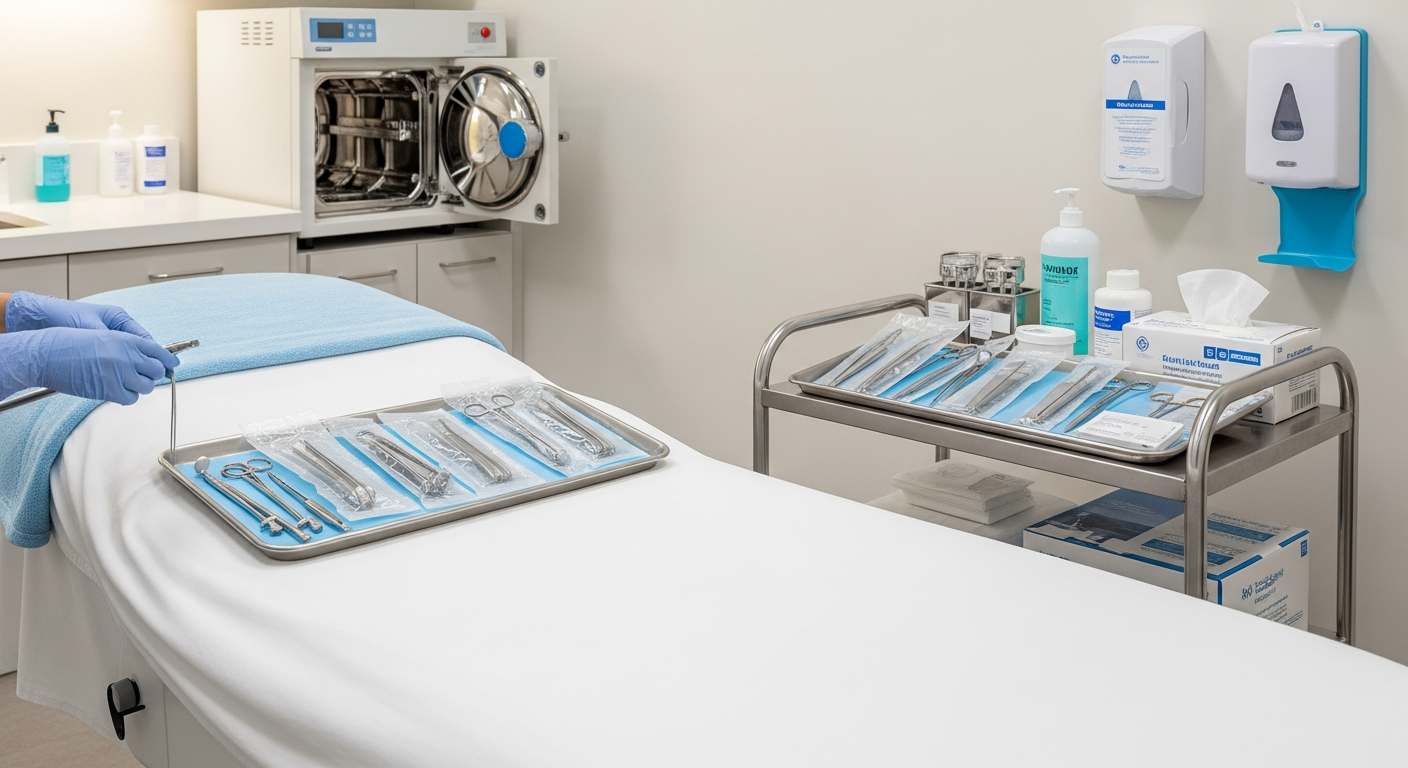
Steam sterilization via an autoclave is the standard method for metal instruments. This equipment must undergo regular biological spore testing to ensure total efficacy.
Instruments should be cleaned of all organic debris before being placed in sterilization pouches. Properly sealed pouches maintain sterility until the moment of clinical use.
Treatment Room Disinfection Systems
Environmental surfaces must be decontaminated after every client session. This includes treatment tables, counters, and any equipment touched during the aesthetic procedure.
Using EPA-registered disinfectants ensures the elimination of persistent pathogens on surfaces. Dwell times must be strictly followed to achieve the required level of microbial kill.
Environmental Surface Decontamination
Smooth, non-porous surfaces are essential in treatment rooms to facilitate effective cleaning. Any porous materials should be covered or replaced with clinical-grade alternatives.
High-touch areas, such as doorknobs and light switches, require frequent attention throughout the day. A systematic cleaning schedule prevents the build-up of environmental contaminants.
Cross-Contamination Prevention Strategies
Contamination occurs when pathogens move from one surface to another via hands or tools. Med spas must establish clear zones to separate clean and dirty items.
Implementing a one-way flow of materials helps minimize the risk of accidental exposure. Staff must be trained to recognize and stop potential contamination events immediately.
Single-Use Item Management
Many med spa supplies are designed for a single use and must be discarded immediately. This includes needles, gauze, and certain disposable applicators.
Sharps containers must be easily accessible and never overfilled to prevent injury. Proper disposal of biohazardous waste is a critical component of a safe clinical workflow.
