Med Spa Infection Control and Clinical Safety Standards
Med spa infection control is the comprehensive system of sanitation, disinfection, and sterilization procedures used to eliminate pathogen transmission during aesthetic procedures. These protocols follow OSHA guidelines to maintain a sterile clinical environment, ensuring that all treatment surfaces, tools, and practitioner behaviors prevent cross-contamination and protect client health.
Standard Precautions and OSHA Compliance
Every med spa must implement standard precautions to treat all blood and body fluids as potentially infectious. This foundational safety layer protects practitioners and clients from bloodborne pathogens.
Hand hygiene serves as the primary defense against the spread of germs. Practitioners must wash hands with antimicrobial soap before and after every client contact or glove change.
Personal Protective Equipment (PPE) provides a physical barrier between the clinician and infectious materials. Proper use of gloves, masks, and eye protection is mandatory during invasive treatments.
Treatment Room Disinfection Protocols
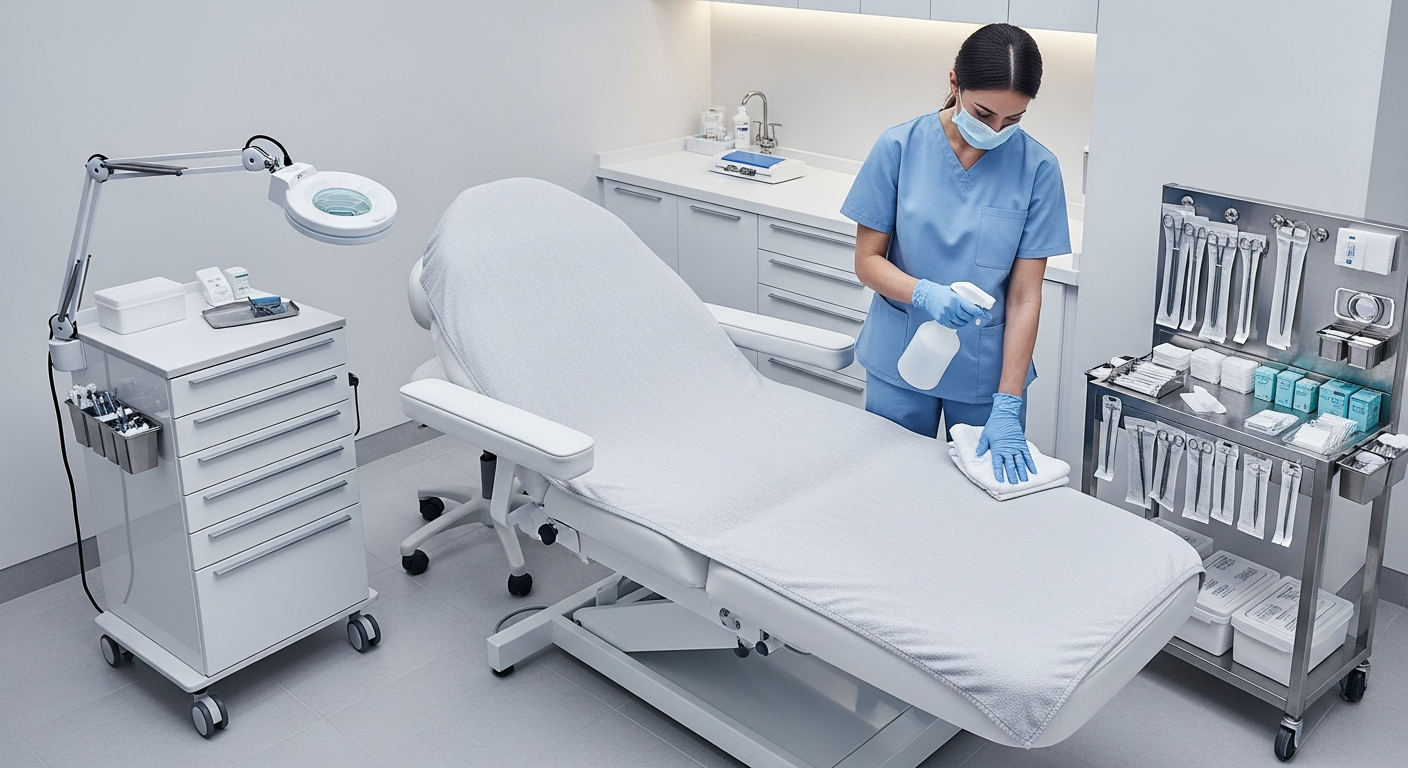
Clinical surfaces require systematic cleaning and disinfection between every client session. This process targets high-touch areas like treatment tables, Mayo stands, and magnifying lamps.
Practitioners must use EPA-registered, intermediate-level disinfectants that are labeled as bactericidal, virucidal, and fungicidal. These solutions must remain wet for the full manufacturer-recommended contact time.
Workstations should be kept clear of unnecessary items to prevent aerosolized contaminants from settling on clean supplies. Use disposable barriers on equipment that is difficult to disinfect manually.
Sterilization Standards for Reusable Tools
Any instrument that penetrates the skin or contacts broken skin must undergo full sterilization. This process uses high-pressure steam to kill all forms of microbial life, including spores.
- Pre-cleaning: Remove all organic debris from tools using enzymatic cleaners before sterilization.
- Packaging: Place dry instruments in sterilization pouches with internal chemical indicators.
- Monitoring: Perform weekly biological spore tests to verify the autoclave is functioning correctly.
Documentation of every sterilization cycle is essential for compliance and safety tracking. Logs must include the date, load number, temperature, and pressure readings.
Preventing Cross-Contamination in Aesthetic Settings
Cross-contamination occurs when pathogens are transferred from one surface or person to another. Rigid workflow systems are necessary to keep clean and dirty items separate.
Single-use items, such as gauze, cotton swabs, and disposable applicators, must be discarded immediately after use. Never “double-dip” tools into multi-use product containers.
Sharps safety is a critical component of med spa infection control. All needles and blades must be placed in puncture-resistant sharps containers immediately after the procedure.
Clinical Waste Management
Proper disposal of biohazardous waste prevents environmental contamination. Red bags should be used for items saturated with blood or other potentially infectious materials.
Regular staff training ensures that everyone understands the specific disposal routes for different types of waste. Compliance audits help maintain these high safety standards over time.
