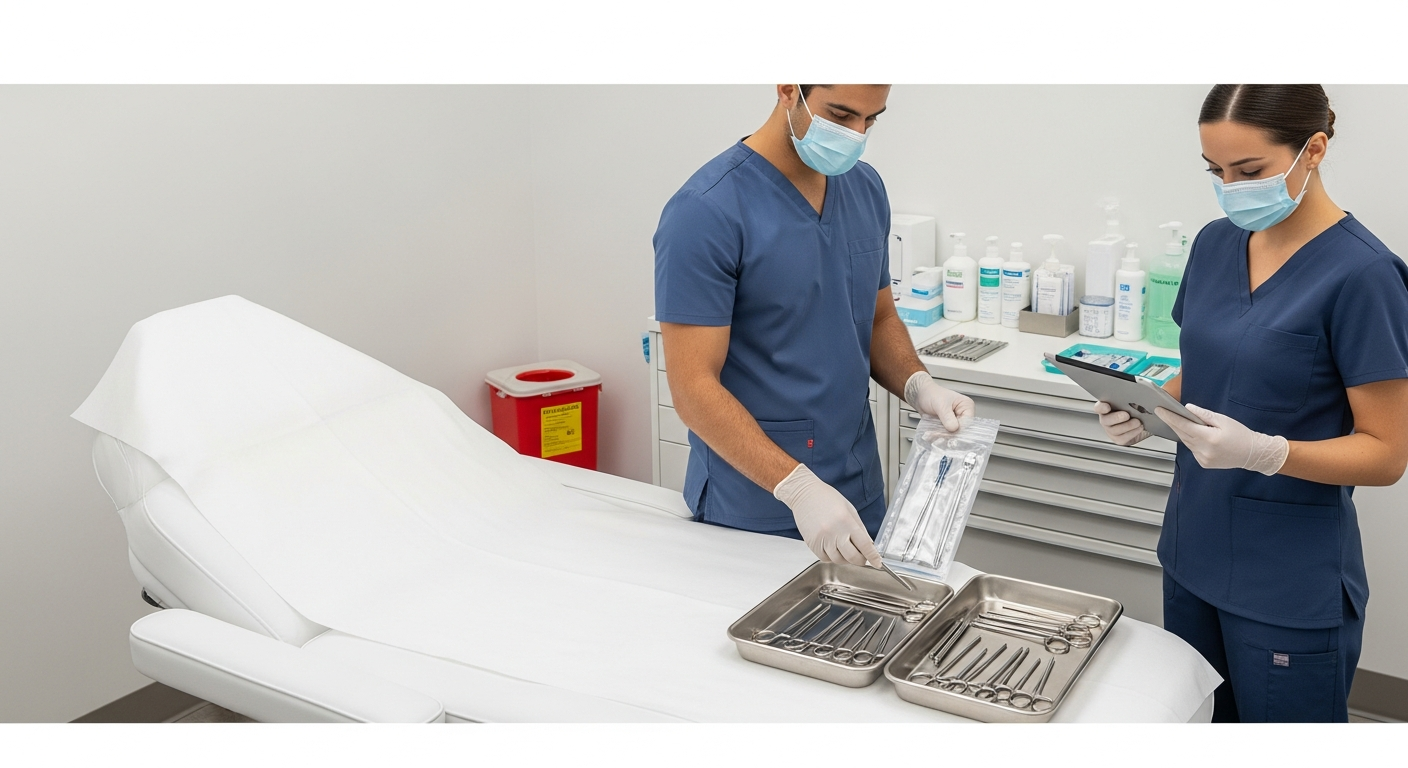
Med Spa Infection Control and Clinical Safety Standards
Med spa infection control refers to the systematic implementation of sanitation, disinfection, and sterilization protocols designed to prevent the spread of pathogens in aesthetic clinics. These OSHA-aligned practices protect both practitioners and clients by maintaining rigorous treatment room hygiene, proper waste disposal, and cross-contamination prevention measures across all clinical procedures.
OSHA-Aligned Sanitation and Hygiene Protocols
Establishing a foundation of safety begins with standardized personal hygiene. Practitioners must follow strict hand-washing routines using antimicrobial soap before and after every client contact.
The use of Personal Protective Equipment (PPE) is mandatory in a clinical med spa setting. This includes gloves, masks, and eye protection to create a physical barrier against fluids and debris.
Gloves must be changed between every client and immediately if they become punctured or contaminated. Proper PPE usage significantly reduces the risk of skin-to-skin pathogen transmission.
Hand Hygiene and Skin Prep Standards
Clinical hand hygiene involves more than simple washing. It requires a specific technique focusing on the fingertips, thumbs, and between the fingers for at least twenty seconds.
When hand washing is not possible, the use of medical-grade hand sanitizer with at least sixty percent alcohol is required. However, visible soil always requires soap and water.
Treatment Room Disinfection Systems
Every treatment room must undergo a thorough disinfection process between each appointment. This involves cleaning all “high-touch” surfaces that are frequently contacted by hands or tools.
Surfaces such as treatment tables, stools, and countertops must be wiped with EPA-registered disinfectants. These chemicals must remain wet on the surface for the full contact time specified.
Using a “clean-to-dirty” workflow ensures that contaminants are not moved from used areas to sterile zones. This systematic approach maintains a controlled environment for every client.
Environmental Surface Cleaning Procedures
Porous surfaces should be avoided in med spa treatment areas. Non-porous materials allow for effective chemical disinfection and prevent the growth of bacteria within the furniture.
Disposable barriers, such as table paper or plastic wraps, provide an extra layer of protection. These barriers must be discarded and replaced after every single treatment session.
Sterilization and Reprocessing Requirements
Any tool that penetrates the skin or contacts mucosal membranes requires high-level sterilization. This process uses heat and pressure to eliminate all forms of microbial life.
Sterilization logs must be maintained to track every cycle performed in an autoclave. This documentation proves that the equipment reached the necessary temperature and pressure levels.
Chemical indicators and biological spore tests are essential for verifying that the sterilization equipment is functioning correctly. These tests should be performed and recorded weekly.
Managing Reusable vs. Single-Use Equipment
Med spas should prioritize single-use, disposable items whenever possible to minimize risk. Items like needles, lancets, and certain applicators must never be reused or reprocessed.
Reusable instruments must be cleaned of all visible debris before being placed in a sterilizer. Debris can act as a shield, preventing the sterilization process from reaching the tool surface.
Cross-Contamination Prevention Strategies
Preventing cross-contamination requires a clear physical separation between clean and dirty items. Designated “dirty zones” for used tools must be clearly marked and away from sterile supplies.
Practitioners should never reach into a multi-use container with contaminated gloves. Utilizing sterile spatulas or dispensing pumps prevents the contamination of entire product batches.
Proper airflow and ventilation in the med spa also play a role in safety. Maintaining a clean environment includes managing dust and airborne particles through regular filter changes.
Biohazardous Waste Disposal Procedures
Sharps, such as needles and blades, must be disposed of in puncture-resistant, leak-proof containers immediately after use. These containers should be located at the point of use.
Non-sharp waste saturated with blood or bodily fluids must be placed in biohazard bags. These bags must be sealed and handled according to local and federal medical waste regulations.
Regular staff training on waste handling ensures that all team members understand the risks. Consistent compliance with disposal protocols protects the facility and the community at large.
