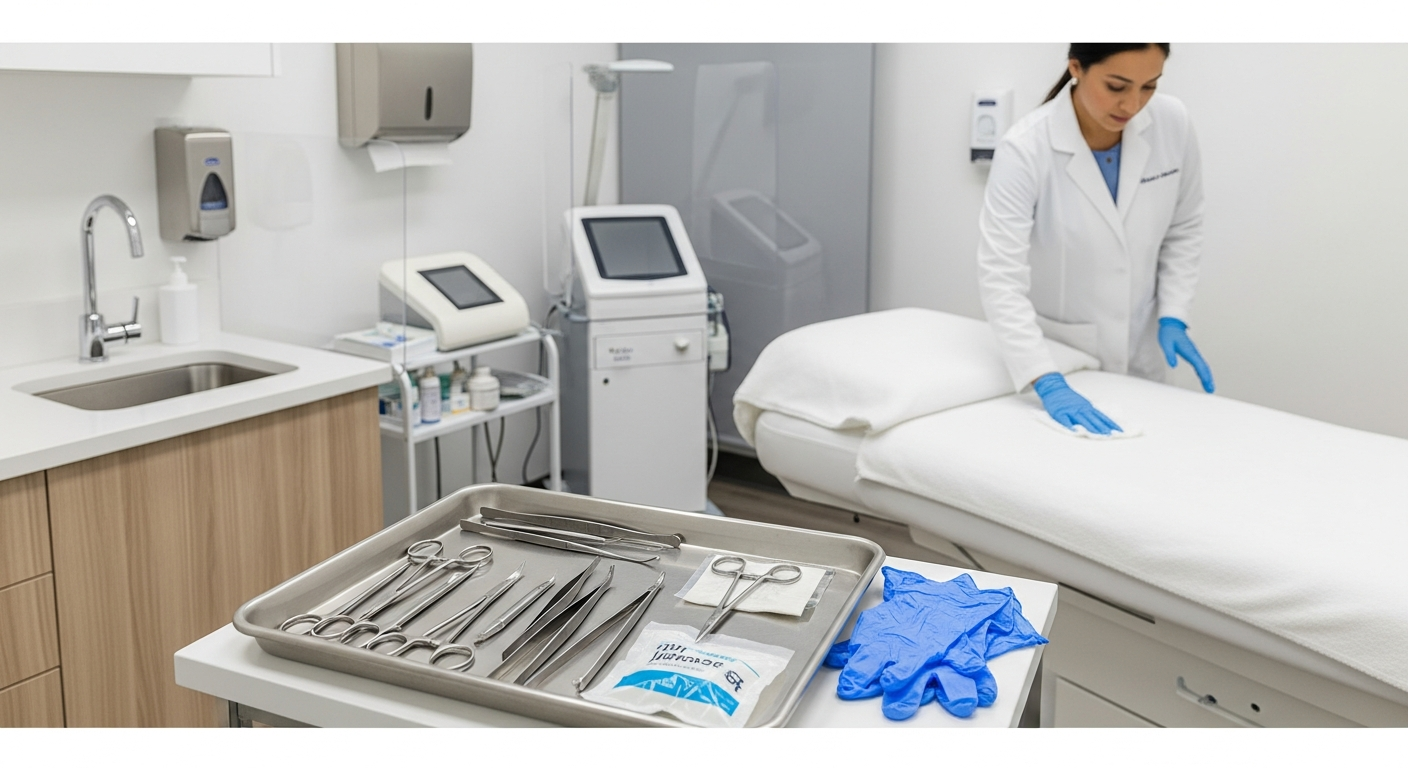
Med Spa Infection Control and Clinical Safety Protocols
Med spa infection control refers to the systematic implementation of sanitation, disinfection, and sterilization protocols designed to prevent the spread of pathogens in aesthetic clinical settings. These OSHA-aligned practices protect patients and practitioners by eliminating cross-contamination risks through rigorous treatment room maintenance, proper PPE usage, and high-level medical device reprocessing.
Establishing OSHA-Aligned Sanitation Standards
Every med spa must maintain a written exposure control plan that outlines specific sanitation steps for all clinical areas.
This includes using EPA-registered, hospital-grade disinfectants on all non-porous surfaces between every patient appointment to eliminate viral and bacterial loads.
Standard operating procedures should prioritize high-touch zones such as treatment tables, magnifying lamps, and product counters.
Three Levels of Med Spa Decontamination
Surface Cleaning and Sanitation
Sanitation is the initial removal of visible debris and organic matter from tools and surfaces using detergent and water.
This physical cleaning step is mandatory before any higher level of disinfection or sterilization can occur effectively.
High-Level Disinfection
Disinfection utilizes chemical agents to destroy most pathogenic microorganisms on inanimate surfaces that do not penetrate the skin.
All aesthetic equipment that contacts intact skin must undergo thorough disinfection using intermediate to high-level chemical solutions.
Clinical Sterilization
Sterilization is the absolute elimination of all microbial life, including highly resistant bacterial spores, typically achieved via autoclaving.
Any med spa instrument that penetrates the skin or enters sterile tissue must be sterilized according to manufacturer instructions.
Treatment Room Disinfection Systems
Effective room turnover requires a systematic approach to ensure no area is overlooked during the transition between clinical procedures.
Practitioners should utilize disposable barriers on equipment that is difficult to clean, such as electronic controls or adjustment handles.
All linens must be changed after every use and laundered according to healthcare-grade temperature and chemical standards.
Preventing Cross-Contamination in Aesthetic Settings
Hand hygiene remains the single most important practice for preventing the transfer of microorganisms between staff and patients.
Clinical supervisors must enforce strict personal protective equipment (PPE) protocols, including the use of gloves, masks, and eye protection.
The “single-use only” rule must be applied to all consumables, including cotton pads, wooden applicators, and needle cartridges.
Biohazard and Sharps Management
Med spas must utilize puncture-resistant, leak-proof containers for the immediate disposal of needles, lancets, and other sharp instruments.
Biohazardous waste, including blood-soaked materials, requires separate containment and disposal through regulated medical waste services.
Proper labeling and secure storage of these containers are essential components of maintaining a safe clinical environment.
