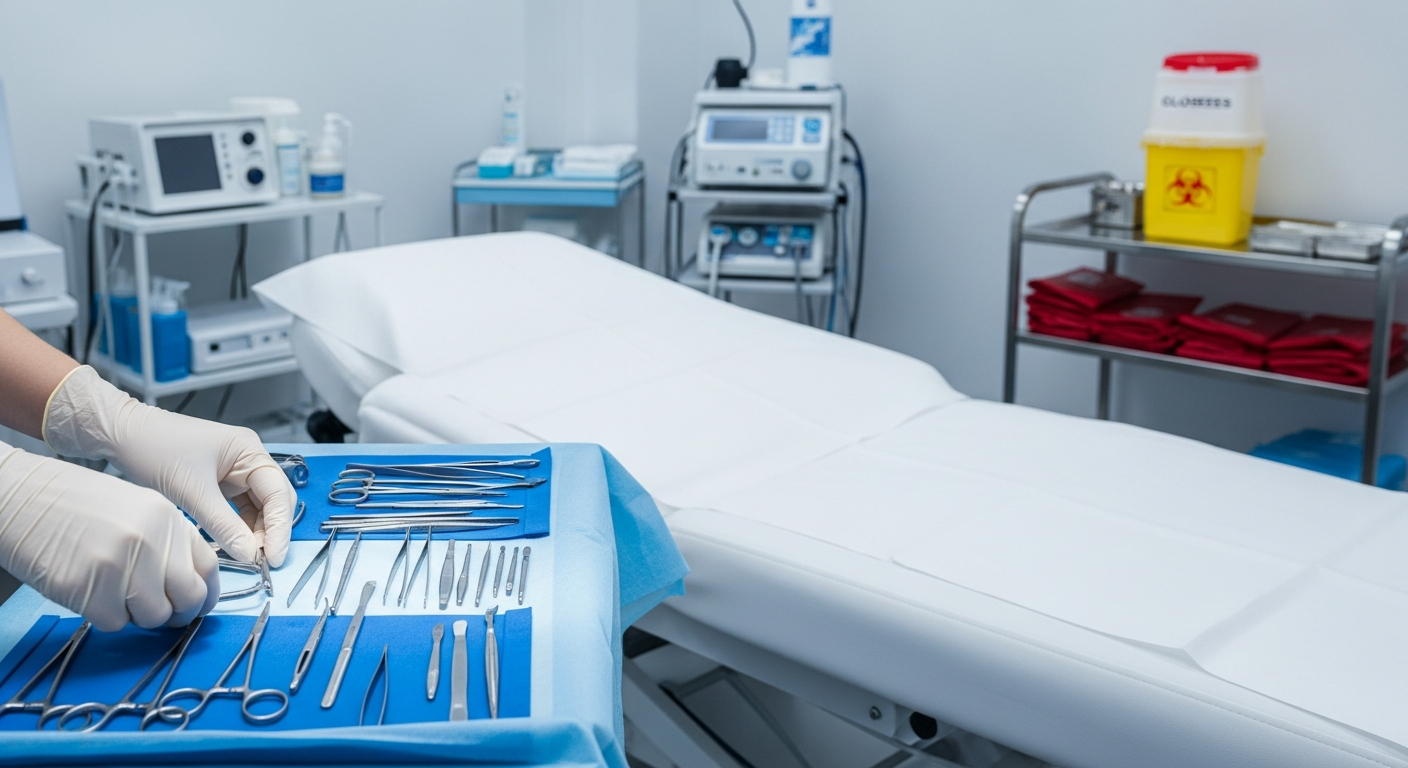
Med Spa Infection Control and Clinical Safety Standards
Med spa infection control refers to the systematic application of sanitation, disinfection, and sterilization protocols designed to prevent the spread of pathogens during aesthetic treatments. These clinical safety standards, aligned with OSHA guidelines, protect both practitioners and clients by eliminating cross-contamination risks through rigorous hand hygiene, environmental cleaning, and proper instrument processing.
OSHA-Aligned Sanitation Practices for Med Spas
Adhering to OSHA standards ensures a safe working environment for all clinical staff.
Practitioners must treat all human blood and certain body fluids as if they are infectious.
This approach, known as Universal Precautions, is the foundation of modern med spa safety.
Personal Protective Equipment (PPE) Requirements
Clinical staff must wear appropriate PPE to create a barrier against infectious materials.
This includes disposable gloves, fluid-resistant gowns, and face shields during invasive procedures.
PPE must be removed and disposed of properly before leaving the treatment area.
Hand Hygiene Protocols
Handwashing is the most effective way to prevent the transmission of healthcare-associated infections.
Staff must wash hands with soap and water before and after every client contact.
Alcohol-based hand rubs are acceptable only when hands are not visibly soiled.
Sterilization Standards for Aesthetic Tools
Any instrument that penetrates the skin or contacts mucosal membranes requires professional sterilization.
Med spas must use validated sterilization methods to ensure all microbial life is destroyed.
Routine biological monitoring is necessary to confirm that sterilization equipment is functioning correctly.
High-Level Disinfection vs. Sterilization
Critical items must be sterilized, while semi-critical items require high-level disinfection.
Non-critical items that only touch intact skin can be processed with intermediate-level disinfectants.
Maintaining a clear distinction between these categories prevents equipment-related infections.
Treatment Room Disinfection Systems
Environmental surfaces must be cleaned and disinfected between every client appointment.
Focus should be placed on high-touch surfaces like treatment tables, counters, and lamps.
Only EPA-registered, hospital-grade disinfectants should be used for these systematic cleanings.
Surface Decontamination Procedures
A two-step process of cleaning followed by disinfection is required for all surfaces.
Cleaning removes visible soil, while disinfection kills the remaining microscopic pathogens.
Surfaces must remain wet with the disinfectant for the full contact time specified by the label.
Preventing Cross-Contamination in Clinical Areas
Cross-contamination occurs when pathogens are transferred between equipment, staff, and clients.
Implementing a “clean to dirty” workflow helps minimize the risk of spreading contaminants.
Dedicated zones for sterile storage and used instrument processing are essential for safety.
Biohazardous Waste Management
Sharps, such as needles and blades, must be disposed of in puncture-resistant containers immediately.
Other biohazardous waste should be placed in marked red bags for specialized disposal.
Proper waste management prevents accidental needle sticks and environmental contamination.
