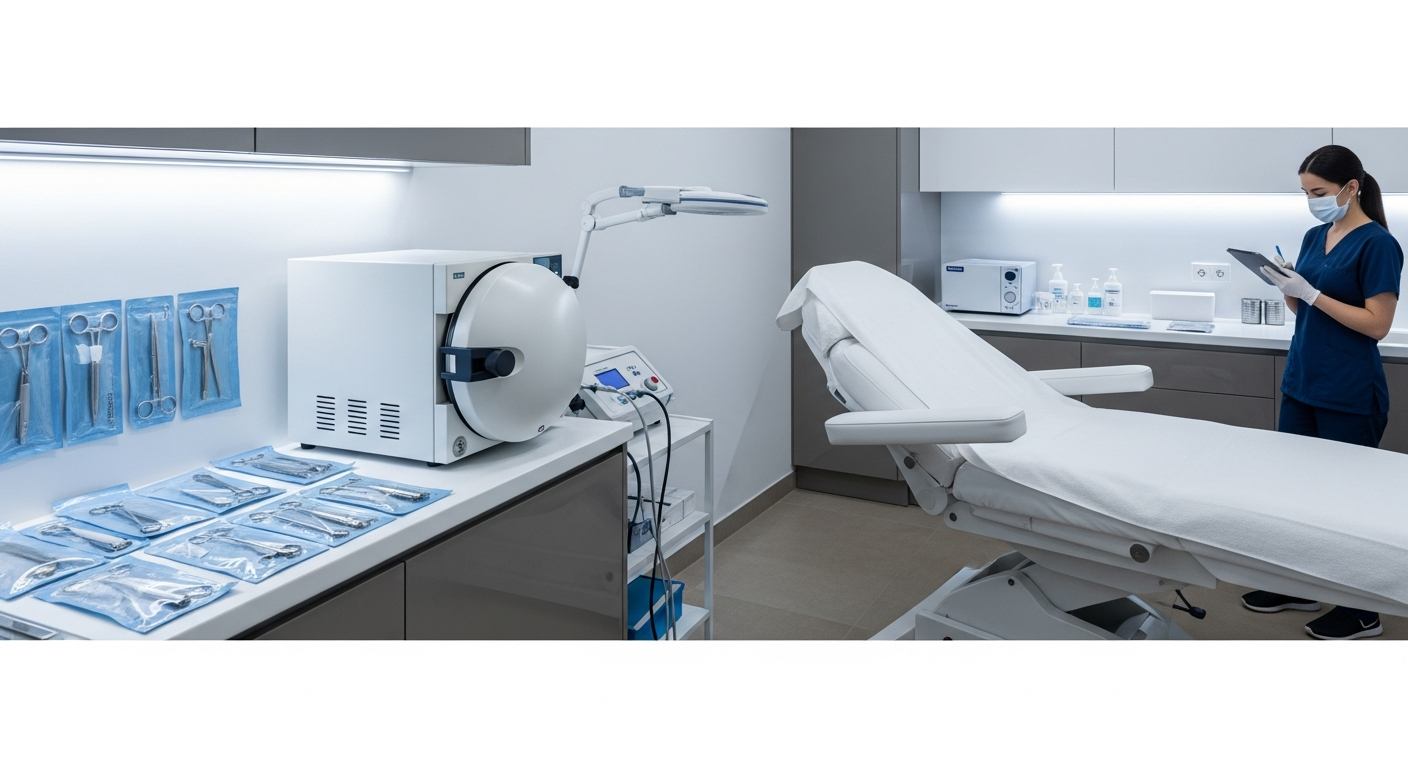
Med Spa Infection Control and Clinical Safety Standards
Med spa infection control refers to the systematic protocols and sanitation practices used to prevent the transmission of pathogens during aesthetic procedures. These standards involve OSHA-aligned surface disinfection, proper sterilization of reusable instruments, and strict hand hygiene to ensure a sterile environment and protect both clients and practitioners from cross-contamination.
OSHA-Aligned Sanitation Practices for Med Spas
Adhering to OSHA standards ensures that the clinical environment remains safe for both staff and clients.
This involves the use of EPA-registered, hospital-grade disinfectants on all non-porous surfaces.
Staff must follow specific contact times for these solutions to effectively eliminate bloodborne pathogens.
Standard precautions must be applied to every client regardless of their perceived health status.
This includes treating all human blood and certain body fluids as if they are known to be infectious.
Consistent documentation of cleaning schedules helps maintain compliance and accountability within the facility.
Sterilization Standards for Reusable Instruments
Any tool that penetrates the skin or comes into contact with sterile tissue must undergo full sterilization.
The gold standard for med spa instrument processing is the use of a steam autoclave.
Instruments must be cleaned of all organic debris before being placed into sterilization pouches.
Biological Monitoring and Record Keeping
Routine spore testing is required to verify that the autoclave is functioning at the correct temperature and pressure.
Results of these biological indicators should be logged and kept for inspection by regulatory bodies.
Each sterilized pack must feature a chemical indicator to confirm that the internal contents reached sterilization parameters.
Treatment Room Disinfection Systems
Effective room turnover is critical between every aesthetic treatment to prevent the spread of bacteria.
All high-touch surfaces, including treatment tables, stools, and countertops, require thorough disinfection.
Porous items such as table linens must be laundered using high-heat cycles or replaced with single-use barriers.
Disinfection systems should prioritize the removal of visible soil before the application of germicidal chemicals.
Staff should use a “wipe-discard-wipe” method to ensure surfaces are both clean and properly sanitized.
Ensuring the treatment area is completely dry before the next client enters prevents chemical irritation and cross-contamination.
Cross-Contamination Prevention Strategies
Preventing cross-contamination requires a disciplined approach to how supplies are handled during procedures.
Aseptic techniques should be used whenever a practitioner is handling needles, syringes, or skin-penetrating devices.
Single-use items must be disposed of immediately in appropriate sharps containers or biohazard waste bins.
Personal Protective Equipment (PPE) Usage
- Gloves: Must be changed between every client and after touching contaminated surfaces.
- Face Masks: Should be worn during procedures that involve aerosolization or close-contact breathing.
- Eye Protection: Essential when there is a risk of splashing or spray from clinical solutions.
Hand hygiene remains the most effective way to interrupt the chain of infection in a med spa.
Practitioners must wash hands with soap and water or use high-alcohol sanitizer before and after glove use.
Properly designated “clean” and “dirty” zones within the facility help separate sterile supplies from used equipment.
