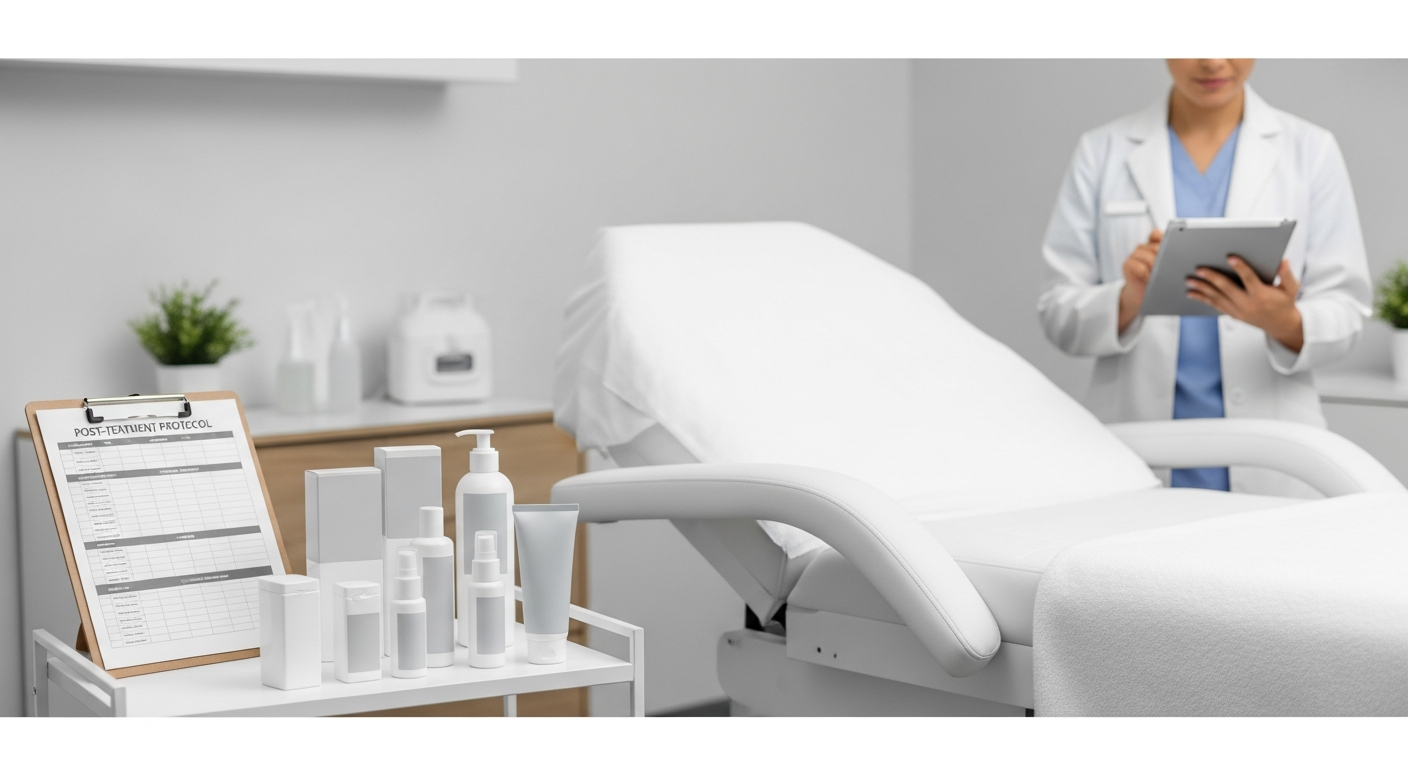
Post-Treatment Management in Med Spa Operations
Post-treatment management in med spa settings refers to the standardized clinical protocols used to monitor and support skin recovery following aesthetic procedures. These systems prioritize inflammation control, erythema reduction, and barrier repair through uniform aftercare workflows, ensuring consistent safety standards and predictable healing timelines for every patient across the practice.
Standardized Post-Laser Recovery Protocols
Post-laser management focuses on heat dissipation and inflammatory response control.
Immediate protocols require the application of cooling measures to reduce thermal retention.
Providers must ensure the skin barrier remains protected to prevent transepidermal water loss.
- Erythema Assessment: Monitoring the duration of redness to ensure it falls within expected clinical parameters.
- Thermal Regulation: Utilizing chilled compresses immediately following ablative or non-ablative sessions.
- Barrier Maintenance: Protecting the compromised epidermis from external environmental stressors during the healing phase.
Managing Microneedling Downtime and Recovery
Microneedling recovery systems revolve around the 24-hour window of micro-channel closure.
Standardized workflows prohibit the application of specific active ingredients during this acute phase.
Clinical supervisors must enforce strict hygiene protocols to prevent secondary complications during healing.
Acute Phase Management
During the first 48 hours, the clinical focus is on soothing the inflammatory response.
Providers should guide patients on gentle cleansing techniques that do not disrupt the skin.
Consistency in these instructions reduces the risk of post-inflammatory hyperpigmentation in patients.
Chemical Peel Aftercare Systems
Post-peel management requires a structured approach to the desquamation process.
Med spa protocols should emphasize that the peeling phase must occur naturally.
Manual exfoliation or mechanical peeling by the patient must be strictly discouraged through education.
- Hydration Cycles: Maintaining high moisture levels to support the shedding of dead skin cells.
- UVR Protection: Strict adherence to photoprotection to safeguard newly revealed tissue from damage.
- Inflammation Control: Identifying the difference between normal peeling and adverse reactions in a clinical setting.
Clinical Workflows for Inflammation and Erythema
Managing inflammation and erythema requires a systematic observation and documentation strategy.
Standardized charts help providers track the progression of redness over several days.
This data allows the med spa to adjust future treatment intensities for better patient results.
Documentation and Protocol Consistency
Successful recovery systems rely on written SOPs rather than individual provider judgment.
Uniformity ensures that every patient receives the same high standard of clinical care.
Regular audits of post-treatment logs help maintain these professional clinical benchmarks in the facility.
