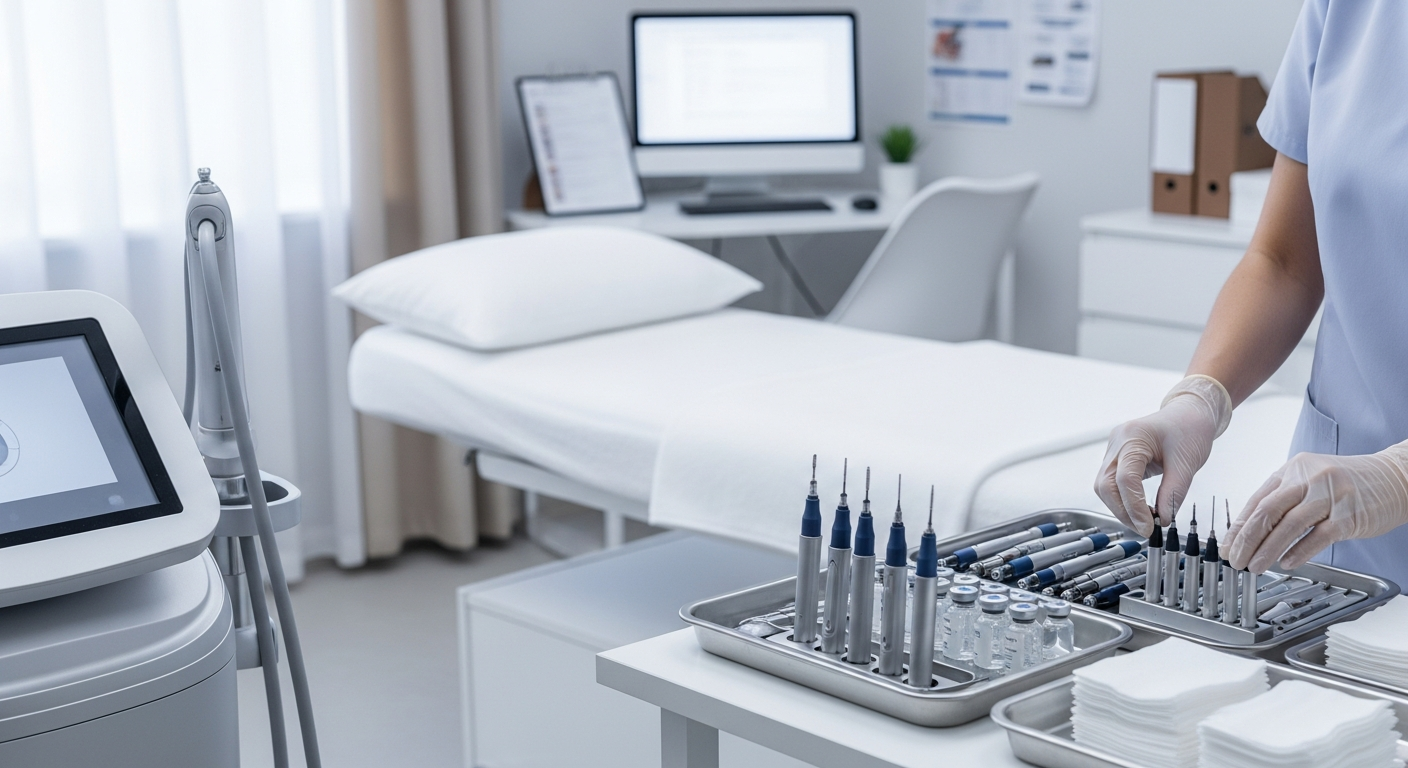
Post-Treatment Management in Med Spas: Clinical Protocols
Post-treatment management in med spa environments involves implementing standardized clinical protocols to monitor recovery, mitigate complications, and reduce patient downtime after aesthetic procedures. This systematic approach ensures consistent outcomes across laser therapies, microneedling, and chemical peels by prioritizing controlled inflammation management and strictly regulated patient aftercare workflows for clinical staff.
Standardizing Recovery Workflows
Standardizing workflows ensures every provider follows the same safety steps.
This reduces clinical variability and minimizes errors during the recovery phase.
Clear documentation is the foundation of a professional med spa environment.
Effective systems include immediate post-procedure assessments and scheduled follow-ups.
Providers must document the skin’s response to treatment at specific intervals.
This data allows for early detection of any deviations from the normal healing process.
Post-Laser Recovery Protocols
Laser treatments require precise thermal management to prevent adverse effects.
Protocols focus on cooling the epidermis while maintaining treatment efficacy in the dermis.
Clinical staff must monitor the skin for persistent heat or swelling.
Standard protocols include the application of cooling agents immediately after the laser.
Protecting the compromised skin barrier from environmental irritants is mandatory.
Staff should provide clear instructions on avoiding heat and UV exposure during recovery.
Managing Erythema and Inflammation
Erythema is a normal clinical response to thermal or mechanical injury.
Standard protocols dictate the use of cold compresses or specialized occlusive agents.
Monitoring timelines prevents normal inflammation from progressing into a complication.
If erythema persists beyond the expected window, the clinical supervisor is notified.
Systematic checks ensure that every patient receives the same level of observation.
This consistency is vital for maintaining the safety standards of the med spa.
Microneedling Downtime Management
Microneedling creates micro-channels that require immediate barrier support.
Clinical staff must ensure the treatment area remains sterile and hydrated post-procedure.
Standardizing these steps prevents exogenous material from entering the open dermis.
Patients should be instructed on the appropriate timeline for resuming topical products.
Early introduction of active ingredients can cause significant irritation or granulomas.
Standard med spa protocols provide a tiered approach to reintroducing skincare.
Chemical Peel Aftercare Systems
Chemical peels involve controlled exfoliation of the specific skin layers.
Management systems focus on preventing premature desquamation or skin picking.
Providers must educate patients on the physiological stages of the peeling process.
- Apply gentle cleansers and barrier creams as directed.
- Avoid mechanical exfoliation during the active peeling phase.
- Use broad-spectrum sun protection to prevent post-inflammatory hyperpigmentation.
- Report any signs of infection or unexpected crusting to the clinic.
Following a standardized timeline helps patients manage expectations regarding peeling.
Consistency in aftercare instructions reduces the number of urgent patient inquiries.
A well-managed peel recovery leads to smoother skin texture and higher satisfaction.
Establishing Clinical Consistency
Consistency in post-treatment management protects both the patient and the med spa.
When protocols are followed, the risk of preventable complications is significantly lowered.
Ongoing training ensures all providers stay aligned with the facility’s clinical standards.
Clinical supervisors should review recovery logs to identify areas for improvement.
Refining protocols based on observed recovery patterns enhances overall facility safety.
A structured recovery system is the hallmark of a high-functioning aesthetic clinic.
