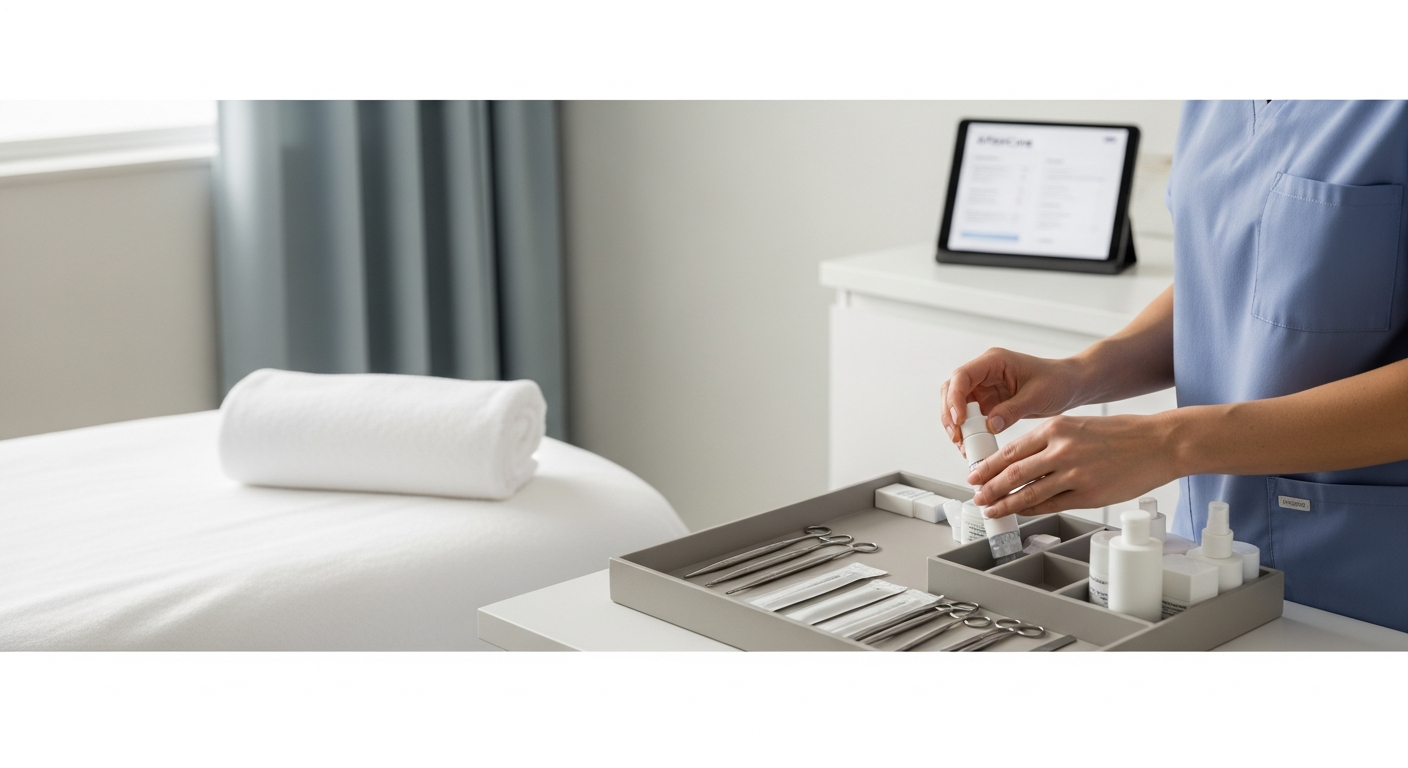
Post-Treatment Management in Med Spas
Post-treatment management in med spas refers to the standardized clinical protocols used to oversee patient recovery following aesthetic procedures. These systems focus on reducing inflammation, managing erythema, and accelerating tissue repair after laser, microneedling, or chemical peel treatments to ensure consistent outcomes and minimize potential complications across the practice.
Standardizing Post-Laser Recovery Protocols
Effective post-treatment management in med spas begins with thermal regulation.
Laser procedures induce controlled heat, making immediate cooling and heat dissipation
the primary clinical focus for providers.
Standardized protocols ensure that erythema and edema are managed consistently.
Clinics must implement specific timelines for ice application or cooling masks
to prevent prolonged thermal injury to surrounding tissues.
Documentation of skin response at 24 and 48 hours is vital.
Standardized workflows allow clinical supervisors to track recovery trends
and identify deviations from the normal inflammatory response quickly.
Managing Inflammation and Erythema
Managing post-laser erythema requires a systematic approach to barrier protection.
Clinicians should instruct patients on avoiding heat-inducing activities
to maintain the integrity of the treated area during the acute phase.
Visual assessment tools help providers categorize the severity of redness.
Using a standardized scale ensures all staff members evaluate inflammation
using the same clinical criteria, regardless of individual experience level.
Microneedling Downtime Management
Post-treatment management in med spas for microneedling focuses on channel closure.
Because the skin barrier is temporarily compromised, protocols must prioritize
preventing environmental contamination and transepidermal water loss.
Downtime management systems typically involve a 24-hour restricted window.
During this time, patients must follow a strict “no-touch” policy
to allow the micro-channels to seal without introducing pathogens.
Standardizing the post-needling workflow reduces the risk of adverse events.
Providers must ensure patients receive clear, written instructions
regarding the resumption of active ingredients in their home care.
Essential Post-Needling Workflows
Hydration is the cornerstone of microneedling recovery management.
Clinics should implement a protocol that emphasizes non-irritating
hydration to support the natural cellular turnover process.
Monitoring for signs of secondary infection is a critical clinical step.
Standardized follow-up calls allow the med spa to verify
that the patient’s healing is progressing according to the expected timeline.
Chemical Peel Aftercare Systems
Post-treatment management in med spas for chemical peels requires strict adherence.
The primary objective is to manage the desquamation process
without causing premature peeling or post-inflammatory hyperpigmentation.
Peel aftercare systems must emphasize sun avoidance and physical protection.
Clinicians provide patients with a specific timeline for when
normal cleansing and moisturizing routines can safely resume.
Consistent protocols prevent patients from picking or scrubbing the skin.
Educational materials should explain the biological process of exfoliation
to manage patient expectations regarding the appearance of the skin.
Controlling Desquamation and Sensitivity
Managing the sensitivity associated with chemical resurfacing is essential.
Protocol consistency ensures that every patient receives the same
guidance on managing tightness and peeling without intervention.
Standardized recovery kits help maintain the pH balance of the skin.
By providing a unified system, med spas can ensure that patients
are not using incompatible products during the vulnerable healing phase.
Implementing Standardized Clinical Workflows
Successful post-treatment management in med spas relies on protocol consistency.
When every provider follows the same recovery system, the clinic
can achieve predictable results and higher levels of patient safety.
Clinical supervisors should conduct regular audits of post-treatment logs.
This ensures that every patient encounter is documented properly
and that all recovery milestones are being met across the entire team.
Standardized workflows also simplify the training process for new staff.
A clear, procedure-based manual allows for seamless integration
into the med spa’s clinical environment and safety culture.
