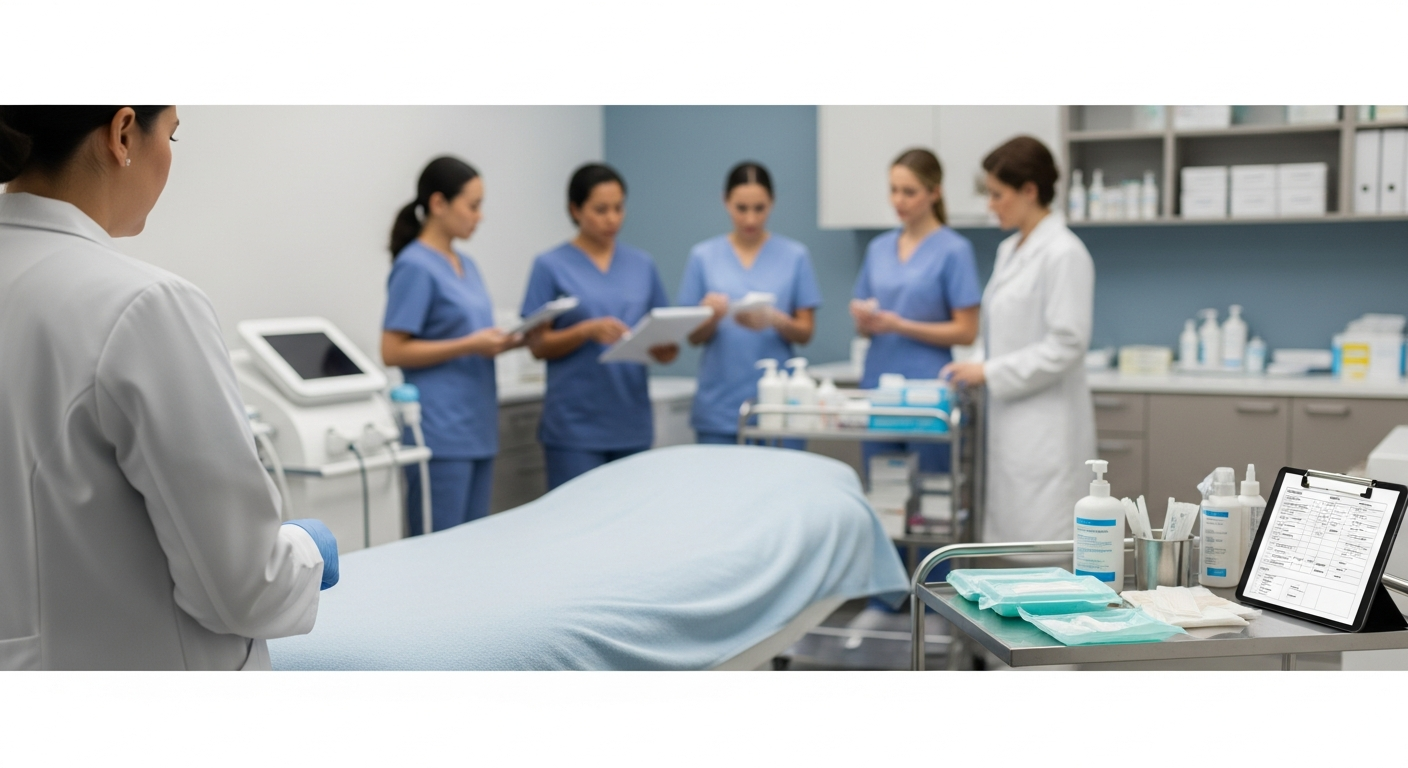
Clinical Post-Treatment Management in Med Spas
Post-treatment management in med spa settings refers to the standardized clinical protocols used to monitor recovery, minimize downtime, and manage inflammation after aesthetic procedures. These systems ensure consistent patient safety and outcome quality by providing structured workflows for laser recovery, microneedling aftercare, and chemical peel healing processes across all clinical staff.
Standardizing Post-Treatment Clinical Workflows
Standardized workflows minimize clinical variability between different practitioners within a med spa environment.
Consistency in post-treatment management ensures that every patient receives the same baseline level of care.
Documented protocols serve as the primary foundation for clinical safety and predictable recovery timelines.
Establishing these systems requires clear communication of expectations for both the provider and the patient.
Uniformity in recovery advice reduces the risk of patient error during the critical healing phase.
A structured approach allows clinical supervisors to audit outcomes and refine techniques based on data.
Post-Laser Recovery Protocols
Post-laser care focuses on managing the controlled thermal injury delivered during the aesthetic procedure.
Clinical protocols emphasize immediate cooling strategies to reduce heat-induced erythema and localized discomfort.
Maintaining an intact skin barrier is the priority during the first forty-eight hours of recovery.
Med spa providers must monitor for signs of excessive heat retention or unexpected pigmentary changes.
Standardized instructions include strict UV avoidance and the use of gentle, non-reactive cleansers.
Protocol consistency ensures that patients do not introduce irritants that could lead to post-inflammatory hyperpigmentation.
Microneedling Downtime Management
Managing microneedling downtime requires a clinical focus on the rapid closure of created micro-channels.
Protocols must specify a strict timeline for when patients can safely resume using active ingredients.
Med spas utilize structured observation to monitor erythema levels during the initial recovery period.
Standardized management prevents the introduction of bacteria into the skin while the barrier is compromised.
Clinical supervisors should ensure all providers instruct patients to avoid strenuous exercise for twenty-four hours.
This consistency prevents localized edema and reduces the risk of inflammatory responses or granulomas.
Chemical Peel Aftercare Systems
Chemical peel aftercare systems are designed to manage the natural desquamation process following acid application.
Clinical protocols prioritize hydration and the prevention of premature peeling by the patient.
Managing the skin’s pH balance is essential to supporting the re-epithelialization process after a peel.
Providers must educate patients on the difference between expected shedding and abnormal clinical reactions.
Standardized recovery kits often include specific emollients to prevent transepidermal water loss.
Consistent follow-up schedules allow the med spa to track the progression of the new skin layer.
Managing Inflammation and Erythema
Distinguishing between therapeutic inflammation and adverse erythema is a critical skill for med spa providers.
Standardized protocols include the use of cold compresses and specific topical barriers to calm the skin.
Prompt identification of abnormal swelling allows for immediate clinical intervention and adjustment of protocols.
Consistency in managing inflammation reduces the overall downtime associated with high-energy aesthetic treatments.
Standardized assessments help providers determine if the inflammatory response is within the expected range.
Maintaining detailed clinical notes on erythema duration helps refine future treatment parameters for the patient.
Improving Clinical Outcomes Through Systems
Success in a med spa depends on the move from individual provider judgment to institutional systems.
Standardized post-treatment management ensures that no critical step in the recovery process is overlooked.
These clinical systems protect the patient while enhancing the professional reputation of the facility.
