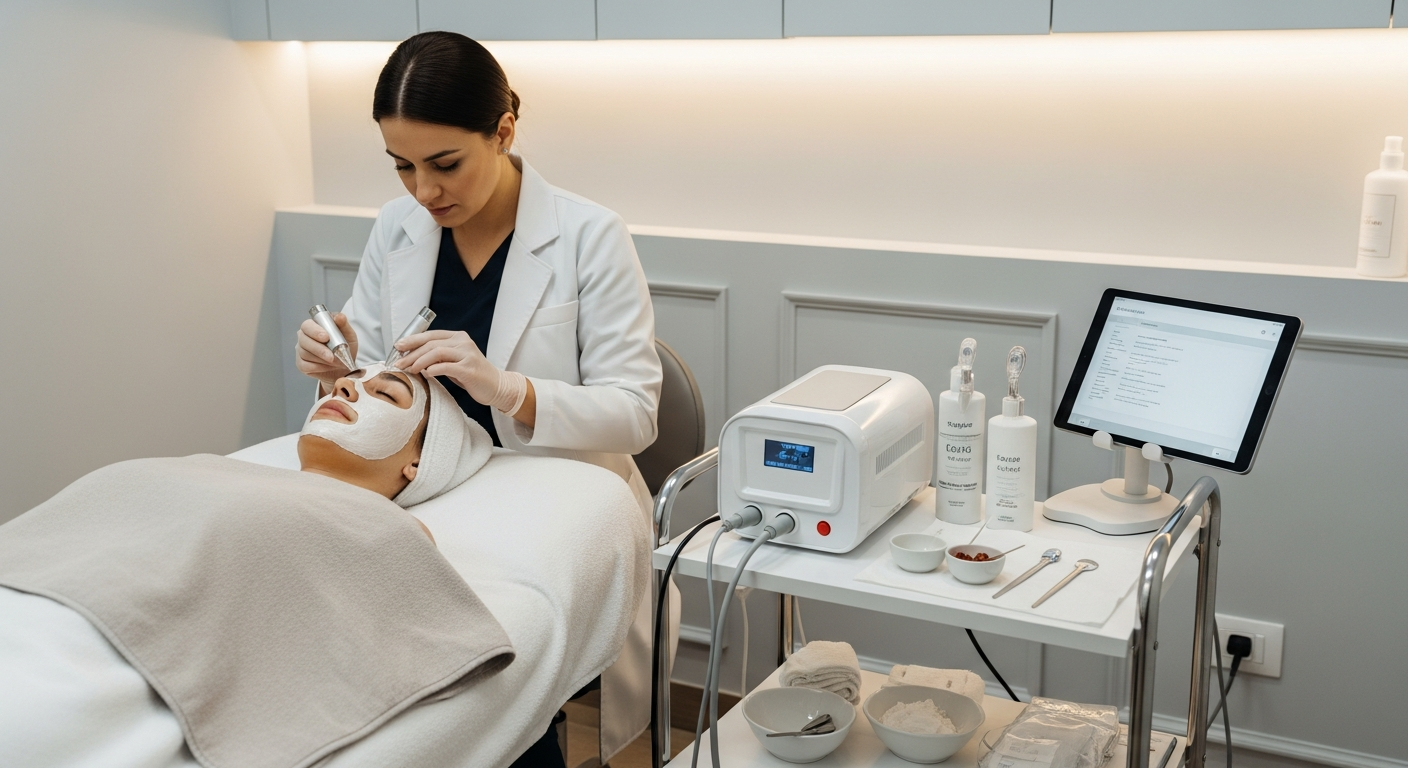
Post-Treatment Management in Med Spa Clinical Operations
Post-treatment management in med spa settings involves implementing standardized clinical protocols to stabilize the skin after aesthetic procedures. These recovery systems focus on reducing erythema, managing inflammation, and accelerating tissue repair through structured workflows that ensure consistent patient outcomes following laser treatments, microneedling, and chemical peels.
Standardized Post-Laser Recovery Protocols
Effective post-laser management requires immediate thermal stabilization of the treated tissue.
Standardized protocols ensure that heat is dissipated efficiently to prevent secondary thermal injury.
Clinicians must implement cooling phases that do not compromise the intended treatment response.
The use of occlusive or semi-occlusive barriers is essential for protecting the compromised epidermis.
These protocols focus on preventing transepidermal water loss while maintaining a sterile environment.
Consistency in these workflows reduces the risk of post-inflammatory hyperpigmentation in laser patients.
Managing Thermal Heat and Erythema
Managing erythema after high-energy device treatments requires a structured timeline of intervention.
Initial management focuses on physiological cooling and the application of soothing agents.
Subsequent steps emphasize long-term barrier support and strict photo-protection systems.
Microneedling Downtime Management Systems
Microneedling creates thousands of micro-channels that require specific post-treatment management.
The clinical goal is to facilitate rapid channel closure while managing local inflammation.
Providers should follow a strict no-touch protocol for the first few hours following the procedure.
Post-microneedling systems emphasize hydration using non-irritating, low-molecular-weight agents.
Standardized workflows guide the patient through the transition from acute redness to the remodeling phase.
Eliminating provider variability in these instructions ensures predictable healing across all skin types.
Barrier Restoration Workflows
Barrier restoration is the cornerstone of microneedling recovery in a med spa environment.
Clinicians must provide clear guidelines on when patients may resume active topical ingredients.
Standardized recovery kits help maintain protocol compliance and reduce the incidence of contact dermatitis.
Chemical Peel Aftercare Systems
Post-treatment management for chemical peels focuses on controlled desquamation and pH stabilization.
Standardized systems ensure that the skin’s acid mantle is supported during the exfoliation process.
Clinicians must monitor the depth of the peel to adjust the intensity of the recovery protocol.
Preventing premature peeling is a critical component of professional aftercare systems.
Patients require structured instructions on lipid-rich hydration to prevent scarring or irritation.
Med spas that utilize uniform aftercare manuals see higher patient satisfaction and fewer clinical call-backs.
Standardizing Desquamation Oversight
Managing the peeling phase requires a delicate balance of moisture and protection.
Standardized workflows dictate the frequency of emollient application based on peel intensity.
Provider consistency ensures that every patient understands the normal progression of skin shedding.
Clinical Management of Post-Procedure Inflammation
Inflammation and erythema are expected physiological responses to most med spa procedures.
Management involves identifying the threshold between therapeutic inflammation and adverse reactions.
Clinical protocols should include standardized assessment tools to track the reduction of redness over time.
Med spa supervisors must ensure that all staff can recognize the signs of excessive inflammation.
Standardized recovery pathways include the use of cold compresses and specific topical anti-inflammatories.
Clear documentation of the resolution of erythema is vital for clinical record-keeping and quality control.
Standardized Recovery Workflows in Med Spas
Implementing standardized workflows removes the uncertainty associated with individual provider judgment.
Every aesthetic procedure should have a matching, pre-defined recovery roadmap.
This systemic approach ensures that patient safety is prioritized during the vulnerable post-treatment window.
Med spa owners benefit from recovery systems that are easy for staff to explain and execute.
A uniform approach to post-treatment management builds trust and ensures clinical excellence.
Structured protocols are the most effective way to manage downtime and deliver superior aesthetic results.
