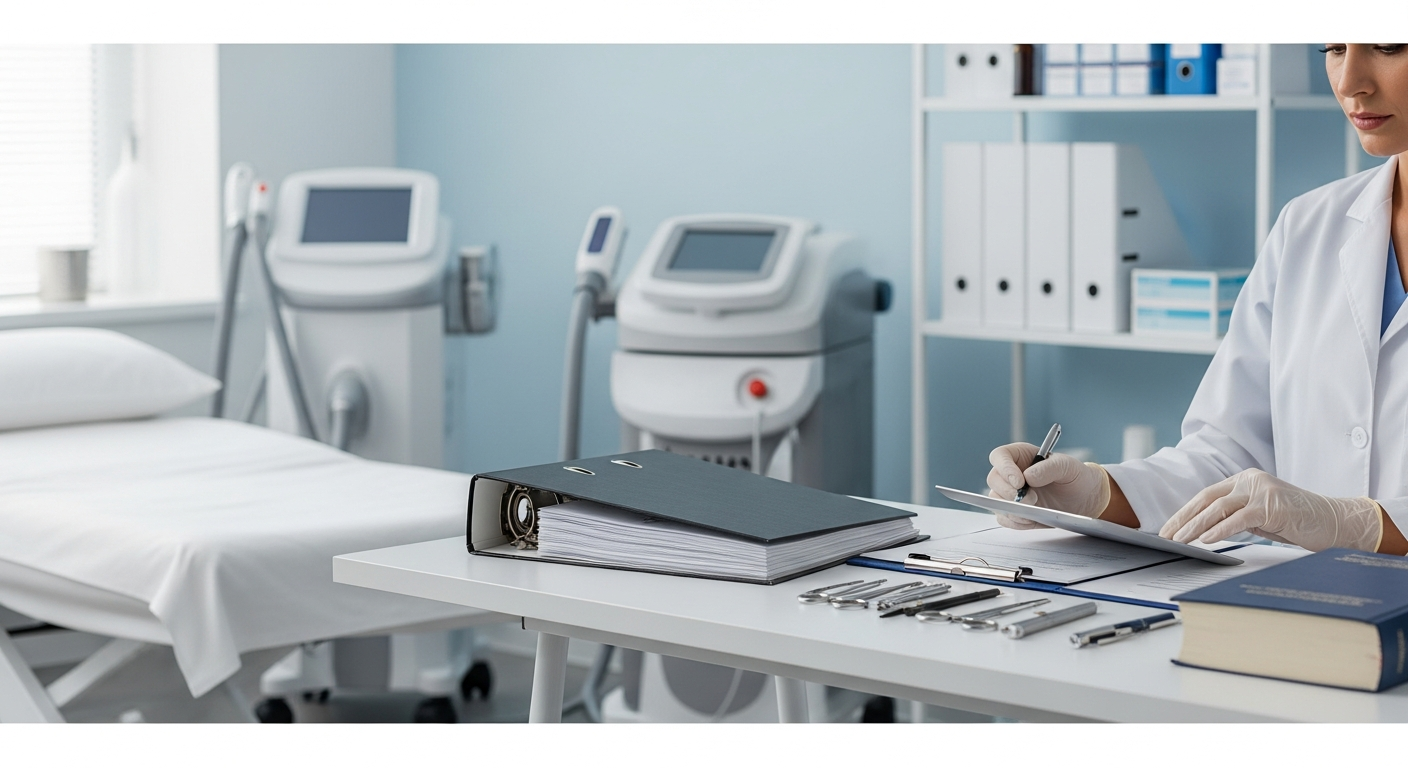
Med Spa Regulations and Compliance Requirements
Med spa regulations are state-specific laws governing medical aesthetic practices in the United States. These regulations mandate that medical directors oversee clinical operations, establish the legal scope of practice for providers, and ensure compliance with the corporate practice of medicine doctrine to maintain patient safety and professional licensing standards.
The Corporate Practice of Medicine
Most states follow the Corporate Practice of Medicine (CPOM) doctrine.
This legal principle prohibits non-physicians from owning a medical practice.
In CPOM states, a med spa must be owned by a licensed physician.
Management Service Organizations (MSO)
Non-doctors often use an MSO to partner with medical professionals.
The MSO handles administrative tasks while the doctor owns the clinical side.
This structure ensures the clinic adheres to strict ownership regulations.
Medical Director and Supervision Rules
A med spa must operate under the license of a medical director.
The medical director is responsible for all clinical protocols and outcomes.
State laws vary on whether the director must be physically present.
Delegation of Medical Tasks
Physicians can delegate procedures like Botox or lasers to qualified staff.
Regulations define which tasks an RN, NP, or PA can perform.
Improper delegation can lead to heavy fines or license revocation.
Legal Scope of Aesthetic Practice
Every practitioner has a defined scope of practice based on their license.
Estheticians are typically limited to the epidermis and non-invasive care.
Medical procedures involving needles or light energy require medical licenses.
The Good Faith Examination
Regulations require a physician or mid-level provider to see patients first.
This initial “good faith exam” must occur before any medical treatment.
Performing injections without a prior exam is a common compliance violation.
Inspection Readiness and Documentation
State boards may conduct unannounced inspections of medical facilities.
Clinics must maintain organized records of all medical protocols.
Documentation must prove that staff are properly trained and supervised.
Essential Compliance Paperwork
- Standardized procedures and clinical protocols.
- Personnel files with current professional licenses.
- Evidence of medical director oversight and chart reviews.
- Patient consent forms and detailed treatment records.
HIPAA and OSHA Standards
Med spas are healthcare providers and must follow HIPAA privacy laws.
Patient data must be stored securely and shared only with authorization.
Compliance also includes OSHA standards for bloodborne pathogens.
Safety and Sanitary Protocols
Regulations require specific sterilization techniques for all reusable tools.
Biohazardous waste must be disposed of according to state health laws.
Maintaining these standards prevents legal liability and patient harm.
