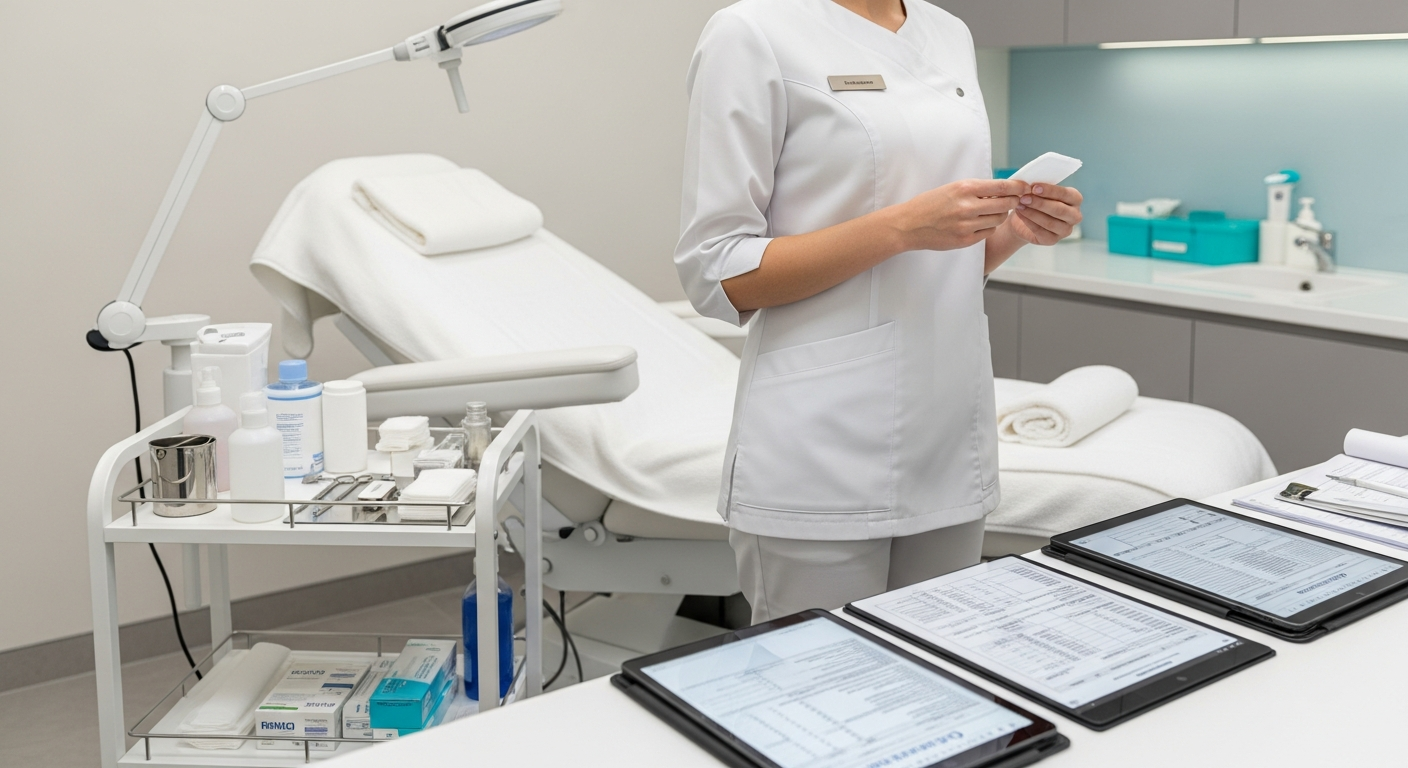
Standardizing Post-Treatment Management in Med Spas
Post-treatment management in med spa environments is the implementation of clinical protocols to oversee patient recovery after aesthetic procedures. These standardized systems focus on reducing inflammation, managing erythema, and ensuring proper skin barrier restoration following laser, microneedling, or chemical peel treatments to minimize complications and optimize outcomes.
Clinical Recovery Protocols for Laser Procedures
Post-laser recovery requires immediate attention to thermal regulation and inflammatory response. Standardized protocols ensure that skin temperature is lowered efficiently after resurfacing or vascular treatments.
Providers must monitor for prolonged erythema and edema beyond the expected clinical endpoint. Standardized workflows include precise cooling durations and the application of occlusive barriers to protect the treated area.
Patient instructions should emphasize the avoidance of exogenous heat sources and friction. Clinical supervisors must ensure all staff communicate consistent timelines for the resolution of post-laser redness.
Microneedling Downtime and Barrier Management
Effective post-treatment management in med spa settings for microneedling focuses on rapid barrier repair. Because the procedure creates micro-channels, the risk of trans-epidermal water loss is significantly increased.
Clinical protocols should prioritize hydration and the prevention of secondary infections. Providers must ensure that no active ingredients are applied until the channels have clinically closed.
Standardizing the management of post-procedure inflammation helps prevent adverse events like granulomas. Clear guidelines on when to resume topical retinoids or acids are essential for patient safety.
Chemical Peel Aftercare Systems
Managing recovery from chemical peels involves monitoring the desquamation process and preventing premature peeling. Standardized systems track the depth of the peel and the corresponding recovery stages.
Clinical supervisors must implement protocols for managing post-peel sensitivity and potential hyperpigmentation. This includes strict adherence to broad-spectrum photoprotection and gentle cleansing cycles.
Providers should use standardized assessment tools to evaluate the healing progress during follow-up appointments. Consistency in these evaluations ensures that complications are identified and addressed early.
Managing Erythema and Inflammation
Inflammation is a natural part of the wound-healing cascade in aesthetic medicine. However, post-treatment management in med spa clinics must distinguish between healthy inflammation and pathological reactions.
Standardized protocols for managing erythema include the use of cold compresses and soothing topical agents. Staff must be trained to recognize the signs of a compromised skin barrier or allergic contact dermatitis.
Consistent documentation of redness levels using a standardized scale allows for better clinical tracking. This data helps the med spa refine treatment parameters for future procedures.
Standardizing Clinical Workflows
Workflow consistency reduces the reliance on individual provider judgment and increases patient safety. Every clinician should follow the same post-treatment checklist regardless of the specific procedure performed.
- Documentation: Record all immediate post-procedure skin reactions and interventions.
- Education: Provide written, standardized aftercare instructions to every patient.
- Follow-up: Schedule mandatory clinical check-ins for high-intensity treatments.
By standardizing post-treatment management in med spa operations, clinics can ensure predictable results. These systems form the foundation of a safe and professional clinical environment in the U.S. aesthetic market.
