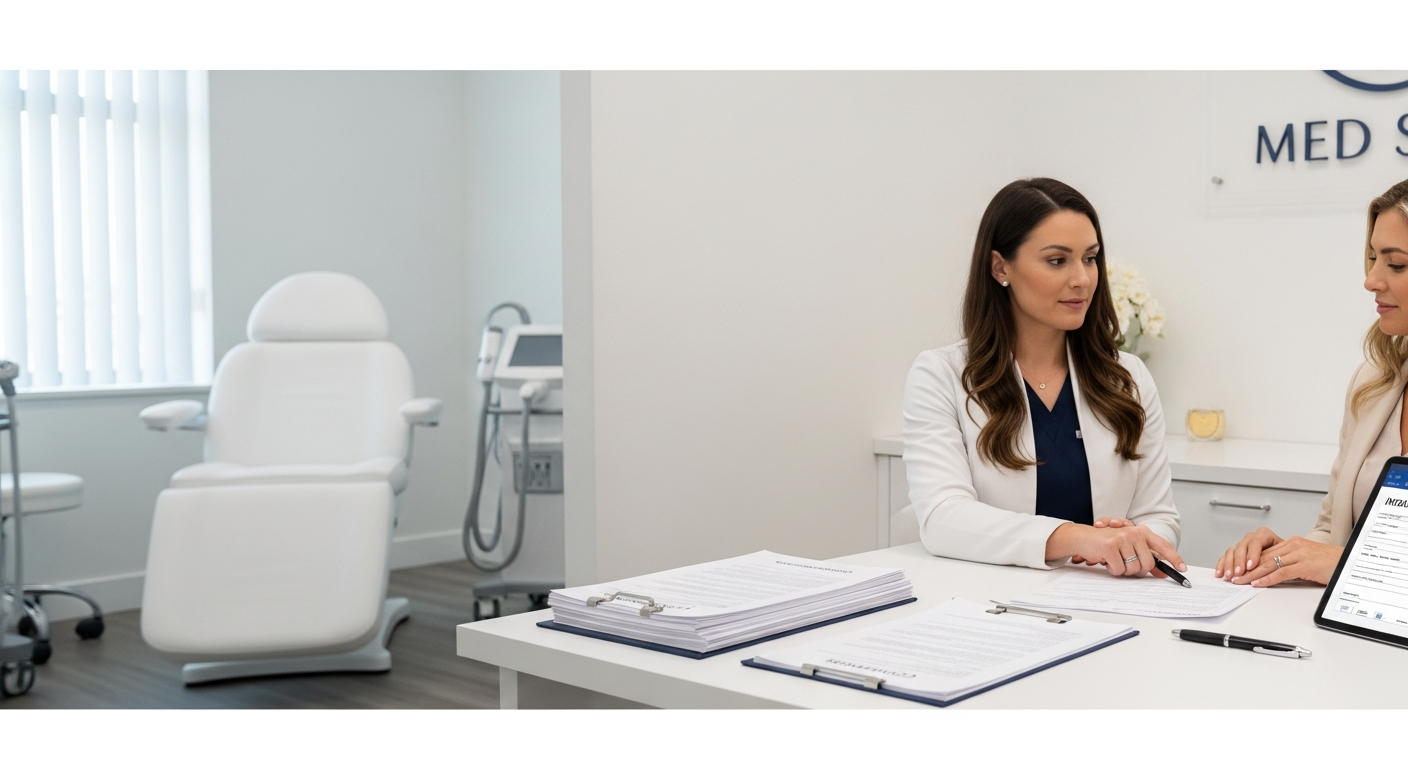
Med Spa Risk Management: Core Liability Safeguards
Med spa risk management is a strategic framework used by aesthetic clinics to identify, evaluate, and mitigate clinical and operational liabilities. This process involves implementing standardized informed consent protocols, rigorous incident reporting systems, and comprehensive recordkeeping practices to ensure regulatory compliance and protect the business from legal exposure following adverse treatment outcomes.
The Role of Informed Consent in Liability Reduction
Comprehensive informed consent is the foundation of med spa risk management. It ensures that patients understand the specific risks, benefits, and alternatives associated with a procedure.
Effective documentation must go beyond a simple signature. It should verify that a qualified practitioner discussed the procedure details with the patient and answered all relevant questions.
A structured consent process protects the med spa by establishing that the patient voluntarily assumed the known risks of the aesthetic treatment before the service began.
Implementing Structured Incident Reporting Systems
A formal incident reporting system is vital for identifying patterns that lead to complications. Every unexpected event or “near miss” must be documented immediately within the med spa.
The report should include objective facts about the incident, the immediate response taken, and the names of all staff members involved in the patient’s care.
Consistent reporting allows medical directors to analyze operational gaps. This data-driven approach helps refine clinical protocols to prevent similar adverse outcomes in the future.
Recordkeeping Standards for Regulatory Compliance
Accurate recordkeeping is a non-negotiable standard for any med spa. Every patient chart must contain detailed treatment notes, including specific device settings and product batch numbers.
Photographic documentation is another essential component of a risk management system. Baseline and post-treatment images provide objective evidence of the clinical results and the patient’s condition.
Well-maintained records demonstrate that the med spa followed the accepted standard of care. These files serve as the primary defense during any regulatory audit or legal inquiry.
Protocols for Handling Adverse Treatment Outcomes
When a complication occurs, the med spa must follow a predetermined response protocol. This includes immediate clinical assessment and a clear communication plan to manage the patient’s expectations.
Managing the patient relationship through transparency can often prevent a clinical complication from escalating into a legal dispute. Prompt and empathetic follow-up is a key liability safeguard.
All post-treatment interactions regarding an adverse event must be logged in the patient’s file. This ensures a complete timeline of the med spa’s efforts to resolve the concerns.
Frameworks for Ongoing Risk Mitigation
Continuous liability reduction requires regular audits of patient files and staff performance. Identifying documentation errors early prevents long-term exposure and ensures the med spa remains compliant with state regulations.
Staff should receive regular training on the latest safety protocols and recordkeeping standards. This ensures that every team member understands their individual role in maintaining clinic safety.
A proactive risk management culture reduces the likelihood of human error. It also prepares the med spa to handle challenges efficiently while protecting its professional reputation and business assets.
