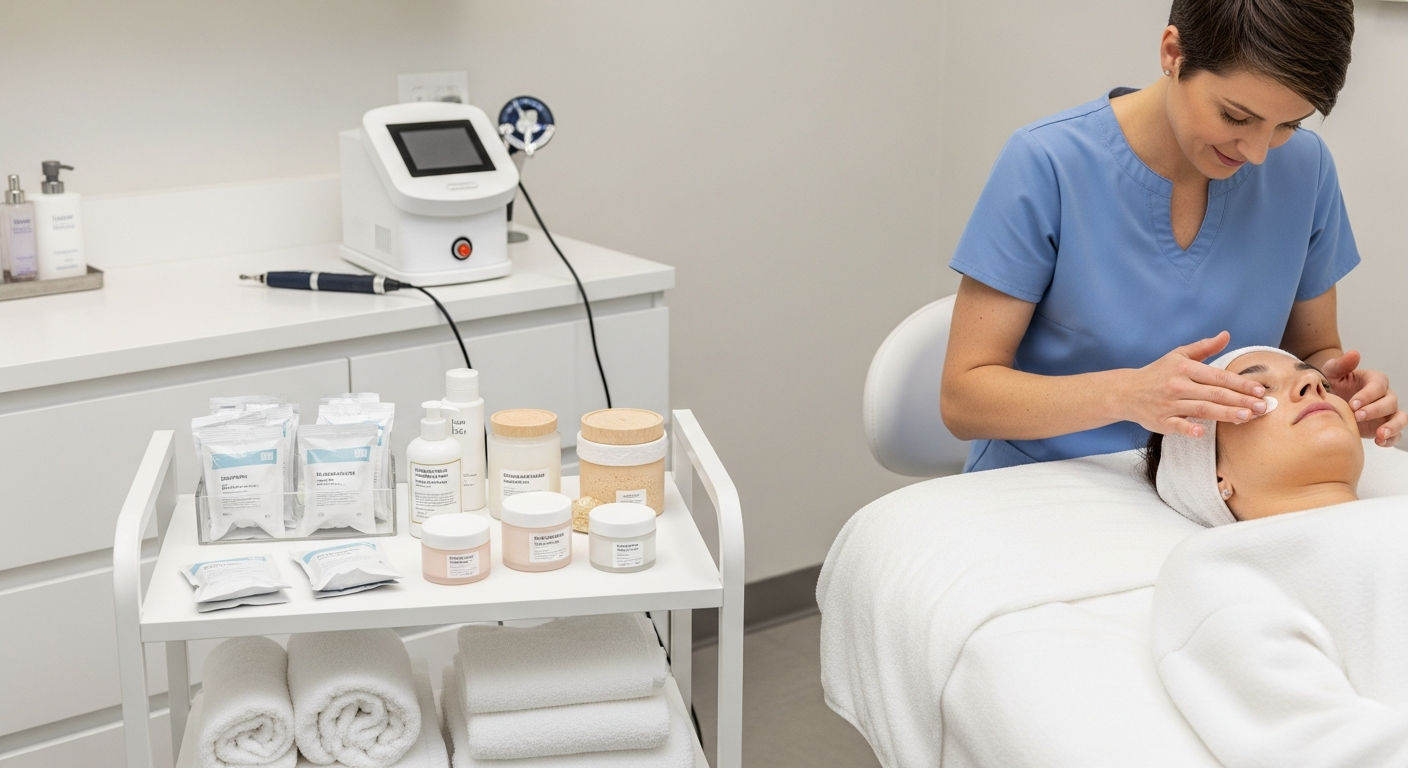
Clinical Post-Treatment Management in Med Spas
Post-treatment management in med spa environments involves structured clinical protocols designed to minimize downtime and prevent complications following aesthetic procedures. These standardized systems focus on controlling inflammation, managing erythema, and promoting skin barrier restoration through consistent, evidence-based workflows applied across all patient recovery phases in a facility.
Standardized Recovery Workflows in Med Spas
Standardization is the foundation of safety in a procedure-based environment.
By implementing uniform recovery systems, med spas ensure that clinical
outcomes remain predictable regardless of which provider performs the service.
A consistent workflow includes immediate post-care application and
clear discharge instructions. These systems prioritize clinical
safety and the reduction of preventable adverse events after treatments.
Post-Laser Recovery Protocols
Post-laser management focuses on heat dissipation and epidermal protection.
Standard protocols typically involve the use of occlusive barriers and
cooling measures to stabilize the skin immediately after thermal energy delivery.
Managing Post-Laser Erythema and Heat
Erythema is a standard response to laser-induced thermal injury.
Med spa protocols should dictate the exact duration of cooling
needed to bring the skin temperature back to a baseline level.
Hydration of the treated area is critical during the first 48 hours.
Standardized systems prevent excessive transepidermal water loss,
which can lead to prolonged downtime and patient discomfort.
Microneedling Downtime Management
Microneedling creates thousands of micro-channels that require specific care.
Post-treatment management in med spa settings focuses on preventing
infection and supporting the natural inflammatory cascade for repair.
Providers must follow a strict timeline for when topical agents
can be reintroduced to the skin. Standardized recovery ensures
the skin barrier is not compromised by premature exposure to irritants.
Chemical Peel Aftercare Systems
Chemical peel protocols manage the transition from controlled injury
to cellular renewal. The primary goal is to support the skin during
desquamation without allowing the patient to interrupt the process.
Monitoring Controlled Desquamation
- Phase 1: Immediate neutralization and soothing of the skin.
- Phase 2: Protecting the new skin layers during the peeling process.
- Phase 3: Restoring the lipid barrier once exfoliation is complete.
Consistent clinical monitoring during these phases prevents complications.
Med spas that use standardized check-in intervals can identify
abnormal inflammation before it leads to post-inflammatory changes.
Managing Inflammation and Erythema
Systemic management of inflammation is a core skill for med spa providers.
Recognizing the difference between expected clinical endpoints and
adverse inflammatory reactions is vital for long-term skin health.
Effective management includes:
- Utilizing physical cooling agents to reduce localized heat.
- Applying non-irritating barriers to protect sensitive tissue.
- Standardizing follow-up timelines to assess healing progress.
Protocol consistency ensures that every patient receives the same
high standard of clinical care. This professional approach reduces
the burden on individual providers to make subjective recovery decisions.
