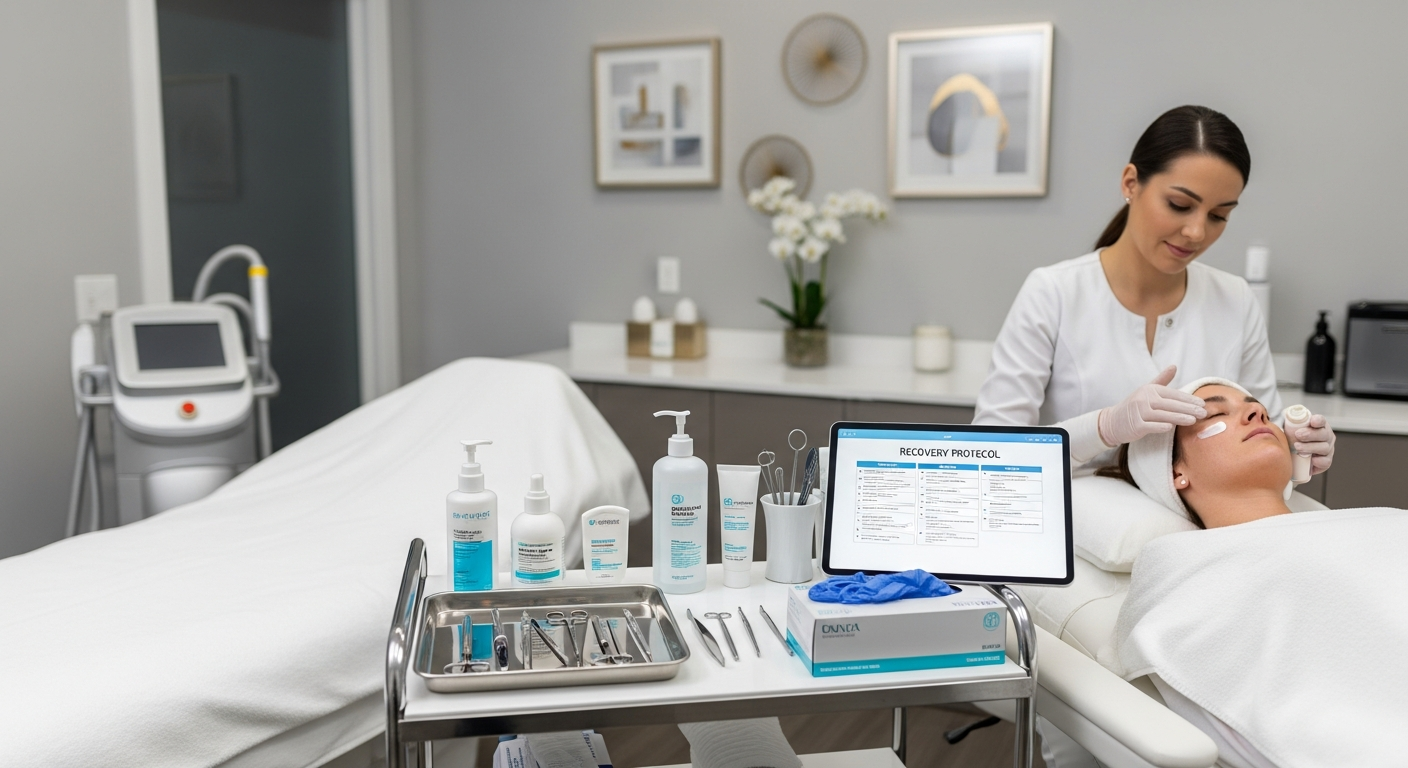
Post-Treatment Management in Med Spa Facilities
Post-treatment management in med spa settings refers to the standardized clinical protocols used to monitor recovery and mitigate side effects following aesthetic procedures. These systems focus on controlling inflammation, managing erythema, and accelerating tissue repair after laser treatments, microneedling, and chemical peels to ensure consistent patient outcomes and minimize downtime.
Standardizing Post-Laser Recovery Protocols
Effective recovery after laser resurfacing or light-based therapies requires immediate thermal regulation. Med spa clinicians must implement cooling protocols to dissipate residual heat and prevent prolonged thermal injury to surrounding tissue.
Standardized workflows include the application of occlusive barriers and specialized hydrators that support the epidermal layer. Monitoring for excessive erythema or edema during the first 48 hours is critical for identifying abnormal inflammatory responses.
Clinical supervisors should ensure that all patients receive written instructions regarding sun avoidance and gentle cleansing. Consistency in these instructions reduces the risk of post-inflammatory hyperpigmentation across the patient base.
Microneedling Downtime Management
Post-treatment management in med spa environments for microneedling focuses on the closure of micro-channels. The primary clinical objective is to maintain a sterile environment while the skin’s natural barrier function restores itself.
Inflammation management typically involves avoiding active ingredients like retinoids or exfoliating acids for several days. Standardized protocols prioritize hydration and non-comedogenic protection to prevent secondary infections or irritation.
Providers must educate patients on the expected progression of redness and minor swelling. A structured follow-up schedule allows the clinical team to verify that the healing process aligns with established recovery benchmarks.
Chemical Peel Aftercare Systems
Managing the recovery from chemical peels requires a systematic approach to controlled desquamation. Clinical protocols must address the different depths of peeling and the corresponding levels of skin sensitivity following the procedure.
The post-treatment system emphasizes pH balance and lipid replacement to soothe the treated area. Clinicians must strictly prohibit manual peeling of the skin by the patient to avoid scarring and uneven pigmentation.
Standardization ensures that every patient utilizes the same gentle cleansing and moisturizing frequency. This uniformity allows med spa directors to troubleshoot complications more effectively by narrowing down variables in the recovery phase.
Managing Inflammation and Erythema
Persistent inflammation and erythema are the most common challenges in aesthetic recovery. Clinical management involves the use of cold compresses and topical agents designed to constrict blood vessels and calm the skin.
Standardized assessment scales help providers quantify the degree of redness. If erythema exceeds the expected duration for a specific procedure, med spa protocols should trigger a clinical review by the supervisor.
Standardized Recovery Workflows
A successful med spa relies on protocol consistency over individual provider judgment. Standardized workflows include pre-printed aftercare kits, digital follow-up reminders, and mandatory 24-hour check-in calls for aggressive treatments.
These systems ensure that every patient receives the same high level of clinical care regardless of which provider performed the treatment. Documentation of the recovery progress is essential for maintaining clinical standards and safety.
-
Core Elements of Med Spa Recovery:
- Strict adherence to sun protection and UV avoidance.
- Avoidance of high-intensity heat or exercise for 48 hours.
- Use of gentle, non-irritating cleansers and barrier creams.
- Clear communication regarding expected downtime and side effects.
