Med Spa Infection Control: Essential Safety Protocols
Med spa infection control is a systematic set of clinical protocols designed to eliminate pathogens and prevent the spread of infections during aesthetic treatments. These practices include OSHA-aligned surface disinfection, proper instrument sterilization, and rigorous hand hygiene to ensure a sterile environment for both practitioners and clients within the facility.
Standard Precautions for Treatment Safety
Consistent hand hygiene is the foundation of any med spa infection control program. Practitioners must wash hands thoroughly before and after every client contact using antimicrobial soap or approved sanitizers.
Personal Protective Equipment (PPE) provides a necessary barrier between the practitioner and the client. Gloves must be changed between every procedure and whenever they become compromised or soiled during a clinical treatment.
Facial masks and eye protection should be utilized during procedures where splashing or aerated particles are likely. This protects the mucous membranes of the practitioner from potential exposure to bloodborne pathogens.
OSHA-Aligned Surface Disinfection
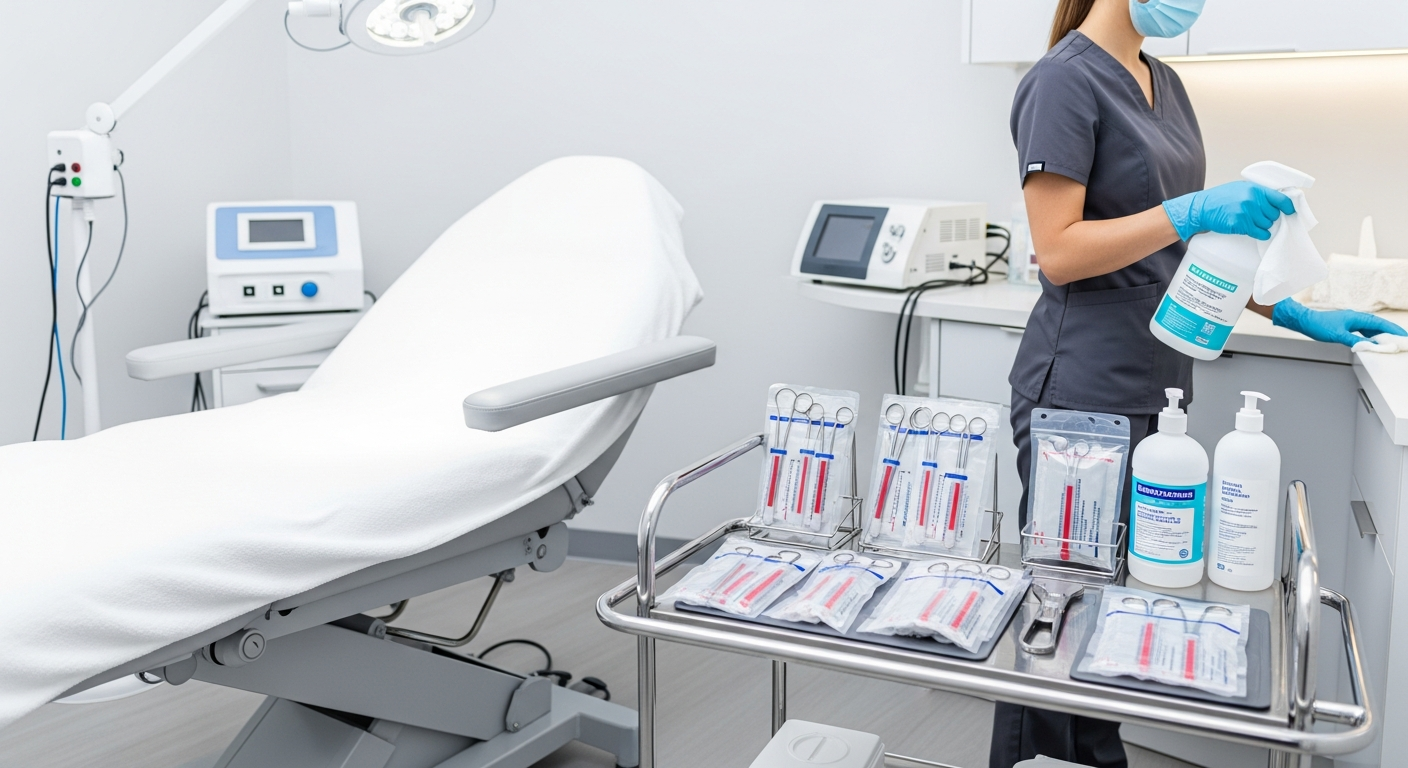
Treatment surfaces must be cleaned and disinfected after every session to prevent pathogen transmission. This includes aesthetic beds, counters, and any equipment touched or used during the clinical procedure.
Using EPA-registered disinfectants ensures that environmental surfaces are free from viruses and bacteria. Dwell times, or the time a surface remains wet with disinfectant, must be strictly followed according to instructions.
High-touch areas such as door handles, light switches, and magnifying lamps require frequent cleaning throughout the day. A dedicated sanitation log helps the clinical team track and verify that these disinfection tasks are completed.
Sterilization Standards for Clinical Tools
Any instrument that penetrates the skin or contacts mucosal membranes requires high-level sterilization. Heat-based sterilization through a monitored autoclave is the standard for reusable metal tools in a med spa setting.
Sterilization pouches must include chemical indicators to verify that the required temperature and pressure were reached. Detailed logs should be maintained to track every sterilization cycle performed within the clinical facility.
-
Sterilization Best Practices:
- Monitor autoclave biological indicators weekly to ensure efficacy.
- Store sterilized tools in a dry, dust-free environment until use.
- Inspect every package for integrity before opening it for a treatment.
Preventing Cross-Contamination in Med Spas
Establishing clear “clean” and “dirty” zones within the treatment room prevents the accidental spread of contaminants. All necessary supplies should be gathered before the treatment begins to minimize movement and touchpoints.
Single-use items, such as needles and lancets, must be disposed of immediately in puncture-resistant sharps containers. These containers must be located as close as possible to the point of use for immediate disposal.
Clinical waste should be handled according to local biohazard regulations to ensure staff and community safety. Systematic waste management prevents the accumulation of contaminated materials in high-traffic areas of the med spa.
