Navigating Med Spa Regulations and Compliance Requirements
Med spa regulations are state-specific legal frameworks that govern the ownership, supervision, and operation of medical aesthetic clinics in the United States. These laws typically mandate that medical spas operate under a licensed physician’s oversight, adhere to Corporate Practice of Medicine doctrines, and ensure all practitioners perform treatments within their legal scope of practice.
Understanding State-Specific Med Spa Laws
In the United States, med spa regulations are primarily governed at the state level by medical and nursing boards.
Many states enforce the Corporate Practice of Medicine (CPOM) doctrine, which prohibits non-physicians from owning a medical practice.
Owners must verify if their state requires a professional corporation or allows traditional business structures for aesthetic clinics.
Medical Direction and Supervision Requirements
A medical director is a licensed physician responsible for the clinical oversight and safety of the med spa.
State laws define how many clinics a single director can supervise and whether they must be physically present.
Supervision requirements ensure that all medical procedures, such as neurotoxin injections, are performed under proper guidance.
The Role of the Medical Director
The medical director establishes clinical protocols and assumes ultimate responsibility for patient outcomes and safety.
They must conduct or delegate a “good faith exam” before any new patient receives a medical aesthetic treatment.
Failure to maintain active medical direction can result in heavy fines or the loss of professional licenses.
Mid-Level Practitioner Oversight
Nurse practitioners (NPs) and physician assistants (PAs) often serve as the primary providers in a med spa setting.
Depending on the state, these practitioners may have full practice authority or require a formal collaborative agreement.
Understanding these specific delegation rules is vital for maintaining a legally compliant clinical workflow.
Legal Scope of Aesthetic Practice
Licensing boards strictly define which procedures can be performed by RNs, LPNs, or licensed estheticians.
For example, some states allow estheticians to perform laser hair removal, while others classify all lasers as medical devices.
Practicing outside of one’s legal scope can lead to charges of practicing medicine without a license.
Standard Operating Procedures and Documentation
Comprehensive documentation is the foundation of regulatory compliance and serves as protection during legal disputes.
Clinics must maintain written Standard Operating Procedures (SOPs) for every medical treatment offered on-site.
These protocols must be reviewed, updated annually, and signed by the medical director to remain valid.
- Patient Consents: Detailed forms explaining risks, benefits, and alternatives for every procedure.
- Treatment Records: Accurate logs of settings used, product lot numbers, and anatomical injection sites.
- Adverse Event Logs: Formal documentation of any unexpected side effects or patient complications.
Inspection Readiness and Regulatory Audits
State boards may conduct unannounced inspections to ensure the facility meets health and safety standards.
Inspectors look for proper biohazardous waste disposal, sterile equipment storage, and current practitioner licenses.
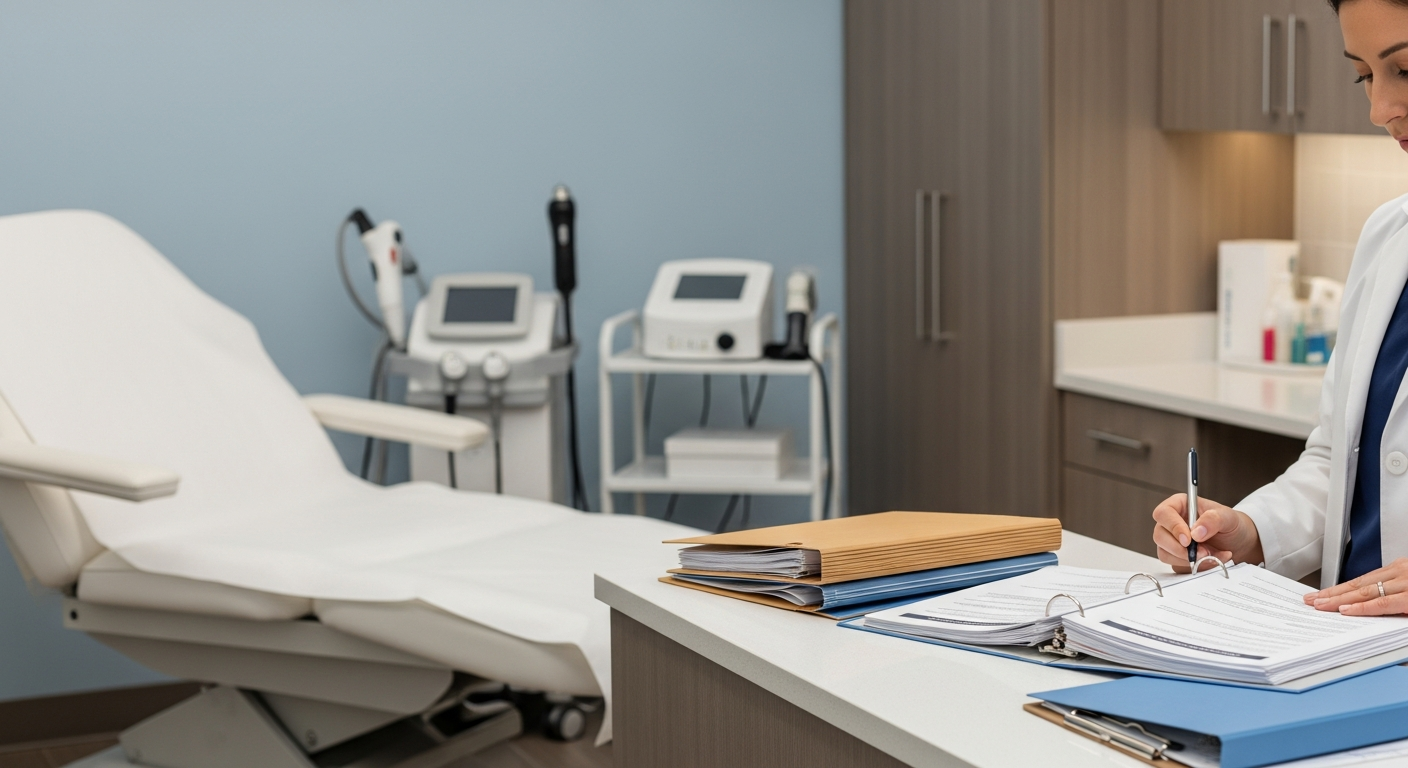
Maintaining organized compliance binders ensures the clinic is always prepared for a regulatory audit or site visit.
Regular internal audits help identify gaps in compliance before they become liabilities for the business.
Owners should prioritize ongoing education to stay current with evolving state legislation and board rulings.
Compliance is a continuous process that protects both the patient and the long-term viability of the med spa.
