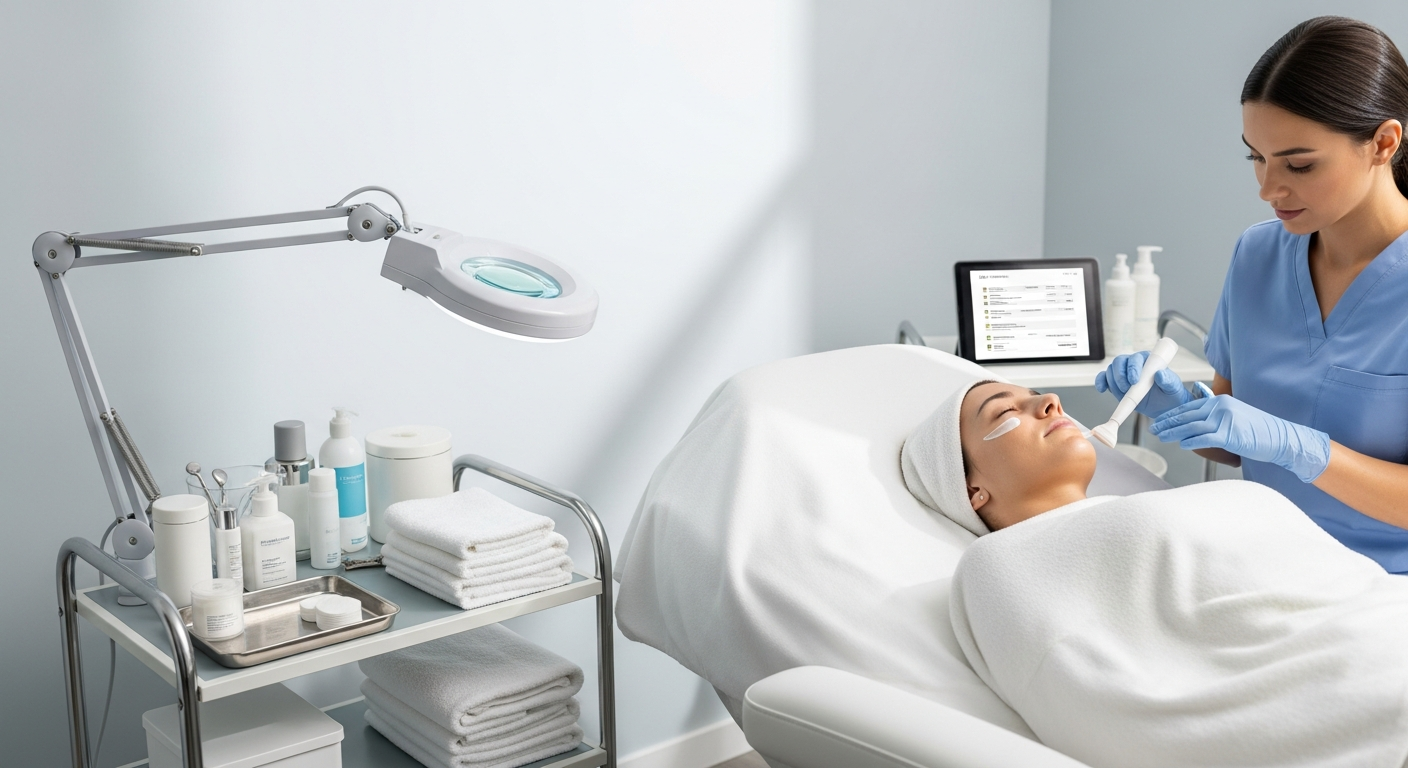
Clinical Post-Treatment Management in Med Spas
Post-treatment management in med spas involves standardized clinical protocols designed to monitor recovery, minimize complications, and manage inflammatory responses following aesthetic procedures. These systems ensure consistent patient outcomes through structured aftercare instructions, controlled downtime monitoring, and professional oversight of the healing process across various laser, microneedling, and chemical treatments.
Standardized Recovery Protocols for Laser Treatments
Effective management of laser-induced thermal injury requires immediate clinical intervention. Standardized protocols focus on heat dissipation and the stabilization of the epidermal barrier to prevent secondary complications.
Clinical supervisors must implement strict timelines for cooling the skin post-procedure. Reducing the internal tissue temperature quickly helps mitigate prolonged erythema and reduces the risk of post-inflammatory hyperpigmentation.
Managing Erythema and Edema
Managing erythema involves monitoring the vascular response to thermal energy. Providers should document the duration and intensity of redness to ensure it aligns with expected clinical benchmarks.
Localized edema is a common inflammatory response in a med spa setting. Standardized elevation and cold compression protocols help resolve swelling within the first forty-eight hours of the recovery window.
Microneedling Downtime Management
Microneedling creates controlled micro-injuries that trigger a wound-healing cascade. Post-treatment management in med spas focuses on protecting these channels from environmental pathogens and preventing transepidermal water loss.
Downtime management systems prioritize hydration and barrier restoration. Clinical staff must ensure patients follow a “no-touch” policy for several hours to allow the micro-channels to close naturally.
Inflammation Control and Barrier Repair
The primary goal during the first twenty-four hours is to modulate the inflammatory response. Standardized workflows involve applying occlusive or semi-occlusive dressings that support the natural repair process.
Med spa providers must monitor for excessive inflammation that exceeds standard clinical expectations. Consistency in aftercare documentation allows supervisors to track healing rates across the entire patient population.
Chemical Peel Aftercare Systems
Chemical peel recovery is defined by controlled desquamation and pH stabilization. Clinical management systems focus on preventing premature peeling, which can lead to scarring or uneven texture.
Standardized instructions for chemical peels emphasize the avoidance of mechanical exfoliation. Patients must be educated on the timeline of skin shedding to ensure they do not interfere with the biological process.
- Phase 1: Stabilization of the skin surface pH.
- Phase 2: Controlled exfoliation and epidermal turnover.
- Phase 3: Barrier re-fortification and protection.
Implementing Clinical Management Workflows
Consistency in post-treatment management in med spas is achieved through written workflows. Relying on standardized protocols rather than individual provider judgment ensures safety and predictable results.
Every procedure must have a corresponding digital or physical checklist. These checklists guide the provider through the immediate post-procedure assessment and the delivery of standardized home-care instructions.
Documentation and Follow-Up Systems
Accurate clinical documentation is the foundation of recovery management. Med spas should record all post-operative skin reactions and patient adherence to the prescribed recovery system.
Standardized follow-up intervals allow the clinical team to intervene if healing deviates from the norm. This proactive approach minimizes the risk of long-term complications and ensures high-quality clinical care.
