Essential Med Spa Risk Management for U.S. Clinics
Med spa risk management is a proactive operational framework used by aesthetic clinics to minimize legal liability and clinical errors. It involves standardized documentation, comprehensive informed consent protocols, and structured incident reporting systems designed to protect the medical director’s license and the business from malpractice claims and regulatory audits.
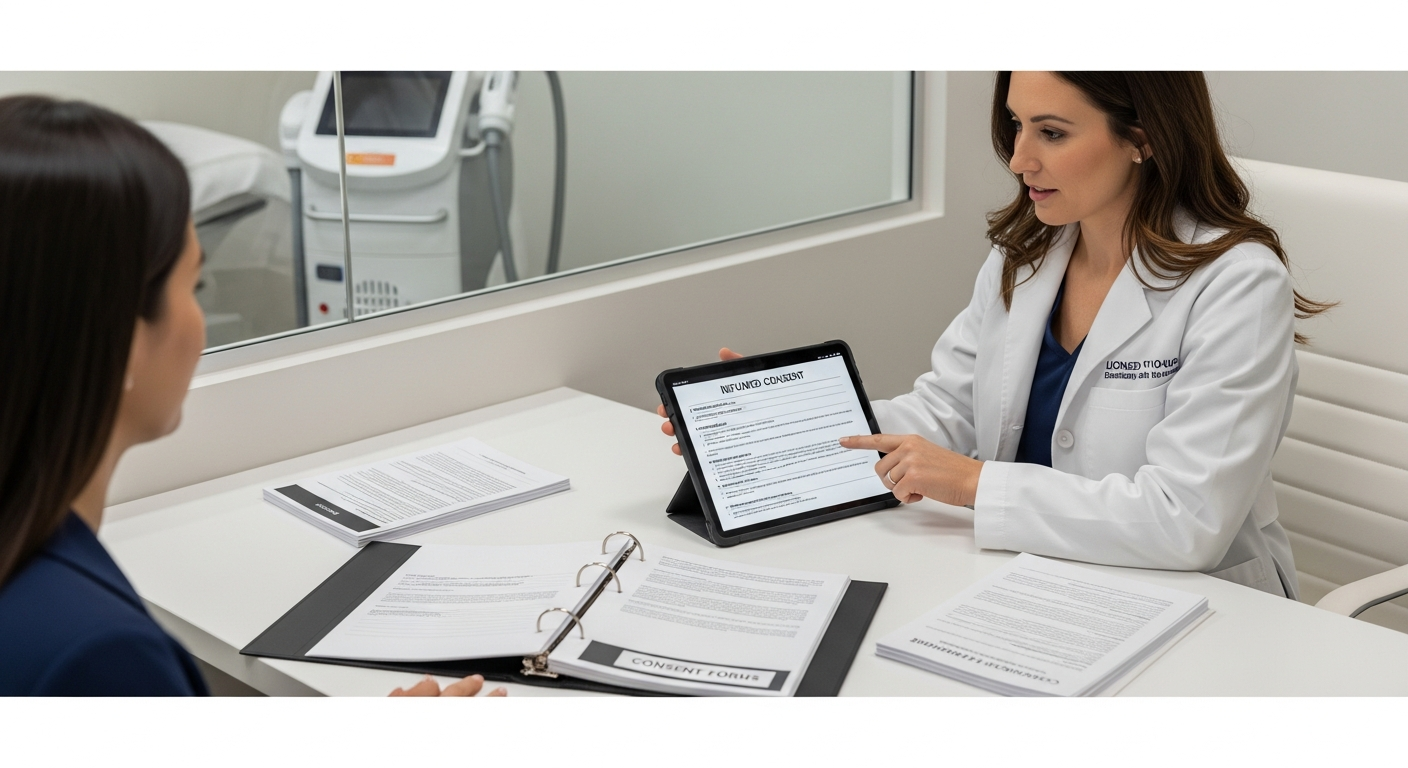
Standardizing Informed Consent Documentation
A robust informed consent process is the primary defense against battery and negligence claims. It must be more than a signature; it is a documented educational interaction between the provider and the patient.
Each treatment requires a specific consent form detailing the risks, benefits, and alternatives. General consent forms are insufficient for high-risk procedures like laser treatments or neurotoxin injections.
- Procedure-Specific Risks: List common and rare adverse outcomes clearly.
- Verbal Affirmation: Document that the patient had the opportunity to ask questions.
- Updates: Refresh consent forms regularly to reflect new clinical safety data.
Comprehensive Recordkeeping Standards
Accurate recordkeeping is the cornerstone of clinical compliance and legal protection. In a med spa, the medical record serves as the definitive evidence of the standard of care provided.
Documentation must include detailed treatment notes, including lot numbers and expiration dates for injectables. This ensures traceability in the event of a manufacturer recall or adverse reaction.
- Visual Evidence: Maintain high-quality pre- and post-treatment photographs for every session.
- Medical History: Require annual updates to patient health histories and medication lists.
- Consistency: Use standardized templates to ensure all providers capture necessary data points.
Managing Adverse Treatment Outcomes
The way a med spa handles a complication directly influences the likelihood of a lawsuit. Establishing a formal protocol for adverse outcomes ensures staff remain calm and professional.
Immediate medical director involvement is necessary when a complication occurs. This demonstrates a high standard of care and prioritizes patient safety over business reputation.
- Immediate Response: Document the clinical intervention used to treat the complication.
- Follow-Up Logs: Record every communication with the patient following the incident.
- Objective Tone: Keep incident notes factual and free from admissions of guilt or blame.
Incident Reporting Systems
A structured incident reporting system allows med spas to identify patterns before they result in major liability. Reporting should include “near misses” as well as actual injuries.
Internal reports should be kept separate from the patient’s medical record in accordance with peer review and quality assurance protections. This facilitates honest internal evaluation.
- Reporting Timelines: Require staff to file incident reports within 24 hours of an event.
- Root Cause Analysis: Review incidents to determine if the cause was training, equipment, or protocol.
- Corrective Action: Document changes made to med spa operations to prevent recurrence.
Liability Reduction Frameworks
Reducing liability requires a comprehensive framework that connects clinical practice with administrative oversight. Clear boundaries on scope of practice are essential for every team member.
Providers must only perform treatments within their legal scope as defined by state boards. Operating outside these boundaries can void professional liability insurance coverage.
- Staff Competency: Maintain records of hands-on training and clinical certifications.
- Supervision Protocols: Clearly define the medical director’s role in daily oversight.
- Standard Operating Procedures: Implement written SOPs for every aesthetic procedure offered.
