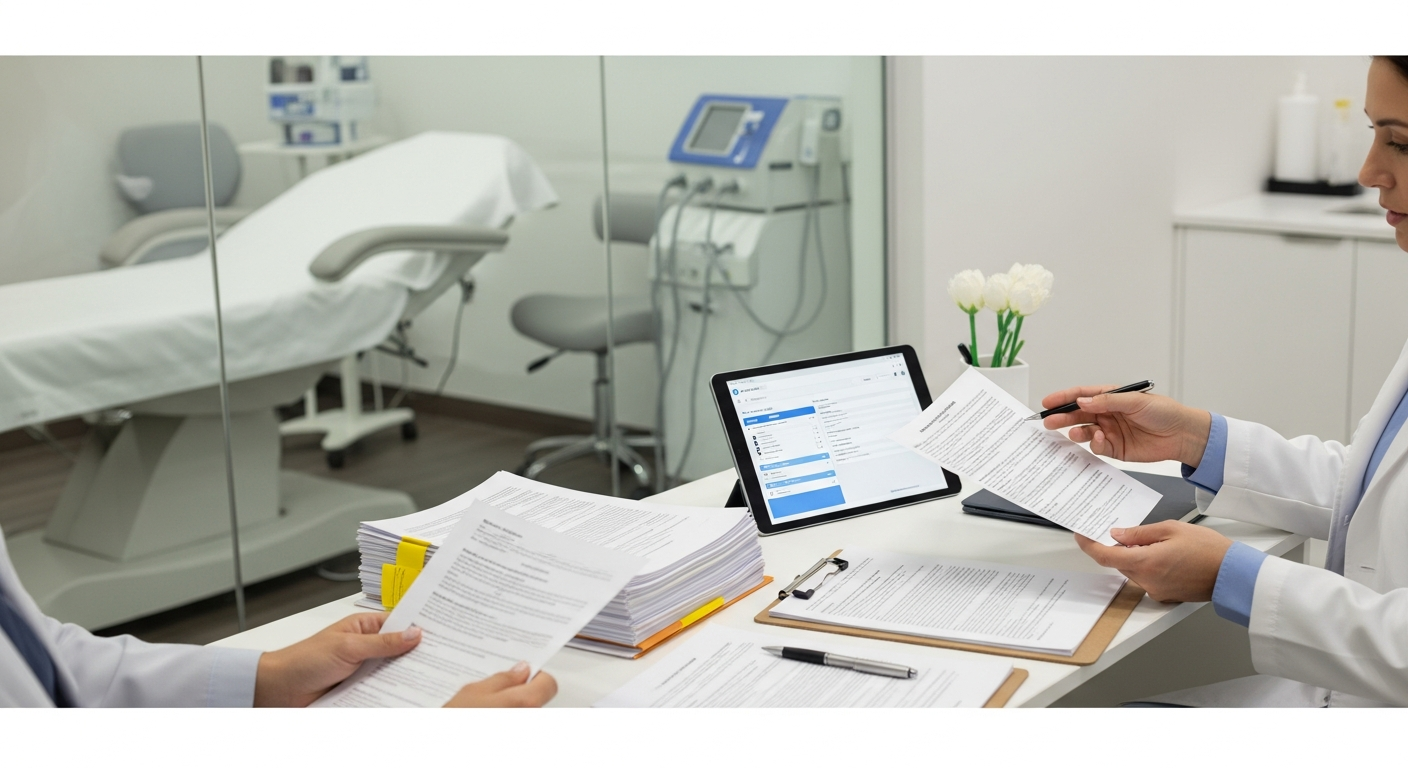
Med Spa Risk Management and Liability Reduction
Med spa risk management is the systematic process of identifying, assessing, and mitigating operational and clinical hazards to protect patients and reduce legal liability. Effective frameworks rely on standardized documentation, robust informed consent protocols, comprehensive incident reporting systems, and strict adherence to recordkeeping standards for all aesthetic procedures.
The Role of Informed Consent in Med Spas
Informed consent is a foundational pillar of med spa risk management. It ensures that every patient understands the potential risks, benefits, and alternatives of a treatment before it begins.
A signed document alone is insufficient for liability protection. The process must involve a verbal discussion where the provider answers all patient questions regarding specific aesthetic outcomes.
Clinics should maintain signed consent forms for every procedure. These documents must be specific to the treatment being performed, such as neurotoxins, dermal fillers, or laser therapies.
Maintaining Recordkeeping Standards for Compliance
Accurate recordkeeping is the best defense against professional liability claims. Every patient encounter should be documented with chronological, detailed notes that reflect the care provided.
Records must include treatment parameters, anatomical locations of injections, and pre- and post-procedure instructions. Consistency across all staff members prevents gaps in the patient history.
Photos are also a critical component of med spa recordkeeping. Standardized images provide objective evidence of treatment results and help manage patient expectations effectively.
Handling Adverse Treatment Outcomes
Adverse outcomes are an inherent risk in aesthetic medicine. How a med spa responds to a complication significantly impacts its total liability exposure and professional reputation.
When a complication occurs, providers must prioritize patient safety and clinical intervention. All follow-up care and communication must be documented immediately and objectively in the medical chart.
Maintaining a professional and supportive tone during adverse events can prevent legal disputes. Detailed notes should capture the clinical findings and the specific steps taken to remediate the issue.
Implementing Incident Reporting Systems
An internal incident reporting system allows med spas to track near-misses and complications. This data is vital for identifying patterns that may require operational changes or additional training.
Reports should be filed for any event that deviates from the expected clinical path. This includes equipment malfunctions, medication errors, or unexpected physical reactions to a treatment.
By reviewing incident reports regularly, medical directors can refine protocols. This proactive approach strengthens the overall med spa risk management framework and improves patient safety outcomes.
Liability Reduction Frameworks and Training
Liability reduction requires a culture of compliance where every staff member understands their role. Regular training on clinical protocols and emergency procedures is essential for safety.
Delegation of tasks must align with state-specific regulations for medical spas. Ensuring that only qualified and trained professionals perform specific treatments reduces the risk of negligence claims.
Operational safeguards, such as routine equipment maintenance and chart audits, further minimize exposure. A structured framework ensures the clinic remains compliant with industry standards and legal expectations.
