Med Spa Risk Management: Essential Liability Strategies
Med spa risk management is a systematic approach to identifying and mitigating legal and clinical liabilities within an aesthetic practice. This framework relies on standardized informed consent, comprehensive treatment documentation, and formal incident reporting to protect practitioners and owners from financial loss, regulatory penalties, and medical malpractice claims.
The Foundation of Informed Consent Documentation
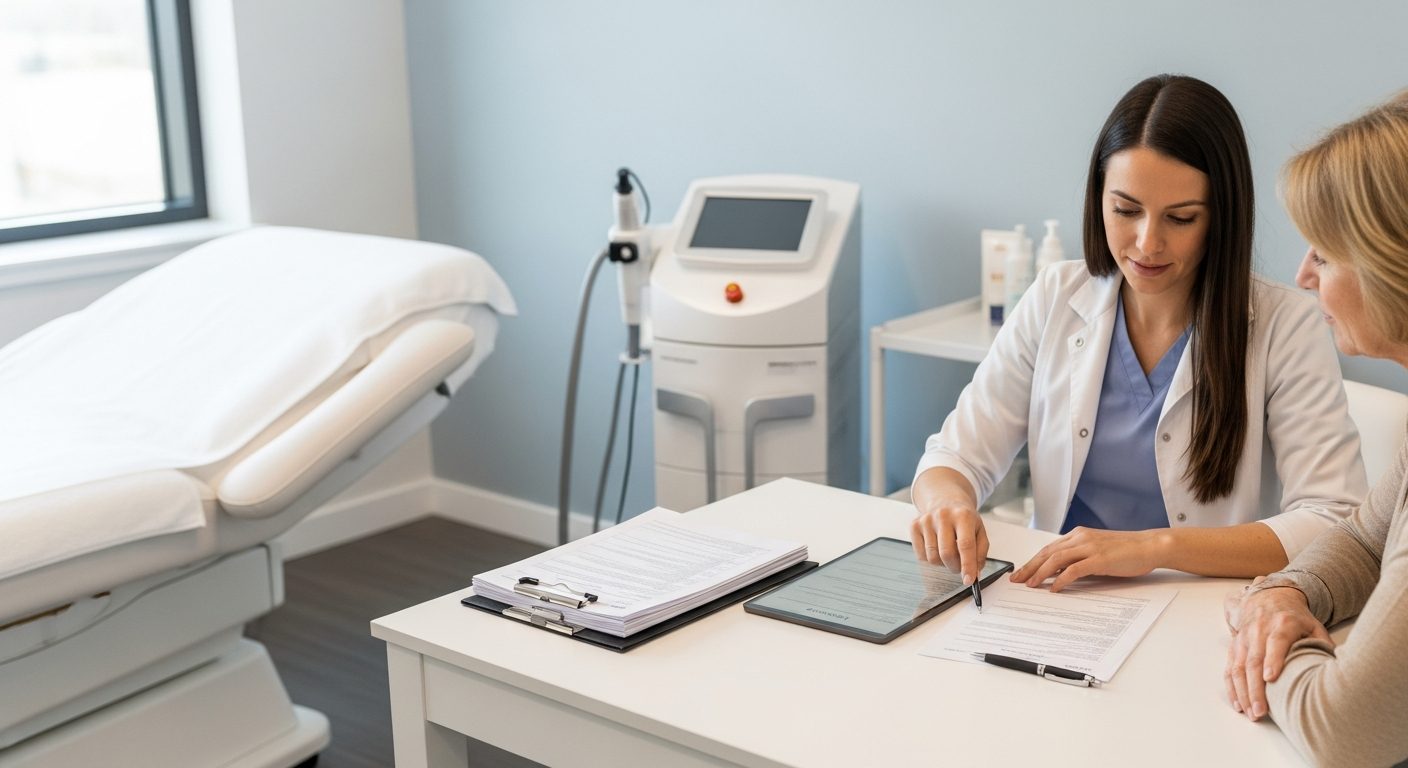
Informed consent is the first line of defense in med spa risk management. It is a documented process where the patient acknowledges they understand the risks, benefits, and alternatives of a specific treatment.
Effective consent forms must be procedure-specific rather than generic. Every injectable, laser treatment, or chemical peel requires a unique document outlining the potential side effects and expected clinical outcomes.
- Detailed Risk Disclosure: Clearly list common and rare complications.
- Patient Understanding: Use plain language to ensure the patient comprehends the information.
- Signature and Date: Ensure every document is signed before the treatment begins.
Recordkeeping Standards for Med Spa Compliance
Meticulous recordkeeping is vital for liability reduction. In the event of a dispute, the treatment record serves as the primary evidence of the standard of care provided by the med spa.
Every patient chart should include the treatment date, the specific products used, lot numbers, and the precise anatomical locations of the application. Accurate notes prevent ambiguity regarding the practitioner’s actions.
The Role of Clinical Photography
Standardized before-and-after photography is a critical component of recordkeeping. These images provide objective evidence of the patient’s baseline condition and the subsequent results of the procedure.
Consistent lighting and positioning are necessary to ensure photos are legally defensible. These records protect the med spa against claims of “no results” or pre-existing conditions blamed on the treatment.
Implementing Internal Incident Reporting Systems
A formal incident reporting system allows a med spa to track adverse events and “near misses.” Documenting these occurrences immediately helps identify patterns that may require operational changes.
Staff should be trained to report any deviation from the standard treatment protocol. This internal transparency allows the medical director to intervene early and mitigate potential patient dissatisfaction or injury.
- Timeline of Events: Document exactly what happened and when.
- Immediate Actions: Record the steps taken to address the incident.
- Follow-up: Note all subsequent communications with the patient.
Handling Adverse Treatment Outcomes
Adverse outcomes are an inherent risk in aesthetic medicine. How a med spa manages these situations directly impacts its total liability exposure and reputation.
When a complication occurs, the practitioner must document the clinical findings and the corrective plan clearly. Professionalism and prompt communication can often prevent a clinical complication from escalating into a legal claim.
Post-Procedure Follow-Up Protocols
Structured follow-up protocols demonstrate a commitment to patient safety. Following up with patients after high-risk procedures ensures that any adverse reactions are identified and treated early.
All follow-up attempts, including phone calls and emails, must be logged in the patient’s permanent file. This proves the med spa exercised due diligence in monitoring the patient’s recovery process.
Liability Reduction through Frameworks
A strong liability reduction framework involves regular audits of patient files and consent forms. Ensuring all staff follow the same documentation standards creates a culture of compliance across the med spa.
Consistency is key to defense. When every practitioner follows the same structured recordkeeping system, the med spa presents a unified and professional front against potential liability threats.
