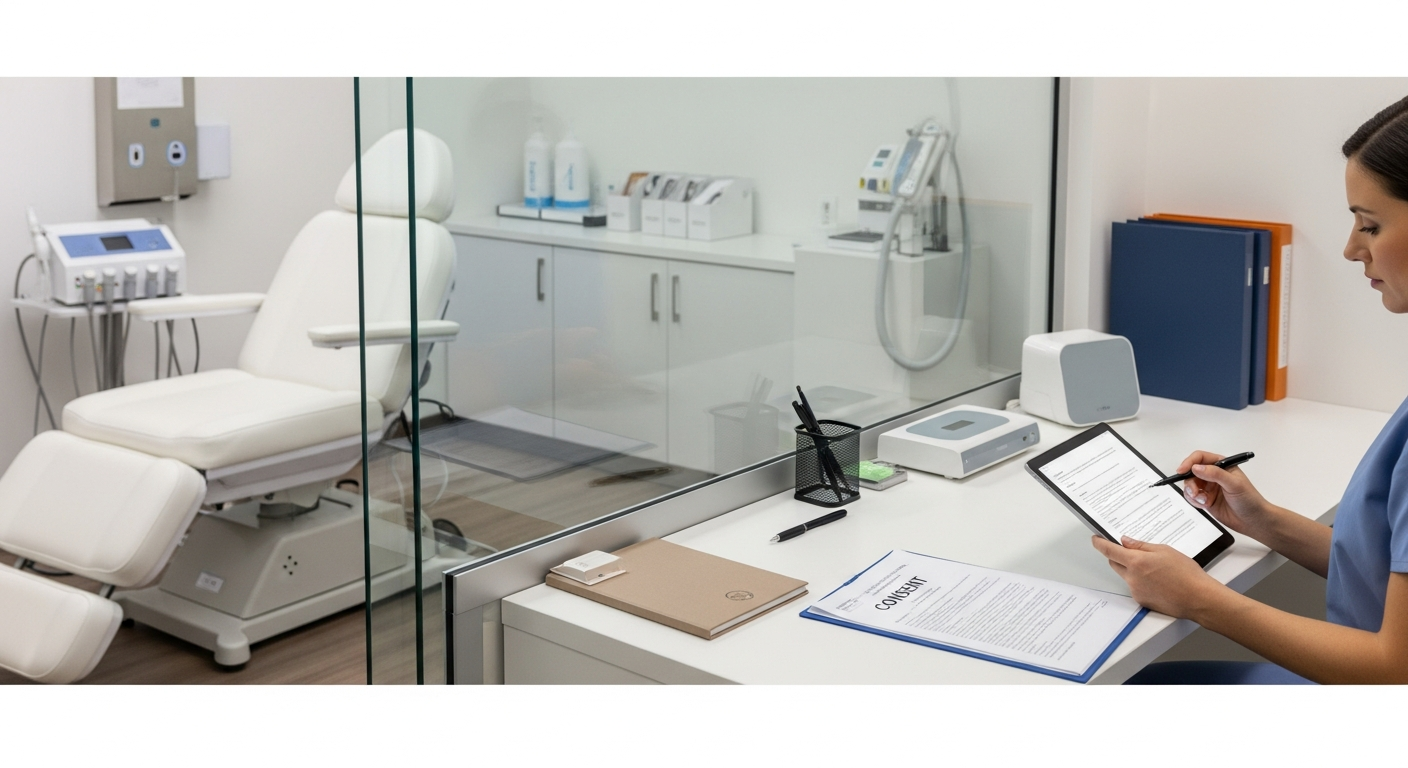
Med Spa Risk Management Strategies for Liability Reduction
Med spa risk management is a strategic operational process focused on identifying and mitigating clinical and legal liabilities in aesthetic practices. It involves implementing standardized documentation, comprehensive informed consent, and incident reporting protocols to protect medical directors and owners from malpractice claims while maintaining strict regulatory compliance across the United States.
The Foundation of Informed Consent Documentation
Informed consent is the first line of defense in med spa risk management. It is more than a signed paper; it is a documented conversation between the provider and the patient.
A legally sound consent form must clearly outline the specific risks, expected benefits, and potential alternatives to the proposed aesthetic treatment.
Providers should document that the patient had the opportunity to ask questions and expressed a clear understanding of the possible adverse outcomes before proceeding.
Essential Elements of Aesthetic Consent Forms
- Detailed description of the specific procedure being performed.
- List of common and rare side effects associated with the treatment.
- Documentation of the patient’s medical history and current medications.
- Clear statement regarding the elective nature of cosmetic procedures.
Implementing Robust Incident Reporting Systems
When an adverse outcome occurs, the speed and accuracy of the med spa response determine the level of liability exposure.
A formal incident reporting system ensures that every unexpected event is tracked, analyzed, and managed according to professional standards.
Internal reports should remain objective, focusing on the facts of the event, the immediate corrective actions taken, and the follow-up plan for the patient.
Managing Adverse Treatment Outcomes
Staff must be trained to recognize complications, such as vascular occlusions or skin burns, and trigger the established medical emergency protocol immediately.
Documentation during an adverse event should include high-resolution photography, a timeline of symptoms, and all communication shared with the supervising medical director.
Prompt and empathetic communication with the patient can often prevent a clinical complication from escalating into a formal legal dispute.
Recordkeeping Standards for Regulatory Compliance
Consistent recordkeeping is the backbone of med spa risk management. Incomplete or messy charts are often viewed by courts as evidence of substandard care.
Every patient interaction, including phone consultations and post-treatment follow-up calls, must be logged in the permanent medical record.
Standardized charting ensure that any provider or auditor can clearly understand the treatment plan, the products used, and the clinical rationale for the service.
Best Practices for Aesthetic Charting
- Use standardized templates for common procedures like neurotoxins and fillers.
- Record lot numbers, expiration dates, and exact injection sites for all products.
- Maintain “before and after” photos taken with consistent lighting and angles.
- Ensure all entries are time-stamped and electronically signed by the performing provider.
Frameworks for Reducing Long-Term Liability
A successful med spa risk management framework relies on clear Standard Operating Procedures (SOPs) that define the scope of practice for all staff members.
Medical directors should perform regular audits of patient charts to ensure documentation meets state board requirements and internal safety policies.
Ongoing staff training on emergency protocols and new equipment safety is essential for maintaining a safe clinical environment and reducing operational risk.
