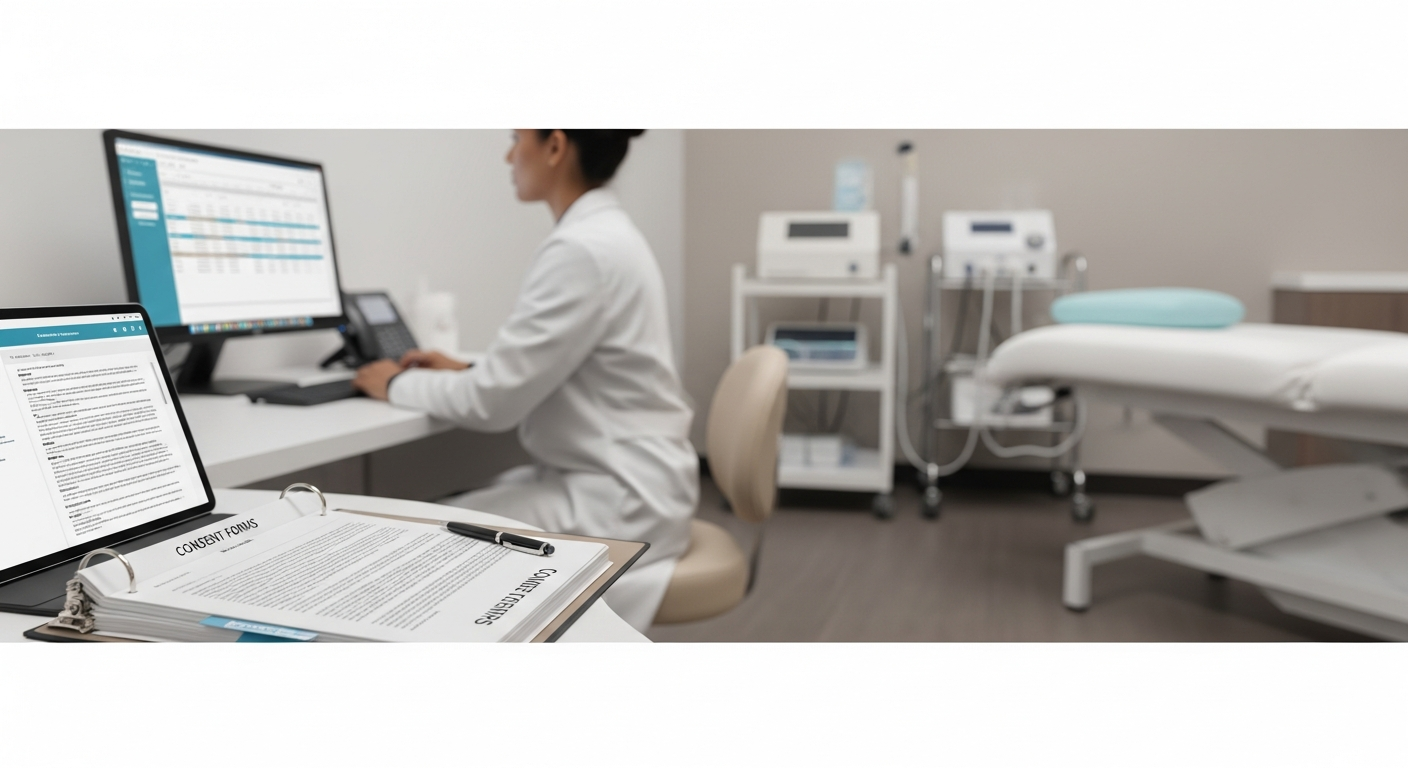
Med Spa Risk Management Strategies for U.S. Clinics
Med spa risk management is a systematic strategy used by aesthetic clinics to identify, assess, and mitigate operational and clinical liabilities. It involves implementing standardized documentation, rigorous informed consent procedures, and formal incident reporting protocols to protect the business from legal claims while maintaining high standards of patient care and safety.
The Role of Informed Consent in Med Spa Risk Management
Informed consent is more than a signed form; it is a communication process between the practitioner and the patient.
A robust consent process ensures the patient understands the specific risks, benefits, and alternatives to a treatment.
Documenting this dialogue helps establish that the patient assumed the risks associated with the aesthetic procedure.
Med spa owners should ensure that consent forms are procedure-specific rather than generic.
Forms must be signed and dated before any treatment begins to remain legally defensible.
Standardized updates to these forms should occur whenever clinical protocols or manufacturer guidelines change.
Implementing Structured Incident Reporting Systems
A formal incident reporting system is a critical component of med spa risk management.
This system tracks any event that deviates from the expected clinical outcome, such as burns or allergic reactions.
Immediate documentation of these events allows the medical director to intervene and mitigate potential harm.
- Timely Recording: Log all adverse events within 24 hours of discovery.
- Objective Data: Record only factual observations without assigning blame or admitting fault.
- Follow-up Documentation: Detail every step taken to remedy the situation and the patient’s response.
Handling Adverse Treatment Outcomes
When a patient experiences an adverse outcome, clear communication is the most effective way to reduce liability.
Practitioners must document the clinical response, including any prescriptions or corrective treatments provided.
Consistency in these records demonstrates a commitment to the standard of care and patient safety.
Recordkeeping Standards for Liability Reduction
Accurate recordkeeping is the primary defense in any professional liability claim.
Med spa records must include detailed treatment notes, including the specific products used and injection sites.
Consistency across all patient files demonstrates that the clinic follows a high standard of professional care.
Digital records should be timestamped and secured to prevent unauthorized alterations.
Retaining these records according to state-specific statutes of limitations is essential for long-term protection.
A well-organized filing system ensures that documentation is easily retrievable during a compliance audit.
Visual Documentation Requirements
Before-and-after photographs are essential evidence in med spa risk management.
These images provide an objective baseline for the patient’s condition prior to receiving treatment.
Standardized lighting and angles ensure that the visual documentation is reliable and professional.
Establishing Operational Compliance Frameworks
Liability reduction requires a framework where every staff member understands their role in safety.
Regular training on documentation standards helps prevent human error in clinical charting.
Medical directors should perform periodic audits of patient files to ensure compliance with internal protocols.
A structured framework also includes maintaining clear protocols for every service offered.
These protocols serve as the roadmap for practitioners and the benchmark for clinical excellence.
When a med spa operates within these guidelines, it significantly reduces its overall liability exposure.
