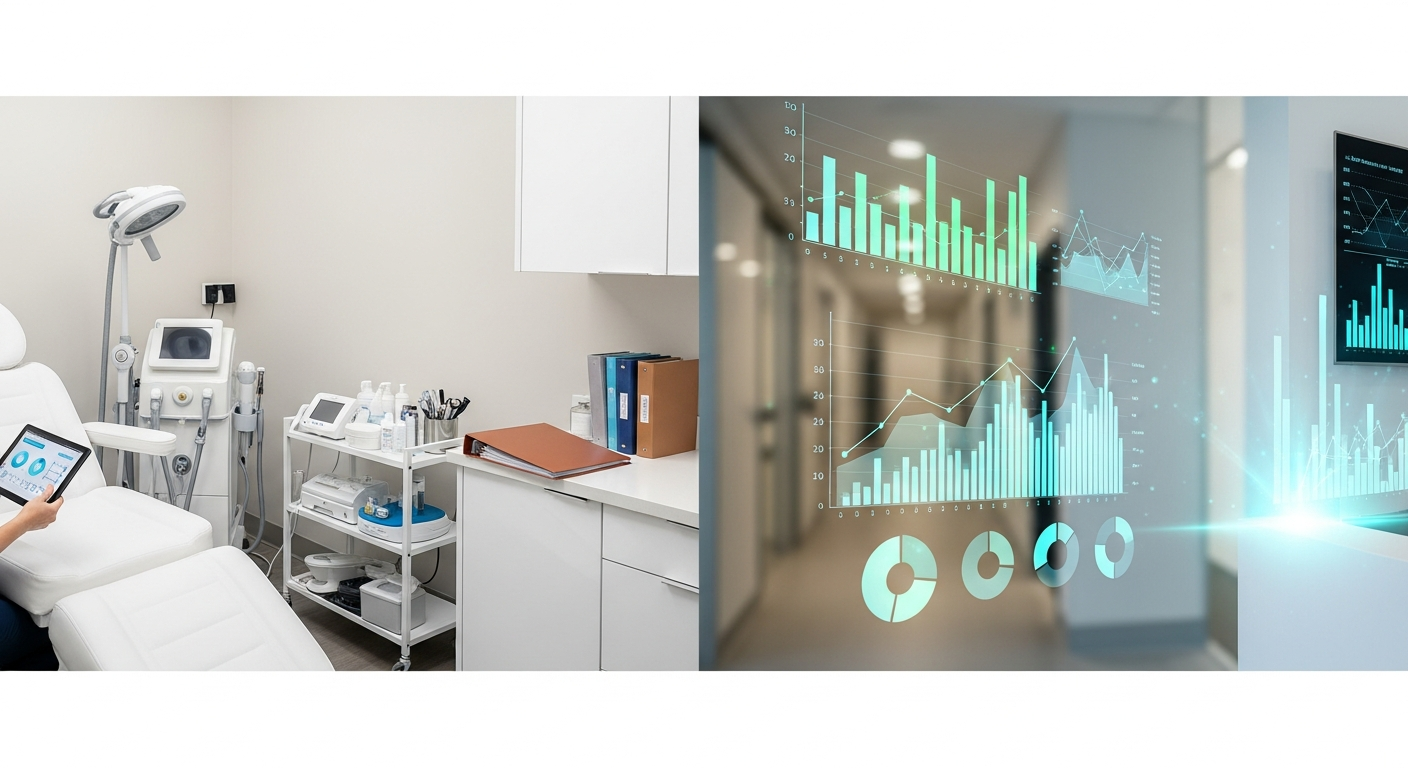
U.S. Med Spa Industry Statistics and Market Analysis
Current U.S. med spa industry statistics indicate a market valuation exceeding $18 billion, with a projected annual growth rate of nearly 10%. Key data points highlight the dominance of aesthetic injectables and laser treatments, driven by increasing consumer demand and advancements in non-invasive clinical protocols across the United States.
Market Growth and Economic Valuation
The U.S. med spa sector represents one of the fastest-growing segments in the healthcare services market. Recent data shows high resilience despite broader economic fluctuations.
Average revenue per med spa location continues to rise annually. This growth reflects increased patient volume and higher average ticket prices for advanced clinical procedures.
Investment activity from private equity firms has accelerated. These entities focus on consolidating independent clinics to leverage economies of scale in the domestic market.
Core Treatment Growth Trends
Injectable Dominance
Neuromodulators and dermal fillers remain the primary revenue drivers for most med spa facilities. Longitudinal data shows a consistent year-over-year increase in injection procedures.
The patient demographic for injectables is expanding into younger age brackets. This shift is primarily attributed to a growing emphasis on preventative aesthetic maintenance.
Energy-Based Device Expansion
Laser hair removal and non-invasive body contouring represent significant secondary revenue streams. Market data indicates high utilization rates for multi-platform energy devices.
Advancements in skin resurfacing technology have shortened recovery times. Consequently, patient adoption rates for fractional CO2 and RF microneedling have reached record levels.
Clinical Safety and Complication Analysis
Data regarding clinical outcomes suggests that complication rates remain low across the U.S. med spa industry. Adverse events are most frequently associated with vascular occlusions.
Structured clinical training and standardized safety protocols correlate with lower incident reports. Facilities utilizing ultrasound guidance for injections show improved safety profiles.
Burn incidents related to energy-based devices are declining as technology improves. Advanced cooling mechanisms and precise energy delivery systems contribute to higher safety standards.
Regulatory Development and Oversight
State medical boards are increasingly refining “corporate practice of medicine” (CPOM) regulations. These legal shifts impact how med spa ownership and supervision are structured.
There is a rising trend toward stricter enforcement of medical director oversight. Regulators are focusing on the physical proximity and involvement of supervising physicians.
Scope of practice regulations vary significantly by state. Current legislative trends suggest a move toward mandatory certification for non-physician providers performing invasive procedures.
Market Development and Investment Insights
The geographic concentration of med spas remains highest in coastal urban centers. However, data shows significant expansion into secondary markets and suburban areas.
Operational stability is increasingly tied to high patient retention rates. Successful med spa models prioritize long-term clinical treatment plans over one-time aesthetic interventions.
Labor statistics indicate a growing demand for qualified aesthetic nurses and mid-level practitioners. Personnel costs remain the largest operational expense for established U.S. clinics.
