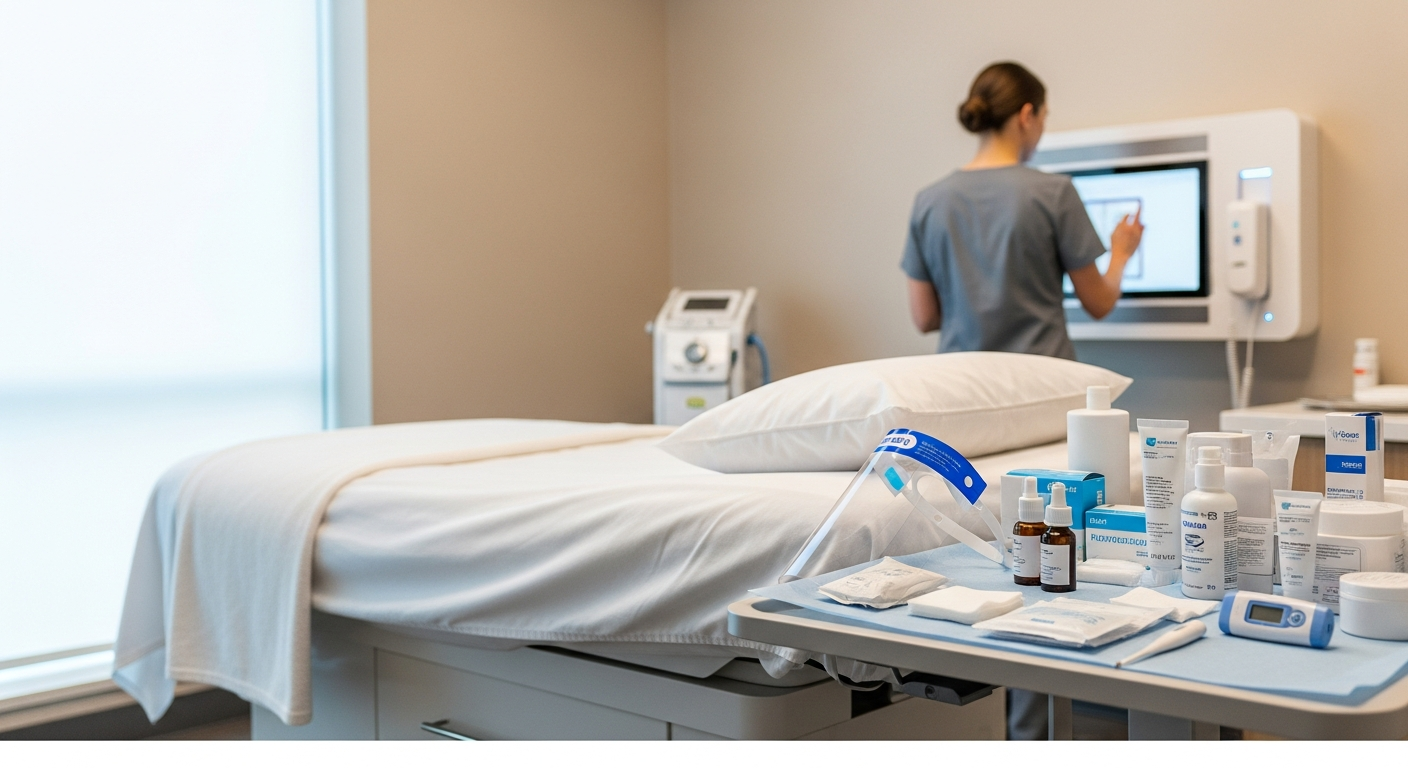
Post-Treatment Management in Med Spas
Post-treatment management in med spas involves the implementation of standardized clinical protocols designed to monitor and support patient recovery following aesthetic procedures. These systems prioritize the reduction of inflammation, management of erythema, and protection of the skin barrier to ensure safe, predictable outcomes across all clinical providers within a facility.
Standardized Recovery Protocols for Laser Treatments
Laser procedures require precise thermal management to prevent prolonged erythema and heat-induced complications. Clinical workflows must prioritize immediate cooling and the application of occlusive barriers to trap moisture.
Standardized protocols ensure every patient receives the same level of care regardless of the provider. This consistency reduces the risk of post-inflammatory hyperpigmentation (PIH) in diverse skin types.
- Thermal Regulation: Use of controlled cooling immediately following laser energy delivery.
- Barrier Maintenance: Application of non-comedogenic emollients to prevent transepidermal water loss.
- Activity Restrictions: Clear instructions regarding heat exposure and exercise for 48 hours.
Microneedling Downtime and Inflammation Systems
Microneedling creates controlled mechanical trauma that requires a specific post-treatment management approach. The focus is on protecting open micro-channels while managing the inflammatory response.
Providers must follow a set timeline for when topical agents can be reintroduced to the skin. Standardized systems prevent patients from applying irritating substances too early in the proliferative phase.
- Channel Closure: Strict 24-hour window where only approved hydrating agents are applied.
- Inflammation Control: Monitoring for normal versus excessive edema during the first 72 hours.
- Sun Protection: Mandatory use of physical mineral blocks once the skin barrier has re-sealed.
Chemical Peel Aftercare and Exfoliation Management
Post-treatment management for chemical peels focuses on the controlled shedding of the epidermis. Clinical systems must prevent patients from manually disrupting the desquamation process.
Standardized workflows include specific check-ins to monitor the depth of the peel’s effect. This ensures that the transition from the inflammatory phase to the remodeling phase occurs without scarring.
- pH Stabilization: Ensuring the skin returns to its natural acidic state post-neutralization.
- Hydration Cycles: Frequent application of bland moisturizers to keep the peeling skin flexible.
- Strict Non-Intervention: Protocols that prohibit picking or pulling at exfoliating tissue.
Managing Erythema and Post-Procedural Edema
Erythema and edema are expected physiological responses in a med spa environment. Management systems must define the threshold between a normal inflammatory response and a clinical complication.
Standardizing the assessment of redness allows clinical supervisors to intervene early if a reaction deviates from the norm. This objective approach removes provider bias from the recovery assessment.
- Visual Assessment Scales: Using standardized charts to grade the severity of redness.
- Patient Education: Providing written timelines of expected swelling and color changes.
- Follow-up Documentation: Recording recovery milestones at 24, 48, and 72-hour intervals.
Implementing Clinical Workflows for Protocol Consistency
Successful post-treatment management in med spas relies on moving away from individual provider judgment. Establishing firm clinical pathways ensures that every patient follows a validated recovery route.
Standard Operating Procedures (SOPs) should be accessible to all clinical staff. This structured environment minimizes errors and ensures that the clinical standard of care is met consistently.
- Digital Checklists: Ensuring all post-care steps are completed and documented in the patient chart.
- Standardized Kits: Providing pre-measured recovery supplies to eliminate patient confusion.
- Staff Training: Regular calibration meetings to ensure uniform assessment of healing skin.
