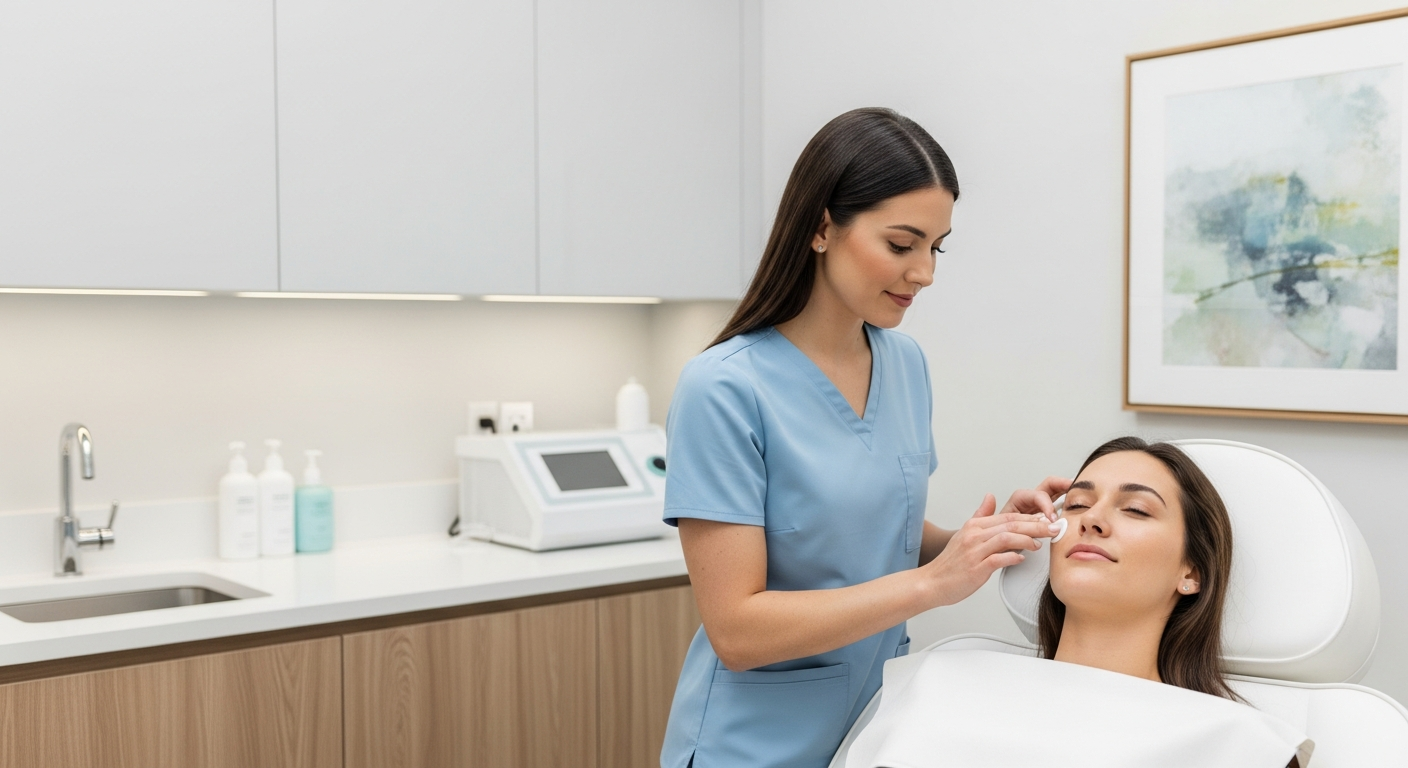
Post-Treatment Management in Med Spa Clinical Protocols
Post-treatment management in med spa facilities involves the systematic application of clinical protocols to guide skin healing after aesthetic procedures. These standardized workflows focus on reducing inflammation, protecting the skin barrier, and monitoring downtime for laser, microneedling, and chemical peel treatments. Consistent recovery systems minimize complications and ensure patient safety across all clinical settings.
Standardized Laser Recovery Protocols
Effective management after laser procedures focuses on thermal regulation and heat dissipation.
Providers must ensure the skin temperature returns to baseline to prevent prolonged inflammation.
Standardized cooling methods should be applied immediately following the treatment session.
Barrier protection is essential during the initial 48 hours of laser recovery.
Clinicians utilize occlusive dressings or breathable ointments to prevent transepidermal water loss.
This phase requires strict avoidance of environmental irritants and heat-inducing activities.
- Thermal Regulation: Cooling the treated area with chilled air or cold compresses.
- Moisture Retention: Applying thick barriers to support the re-epithelialization process.
- UV Shielding: Implementing strict physical sun protection during the healing window.
Microneedling Downtime Management
Managing downtime after microneedling centers on the closure of micro-channels.
Clinical protocols must restrict the use of active ingredients until the skin barrier is intact.
Standard workflows emphasize hydration through non-irritating, soothing topical agents.
Erythema management is a primary goal during the first 24 hours post-microneedling.
Providers should instruct patients to use lukewarm water and avoid abrasive cleansing tools.
Maintaining a sterile environment for the face is critical while channels remain open.
Chemical Peel Aftercare Systems
Post-peel management requires a structured approach to desquamation and skin shedding.
Clinicians must prevent patients from manually removing peeling skin to avoid scarring.
Standardized protocols focus on maintaining high levels of hydration to soften the skin.
The management system should include specific timelines for reintroducing standard skincare.
Aggressive exfoliants or retinoids are strictly prohibited during the active peeling phase.
Consistent application of broad-spectrum protection is mandatory to prevent post-inflammatory hyperpigmentation.
Managing Clinical Inflammation and Erythema
Inflammation is a natural response to aesthetic procedures but must be controlled.
Standardized protocols utilize topical anti-inflammatory agents to reduce persistent redness.
Monitoring the duration of erythema allows providers to distinguish between normal healing and complications.
- Vascular Support: Utilizing soothing ingredients to reduce blood flow to the area.
- Edema Control: Recommending elevated sleeping positions after facial injections or lasers.
- Sensation Monitoring: Tracking reports of burning or itching to ensure typical recovery.
Standardized Recovery Workflows in Med Spas
Consistency in post-treatment management relies on fixed clinical workflows rather than individual judgment.
Every provider in the med spa must follow the same recovery steps for every patient.
This ensures data-driven outcomes and simplifies the identification of clinical outliers.
Documentation is a vital component of a standardized recovery system.
Providers must record the skin’s response at specific intervals during the follow-up period.
Clear communication through written aftercare instructions ensures adherence to the clinical protocol.
- Standardized Kits: Providing pre-arranged clinical aftercare packages for patients.
- Follow-up Schedules: Implementing mandatory 48-hour and 1-week clinical check-ins.
- Triage Protocols: Establishing clear steps for managing unexpected post-treatment reactions.
