Med Spa Infection Control and Clinical Safety Standards
Med spa infection control is the practice of maintaining clinical hygiene through rigorous sanitation, disinfection, and sterilization protocols within an aesthetic facility. These OSHA-aligned systems protect clients and providers from cross-contamination by ensuring that treatment surfaces, tools, and environments are free from infectious pathogens and biological hazards.
Regulatory Standards and OSHA Compliance
Operating a med spa requires strict adherence to Occupational Safety and Health Administration (OSHA) standards. These regulations mandate that facilities protect employees from bloodborne pathogens and environmental hazards.
Compliance begins with a written exposure control plan that outlines specific safety steps. This plan must be updated annually to reflect new clinical procedures and safety technologies.
Staff must receive comprehensive training on the handling of sharps and biohazardous materials. Consistent documentation of this training is a core requirement for federal and state compliance.
Treatment Room Disinfection Systems
Every treatment room must undergo a systematic disinfection process between every client session. This prevents the transfer of bacteria and viruses between individuals.
Clinical providers must use EPA-registered disinfectants that are specifically rated for healthcare environments. These solutions must remain wet on surfaces for the full contact time specified by the manufacturer.
High-touch areas, such as treatment tables, stools, and counter surfaces, require the most attention. All porous materials should be replaced with non-porous alternatives that can be effectively sanitized.
Sterilization Standards for Reusable Tools
Tools that penetrate the skin or contact mucous membranes must undergo full sterilization. This process goes beyond simple disinfection to destroy all forms of microbial life.
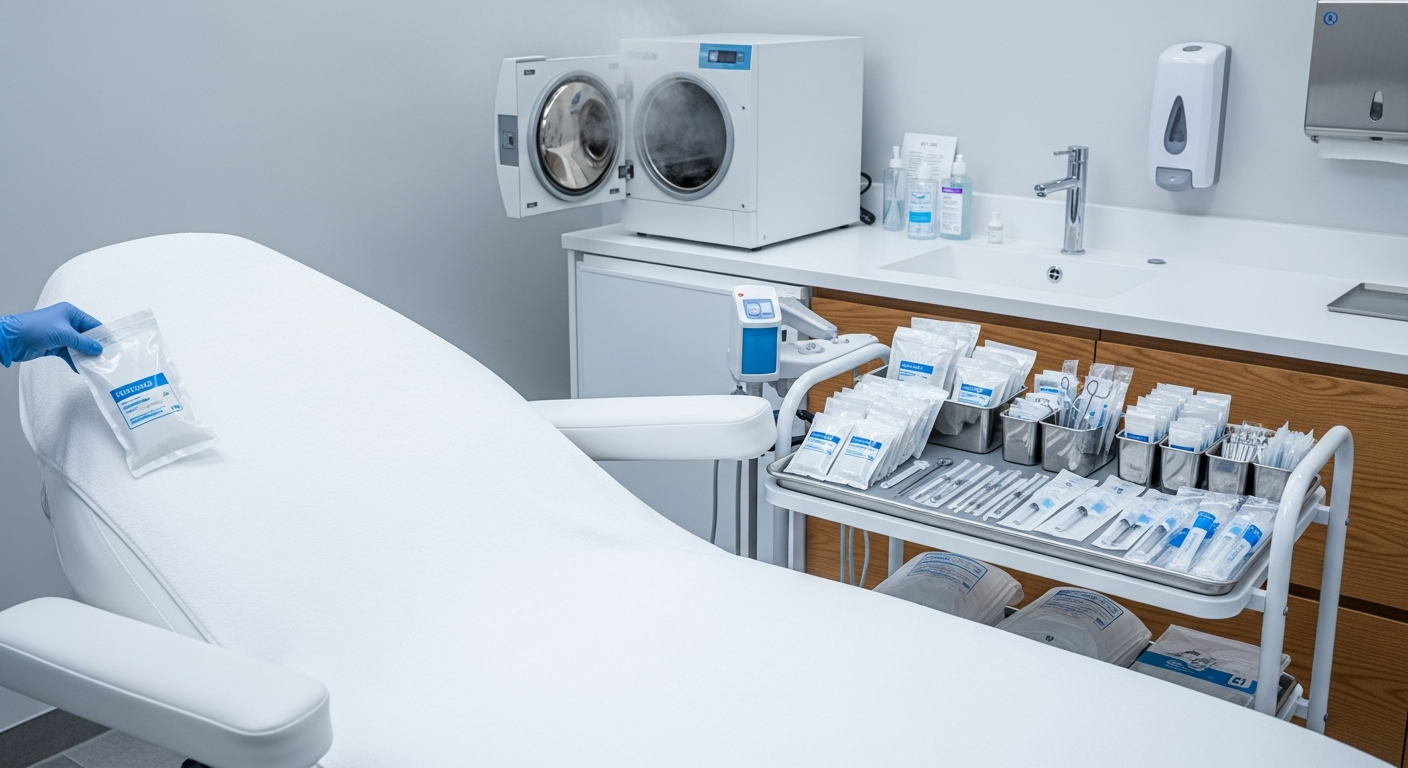
The standard for med spa sterilization is the use of an autoclave, which utilizes steam and pressure. Tools must be cleaned of all visible debris before being placed in the sterilization chamber.
Sterilized items should be stored in sealed pouches with chemical indicators that confirm the process was successful. Detailed logs of every sterilization cycle must be maintained for safety audits.
Cross-Contamination Prevention Strategies
Cross-contamination is the primary risk in an aesthetic setting and requires a multi-layered prevention strategy. Hand hygiene is the most critical component of this system.
Providers must wash hands before and after every client contact and whenever gloves are changed. Personal Protective Equipment (PPE), including gloves and masks, must be used correctly and discarded after one use.
Single-use items, such as gauze, applicators, and needles, must never be reused or repurposed. These items should be disposed of immediately in appropriate biohazard or sharps containers.
Clinical Safety Documentation and Audits
A robust med spa infection control program relies on meticulous record-keeping. This provides a paper trail for safety compliance and clinical accountability.
Facilities should maintain Safety Data Sheets (SDS) for every chemical and disinfectant used on the premises. These sheets must be easily accessible to all staff members at all times.
Internal safety audits should be conducted monthly to identify potential gaps in the sanitation chain. Regular reviews ensure that all protocols are being followed consistently by every member of the team.
