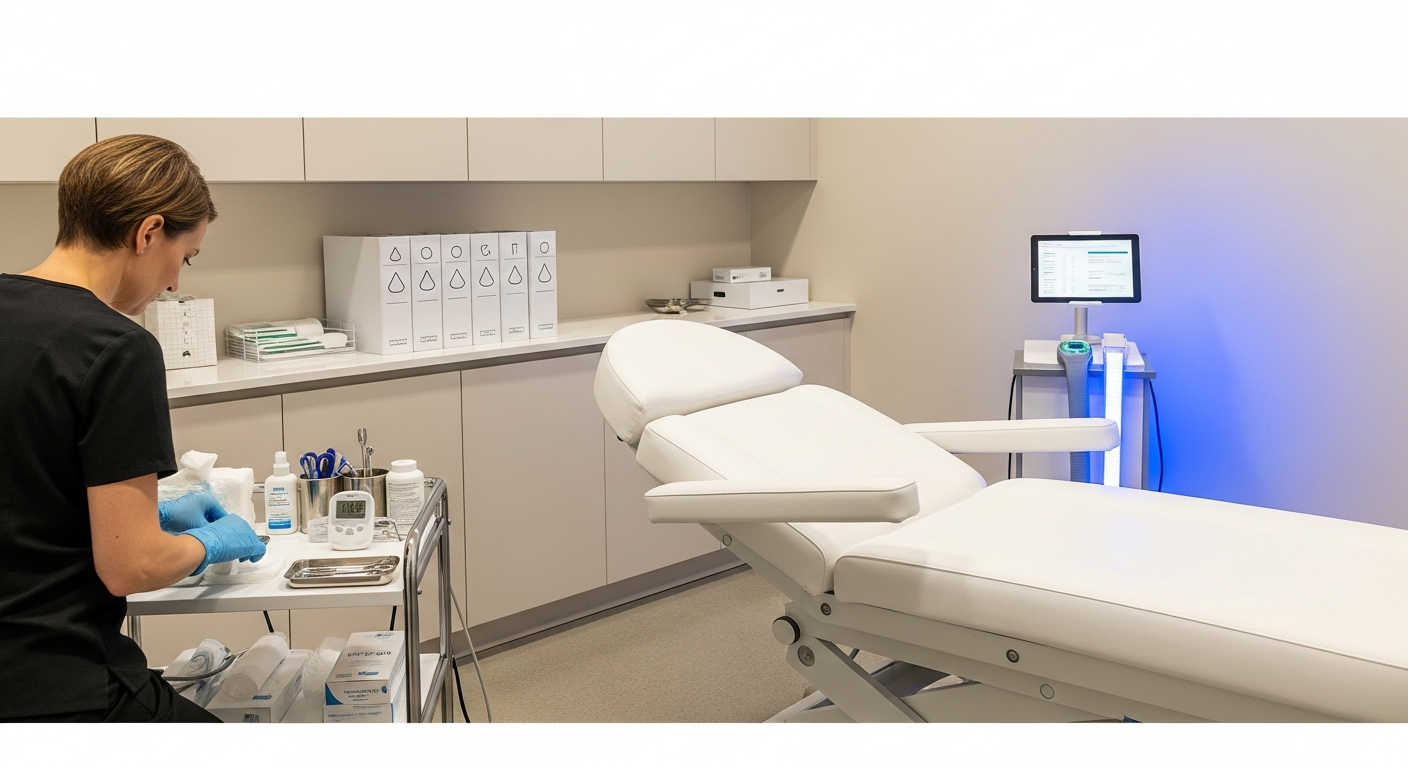
Post-Treatment Management in Med Spas
Post-treatment management in med spas involves implementing standardized clinical protocols to oversee patient recovery after aesthetic procedures like lasers, microneedling, and chemical peels. This system ensures consistent oversight of inflammation, erythema, and barrier repair, reducing complications and downtime through reproducible clinical workflows across the entire aesthetic provider team.
Standardized Post-Laser Recovery Protocols
Clinical management after laser resurfacing or photo-rejuvenation requires strict adherence to thermal regulation.
Providers must monitor the duration of post-procedure erythema to distinguish between expected inflammation and adverse reactions.
Standardized workflows include immediate cooling measures and the application of occlusive barriers to protect the compromised epidermis.
Patients should follow a specific timeline for heat avoidance to prevent prolonged vasodilation.
Clinical supervisors must ensure that all staff members provide identical instructions regarding activity restrictions.
Consistency in these protocols reduces the risk of post-inflammatory hyperpigmentation across the patient base.
Microneedling Downtime and Barrier Management
Effective post-treatment management in med spas for microneedling focuses on the window of micro-channel closure.
Clinical protocols should dictate a strict 24-hour period where only sterile, approved topicals are applied to the skin.
This prevents the introduction of environmental contaminants into the deeper dermal layers during the initial inflammatory phase.
Managing the mechanical injury involves educating the patient on the difference between healthy “pinkness” and signs of secondary infection.
Standardized recovery systems include scheduled follow-up touchpoints to monitor the transition from inflammation to tissue remodeling.
Providers must emphasize gentle cleansing routines that do not disrupt the forming crust or natural healing cascade.
Chemical Peel Aftercare Systems
Management of chemical peels requires a systematic approach to desquamation and pH restoration.
The primary clinical objective is to prevent premature peeling, which can lead to scarring or uneven pigment distribution.
Staff must be trained to explain the biological timeline of cellular turnover to ensure patient compliance.
Standardized workflows include the use of physical barriers rather than chemical blockers during the initial shedding phase.
Clinical supervisors should implement a checklist for assessing skin sensitivity levels before and after the peeling process.
This ensures that the skin’s acid mantle is restored without excessive irritation from outside variables.
Managing Inflammation and Erythema
Controlling the inflammatory response is a cornerstone of post-treatment management in med spas.
While controlled inflammation is necessary for collagen synthesis, excessive erythema can lead to treatment failure.
Clinical systems should define specific thresholds for when therapeutic intervention is required to calm the skin.
Standardized recovery protocols often include the use of cold compresses and specific sleeping positions to manage edema.
Aesthetic providers must prioritize protocol consistency over individual judgment to maintain a high standard of safety.
Documentation of the resolution of redness is essential for the clinical record and future treatment planning.
Implementing Standardized Recovery Workflows
A successful med spa relies on operationalizing recovery rather than leaving it to chance.
Written clinical protocols ensure that every patient receives the same level of care regardless of their specific provider.
This reduces the internal variance in patient outcomes and strengthens the clinical reputation of the facility.
- Digital Documentation: Standardize the tracking of healing milestones in patient charts.
- Provider Training: Conduct regular reviews of post-treatment protocols to ensure clinical alignment.
- Patient Education: Utilize printed or digital guides that mirror the clinic’s internal recovery standards.
By focusing on system-driven post-treatment management in med spas, clinical supervisors can minimize downtime.
Consistent protocols for managing the skin barrier lead to more predictable results and fewer emergency follow-ups.
This structured approach is vital for maintaining safety in high-volume aesthetic environments.
