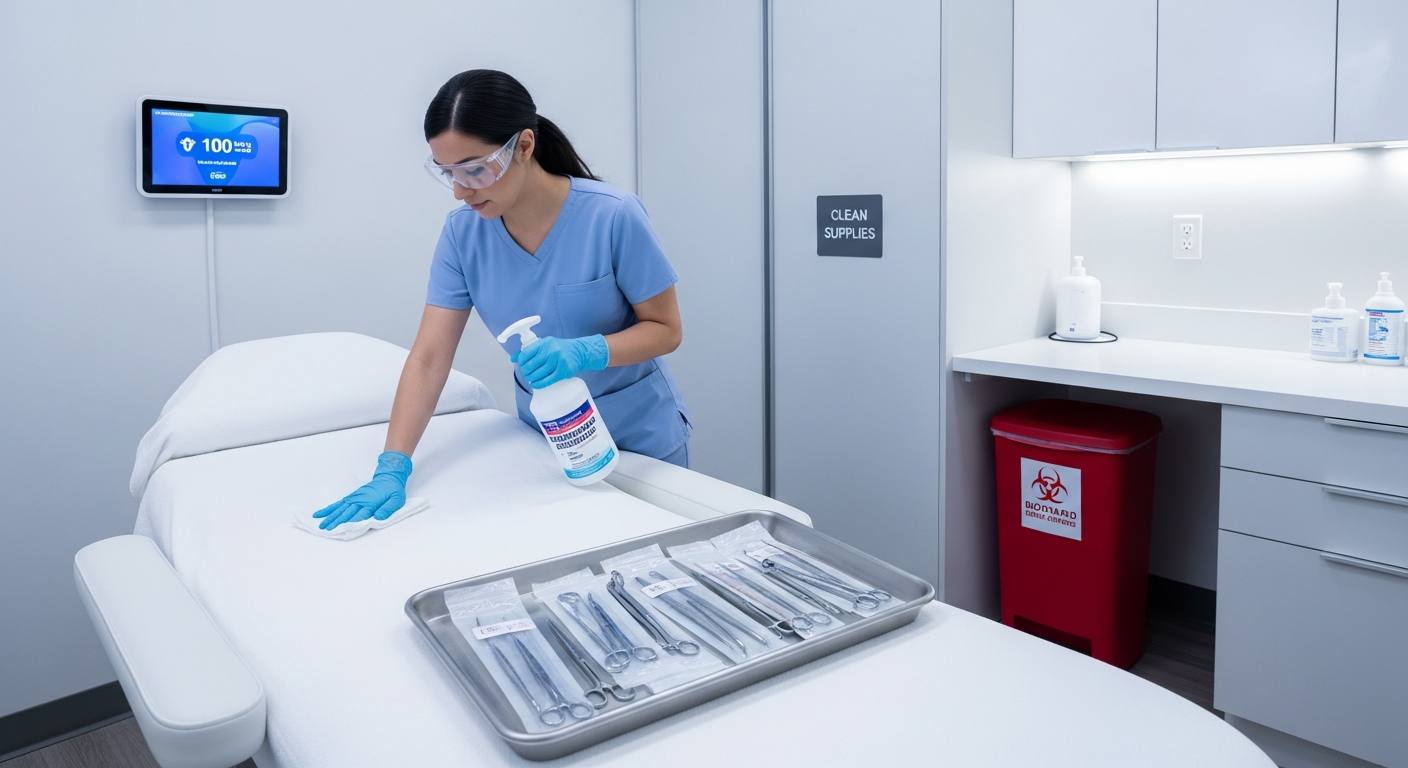
Med Spa Infection Control and Clinical Safety Standards
Med spa infection control is the comprehensive system of sanitation and sterilization protocols used to prevent the transmission of pathogens during aesthetic procedures. These OSHA-aligned standards include rigorous hand hygiene, surface disinfection with EPA-registered solutions, and strict instrument processing to ensure a sterile clinical environment for both providers and clients.
OSHA-Aligned Sanitation in the Med Spa Environment
Every facility must maintain a written exposure control plan to meet OSHA requirements.
This document outlines specific procedures for handling bloodborne pathogens and sharps.
Providers must treat all human blood and bodily fluids as if they are infectious.
Personal Protective Equipment Protocols
Standard precautions require the consistent use of personal protective equipment.
Gloves must be changed between every client and after touching contaminated surfaces.
Protective eyewear and masks are essential during procedures that may involve splashing.
Treatment Room Disinfection Systems
Room turnover must follow a systematic approach to prevent cross-contamination.
All high-touch surfaces, including treatment tables and stools, require thorough cleaning.
Disinfectants must remain wet on surfaces for the full manufacturer-recommended contact time.
Surface Decontamination Procedures
Start cleaning from the cleanest areas of the room and move toward the most soiled.
Use disposable wipes to remove organic debris before applying clinical-grade disinfectants.
Ensure that all cabinetry handles and equipment knobs are included in the cleaning cycle.
Sterilization Standards for Aesthetic Tools
Multi-use instruments must undergo a multi-stage reprocessing cycle.
This includes manual cleaning, ultrasonic debris removal, and steam sterilization.
Sterilization logs should track every cycle to ensure the autoclave reaches necessary parameters.
Management of Single-Use Items
Items designated as single-use must be discarded immediately after a single application.
Never attempt to disinfect or reuse disposable needles, lancets, or cotton swabs.
Dispose of all contaminated sharps in puncture-resistant, labeled biohazard containers.
Cross-Contamination Prevention Strategies
Establish clear zones within the treatment room to separate clean and dirty items.
Clean supplies should remain in closed cabinets until the moment they are needed.
Avoid touching common area surfaces, such as tablets or phones, while wearing gloves.
Hand Hygiene Requirements
Clinical handwashing is the most effective way to prevent the spread of infections.
Wash hands with soap and water before donning gloves and immediately after removal.
Use alcohol-based hand rubs only when hands are not visibly soiled by clinical materials.
Clinical Waste Management
Med spas must segregate general waste from regulated medical waste.
Red bags are reserved for materials saturated with blood or infectious fluids.
Proper labeling and storage of biohazard waste are required until professional pickup occurs.
