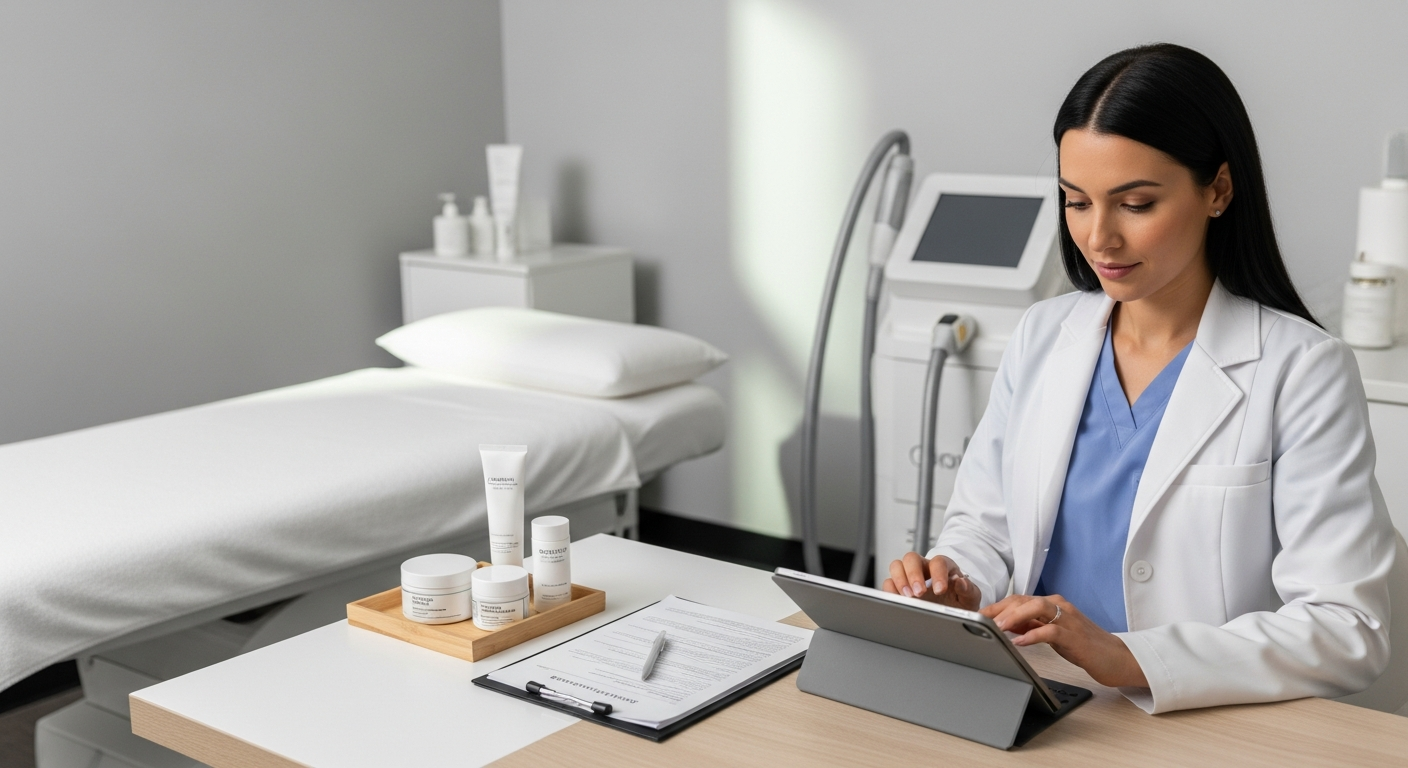
Clinical Post-Treatment Management in Med Spas
Post-treatment management in med spa environments refers to the standardized clinical protocols used to monitor and support skin recovery following aesthetic procedures. These systems focus on reducing erythema, managing inflammation, and minimizing downtime through consistent provider workflows, ensuring patient safety and uniform outcomes across laser, microneedling, and chemical peel treatments.
Standardizing Post-Laser Recovery Protocols
Laser treatments create controlled thermal injury that requires a specific cooling phase.
Providers must prioritize heat dissipation immediately post-procedure to prevent prolonged erythema.
Standardized protocols include the use of thermal compresses and non-occlusive barrier protection.
Staff should monitor the skin for appropriate vascular responses.
In the first 24 hours, the focus remains on maintaining a cool skin temperature.
Clear instructions must be provided to avoid heat-inducing activities like exercise or saunas.
Microneedling Downtime and Tissue Repair
Microneedling management focuses on the critical window of micro-channel closure.
Clinical workflows should restrict patient contact with environmental pollutants for at least 24 hours.
Hydration protocols emphasize sterile, non-irritating agents to support the dermal basement membrane.
Standardizing the post-procedure period reduces the risk of secondary infections.
Providers must ensure patients understand the difference between normal redness and adverse reactions.
Gentle cleansing routines are established to prevent disrupting the newly forming tissue.
Chemical Peel Aftercare and Desquamation Systems
Post-peel management relies on stabilizing the skin’s pH levels after acid application.
Providers must educate patients on the physiological stages of desquamation to prevent interference.
Clinical systems ensure patients do not manually disrupt or peel the exfoliating epidermis.
Standardized workflows include specific timelines for resuming active topical ingredients.
UV protection is the most critical component of chemical peel recovery.
Strict adherence to sun avoidance protocols prevents post-inflammatory hyperpigmentation during healing.
Managing Inflammation and Erythema Post-Procedure
Inflammation is a necessary biological response but must be strictly monitored in a med spa.
Protocols should distinguish between therapeutic erythema and adverse inflammatory events.
Consistent cooling and soothing steps are utilized to bring the skin back to homeostasis.
Providers should use standardized charts to document the duration and intensity of redness.
Persistent inflammation beyond the expected window requires immediate clinical review.
Systematic follow-up ensures that the inflammatory response stays within safe parameters.
Implementing Standardized Recovery Workflows
A successful med spa relies on protocol consistency rather than individual provider judgment.
Written recovery instructions must be reviewed with every patient before they leave the clinic.
Standardization ensures that every patient receives the same high level of clinical care.
- Documentation: Record all post-treatment observations in the patient file.
- Follow-up: Establish a 24-hour check-in system for high-intensity procedures.
- Education: Provide clear visual guides of the normal healing process.
- Supplies: Ensure all necessary recovery materials are prepared in advance.
Scheduled follow-up communications allow the clinical supervisor to monitor recovery trends.
By removing guesswork, med spas reduce the likelihood of avoidable post-procedure complications.
Consistency in aftercare is the foundation of patient safety in aesthetic medicine.
