Med Spa Infection Control and Clinical Safety Standards
Med spa infection control is a systematic approach to preventing the transmission of pathogens through rigorous sanitation, disinfection, and sterilization protocols. These clinical safety standards, aligned with OSHA guidelines, involve high-level surface disinfection, proper personal protective equipment (PPE) usage, and strict instrument processing to ensure a sterile environment for aesthetic treatments.
OSHA-Aligned Sanitation Practices
Maintaining a compliant med spa requires strict adherence to Occupational Safety and Health Administration (OSHA) standards.
These regulations protect both the practitioner and the client by minimizing exposure to bloodborne pathogens.
Facilities must maintain updated safety data sheets for all chemical disinfectants used in the clinic.
Hand hygiene serves as the foundation of all sanitation efforts within the facility.
Clinicians must perform hand washing with antimicrobial soap before and after every patient contact.
Alcohol-based hand rubs are acceptable only when hands are not visibly soiled or contaminated.
Treatment Room Disinfection Systems
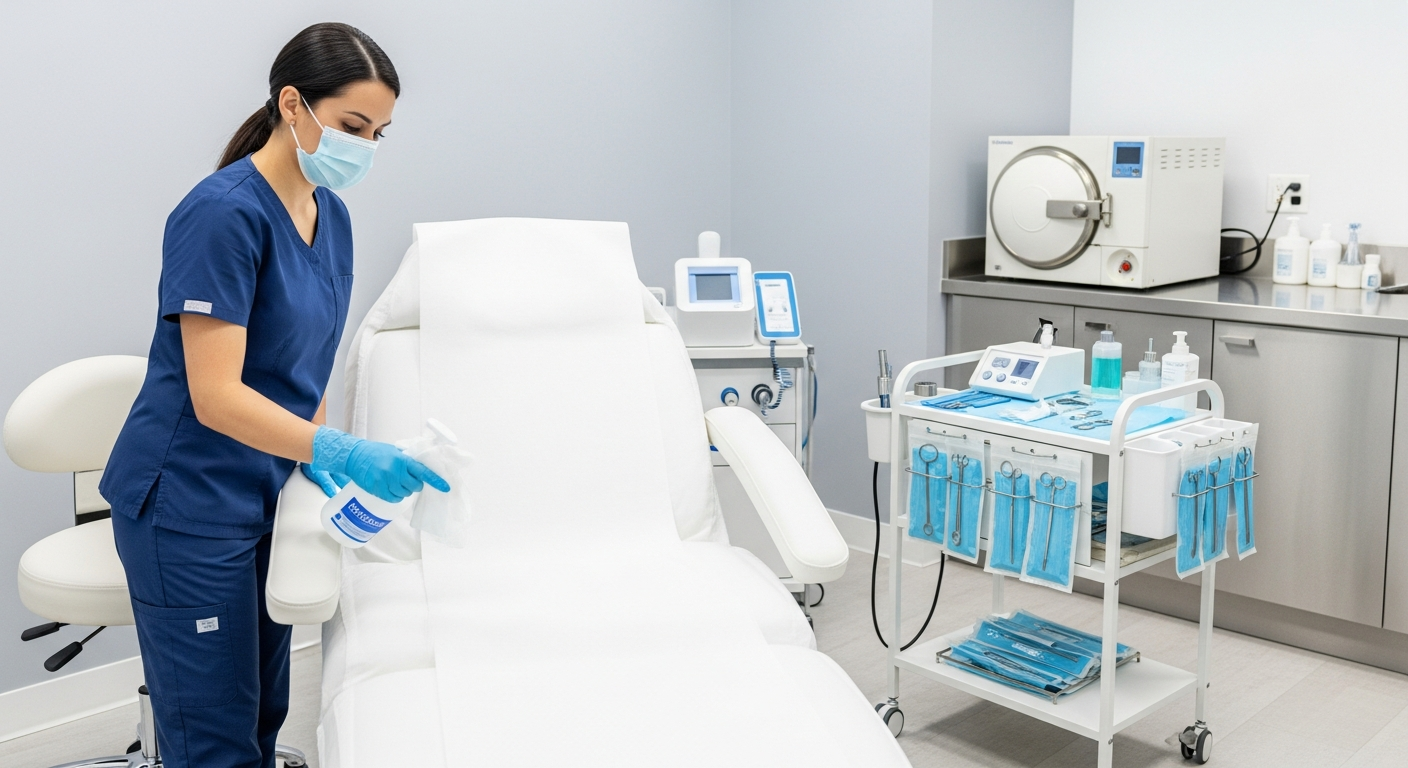
Every treatment room must undergo a complete disinfection cycle between every appointment.
This process involves using EPA-registered, hospital-grade disinfectants labeled for tuberculocidal or virucidal activity.
All surfaces must remain wet for the full contact time specified by the manufacturer.
High-Touch Surface Protocols
High-touch surfaces include treatment tables, adjustable stools, counter tops, and equipment dials.
These areas carry the highest risk for indirect cross-contamination between different clients.
Barriers such as medical-grade plastic sheathing should be used on electronic interfaces that cannot be saturated.
Environmental Cleaning Cycles
Daily cleaning logs should document the sanitation of non-treatment areas, including waiting rooms and restrooms.
Deep cleaning of floors and cabinetry should occur at the end of every clinical shift.
This prevents the accumulation of dust and debris that can harbor microbial growth over time.
Sterilization Standards for Aesthetic Tools
Any instrument that penetrates the skin or contacts mucosal membranes is considered a critical item.
These tools must undergo high-pressure steam sterilization in a calibrated autoclave.
Chemical indicators and biological monitoring must be used to verify that sterilization cycles are successful.
Non-critical items that only touch intact skin require intermediate-level disinfection.
Instruments must be cleaned of all visible organic matter before the sterilization or disinfection process begins.
Cleaned tools should be stored in sealed, dated pouches to maintain sterility until their next use.
Cross-Contamination Prevention Strategies
Cross-contamination is prevented by strictly separating clean supplies from contaminated materials.
Workstations should be organized so that used instruments never contact clean fields or sterile disposables.
Single-use items must be discarded immediately after a single application and never reused.
Personal Protective Equipment (PPE) Usage
Standard precautions dictate that PPE must be worn whenever there is a risk of fluid exposure.
This includes medical-grade gloves, fluid-resistant masks, and protective eyewear during specific procedures.
Gloves must be changed immediately if they become torn or if the clinician touches a non-sterile surface.
Safe Waste Disposal Procedures
Biohazardous waste, including needles and saturated gauze, requires specialized handling and disposal.
Puncture-resistant sharps containers must be located as close as possible to the point of use.
Once containers reach the fill line, they must be sealed and collected by a licensed medical waste provider.
