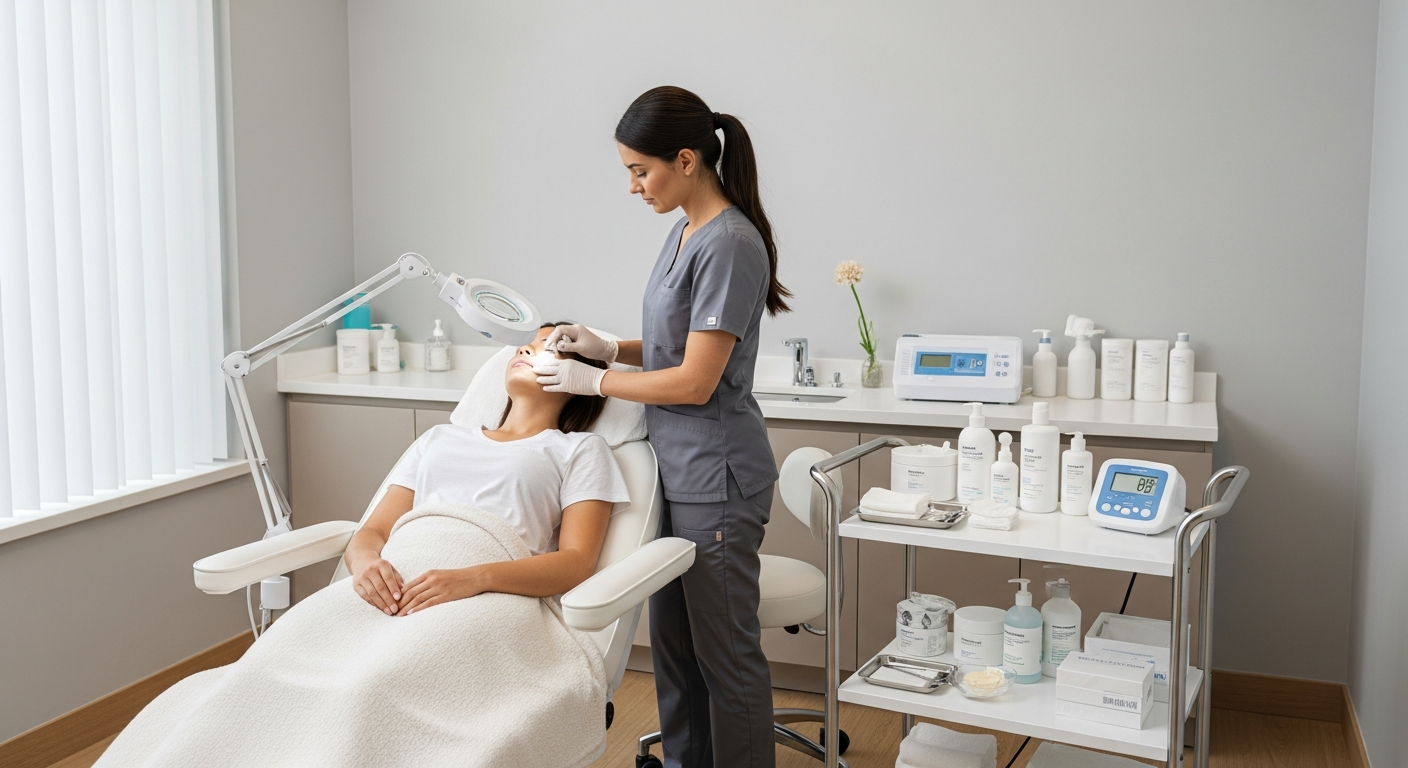
Post-Treatment Management in Med Spa Facilities
Post-treatment management in med spa facilities refers to the standardized clinical protocols used to oversee patient recovery after aesthetic procedures. These systems focus on mitigating erythema, managing inflammation, and reducing downtime through structured aftercare workflows. Implementing consistent recovery guidelines ensures uniform safety standards and predictable healing results across all aesthetic treatments.
Standardizing Post-Laser Recovery Protocols
Laser treatments generate controlled thermal injury that requires a specific healing environment.
Clinical protocols must prioritize heat dissipation immediately following the procedure to prevent prolonged erythema.
Standardized cooling windows help stabilize the skin temperature and reduce the risk of post-inflammatory changes.
Providers should follow a fixed timeline for moisture application to maintain the skin barrier.
Systematic observation during the first 48 hours allows for the early identification of abnormal swelling.
Med spas rely on these uniform steps to ensure every patient achieves a safe recovery.
Microneedling Downtime and Barrier Management
Microneedling creates thousands of micro-channels that require a strict 24-hour protection window.
Clinical management focuses on preventing the introduction of environmental contaminants while the channels remain open.
Standardized workflows dictate exactly when a patient can resume their usual hygiene routines.
Managing inflammation after microneedling involves controlling the natural healing cascade.
Providers use specific clinical guidelines to monitor the transition from pinpoint bleeding to uniform redness.
Consistency in these protocols reduces the likelihood of secondary infections or irritation.
Chemical Peel Aftercare Systems
The success of a chemical peel depends heavily on the management of the desquamation phase.
Med spas implement systems to ensure patients do not manually disrupt the shedding process.
Standardized instructions help patients distinguish between normal flaking and excessive irritation.
Clinical supervisors oversee the duration of the post-peel inflammatory response.
Standardization ensures that each patient receives the same guidance regarding sun avoidance and barrier support.
These systems minimize the risk of complications like post-peel hyperpigmentation.
Managing Inflammation and Erythema
Post-procedure erythema is a standard response to energy-based and abrasive aesthetic treatments.
Clinical workflows must include protocols for immediate soothing and long-term inflammation reduction.
Systematic use of cooling agents and occlusive barriers helps transition the skin back to homeostasis.
Monitoring the duration of redness allows providers to assess the progress of the healing tissue.
Clear clinical benchmarks help staff identify when inflammation exceeds the expected procedural baseline.
Structured management of these symptoms improves patient comfort and treatment satisfaction.
Establishing Standardized Recovery Workflows
Effective post-treatment management in med spa settings relies on protocol consistency over individual judgment.
Every provider must follow a pre-defined checklist to ensure no recovery step is overlooked.
Written clinical systems provide a roadmap for managing downtime across various treatment modalities.
Documentation of the recovery process is a vital component of clinical oversight in the United States.
Med spas that use standardized workflows can more easily track patient progress and outcomes.
Unified protocols ensure a high standard of care regardless of which clinician performs the treatment.
