Med Spa Regulations and Compliance Requirements
Med spa regulations are state-specific legal frameworks governing the ownership, medical supervision, and operational standards of aesthetic clinics in the United States. These laws determine who can legally own a practice, the necessary licensing for practitioners, and the required level of physician oversight for medical procedures like injectables and laser treatments.
Corporate Practice of Medicine and Ownership
In many states, the Corporate Practice of Medicine (CPOM) doctrine prohibits non-physicians from owning a medical practice or employing physicians. This means a med spa must often be owned by a licensed doctor or a professional corporation.
Non-physician entrepreneurs frequently use a Management Services Organization (MSO) model to remain compliant. This structure allows a business owner to handle administrative tasks while a medical professional oversees clinical operations.
The Role of the Medical Director
A medical director is responsible for the clinical integrity of the facility and must ensure all treatments meet medical standards. Their level of involvement varies by state, ranging from physical presence to remote oversight.
Licensing and Supervision Standards
Med spa regulations dictate which healthcare professionals can perform specific aesthetic procedures. While laws vary, most states classify Botox, fillers, and certain lasers as medical treatments requiring professional licensure.
Registered Nurses (RNs), Physician Assistants (PAs), and Nurse Practitioners (NPs) are common providers in this space. However, their ability to practice independently or under a physician’s supervision depends strictly on state board rules.
Mandatory Good Faith Exams
A “Good Faith Exam” (GFE) is a mandatory clinical evaluation performed before a patient receives their first medical treatment. This exam must be conducted by a qualified provider, such as a physician, NP, or PA.
The GFE ensures the patient is a fit candidate for the procedure and establishes a formal provider-patient relationship. Skipping this step is a frequent cause of regulatory disciplinary action.
Scope of Aesthetic Practice
The legal scope of practice defines the specific tasks a professional is authorized to perform based on their license. Estheticians, for example, are often limited to non-invasive surface treatments and cannot perform injections.
Performing procedures outside of one’s licensed scope is considered the unlicensed practice of medicine. Facilities must maintain clear job descriptions and protocols to ensure every staff member stays within their legal limits.
Inspection Readiness and Documentation
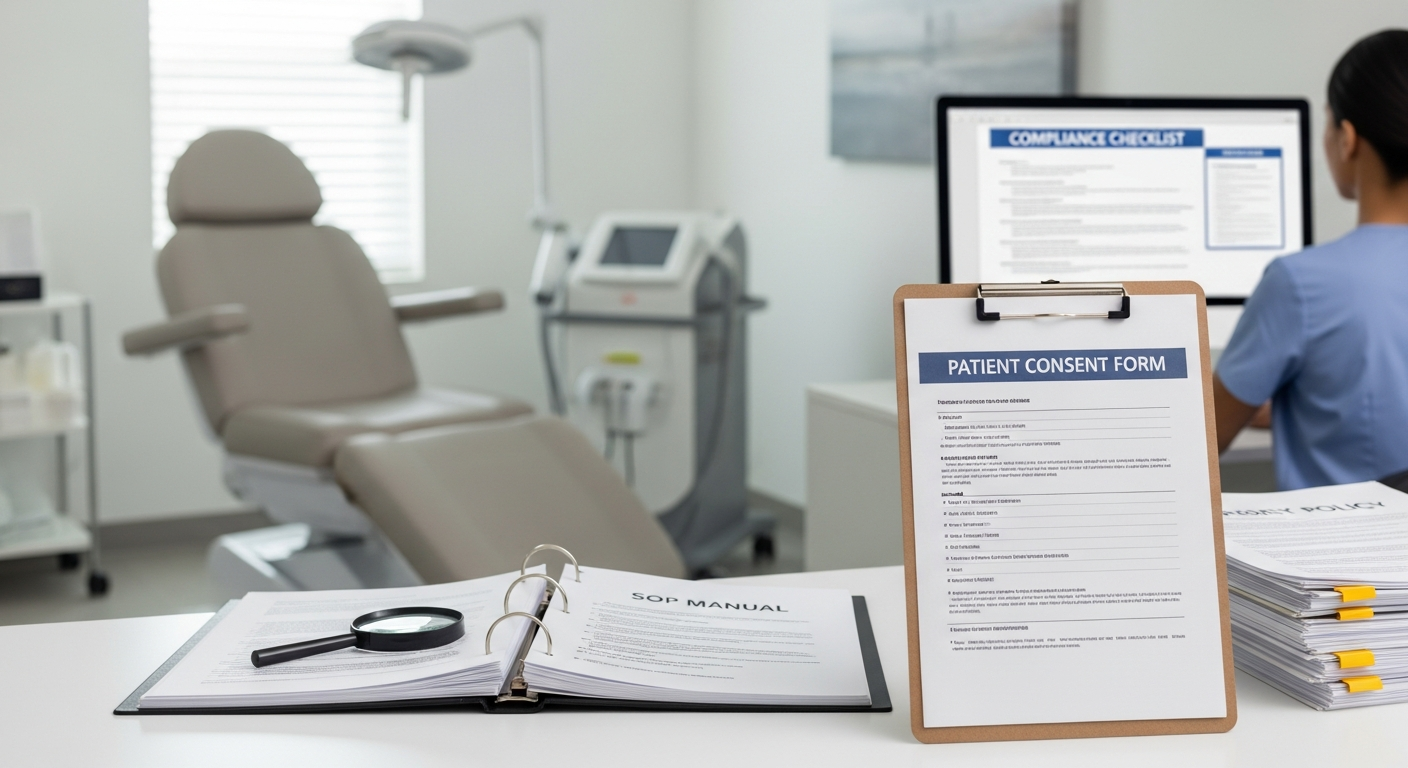
State medical and nursing boards have the authority to inspect med spas to ensure compliance with safety and legal standards. Maintaining organized, up-to-date documentation is the best defense during an unannounced visit.
- Standard Operating Procedures (SOPs) for all medical treatments.
- Evidence of current professional licenses and certifications.
- Detailed patient charts including consent forms and treatment notes.
- OSHA and HIPAA compliance manuals tailored to the facility.
Policy and Procedure Manuals
Every med spa should maintain a comprehensive policy manual that outlines emergency protocols and infection control. These documents demonstrate a commitment to safety and serve as a guide for daily clinical operations.
Regular internal audits of these documents help identify compliance gaps before they become legal liabilities. Consistent record-keeping is essential for protecting the facility’s license and the safety of the patients.
