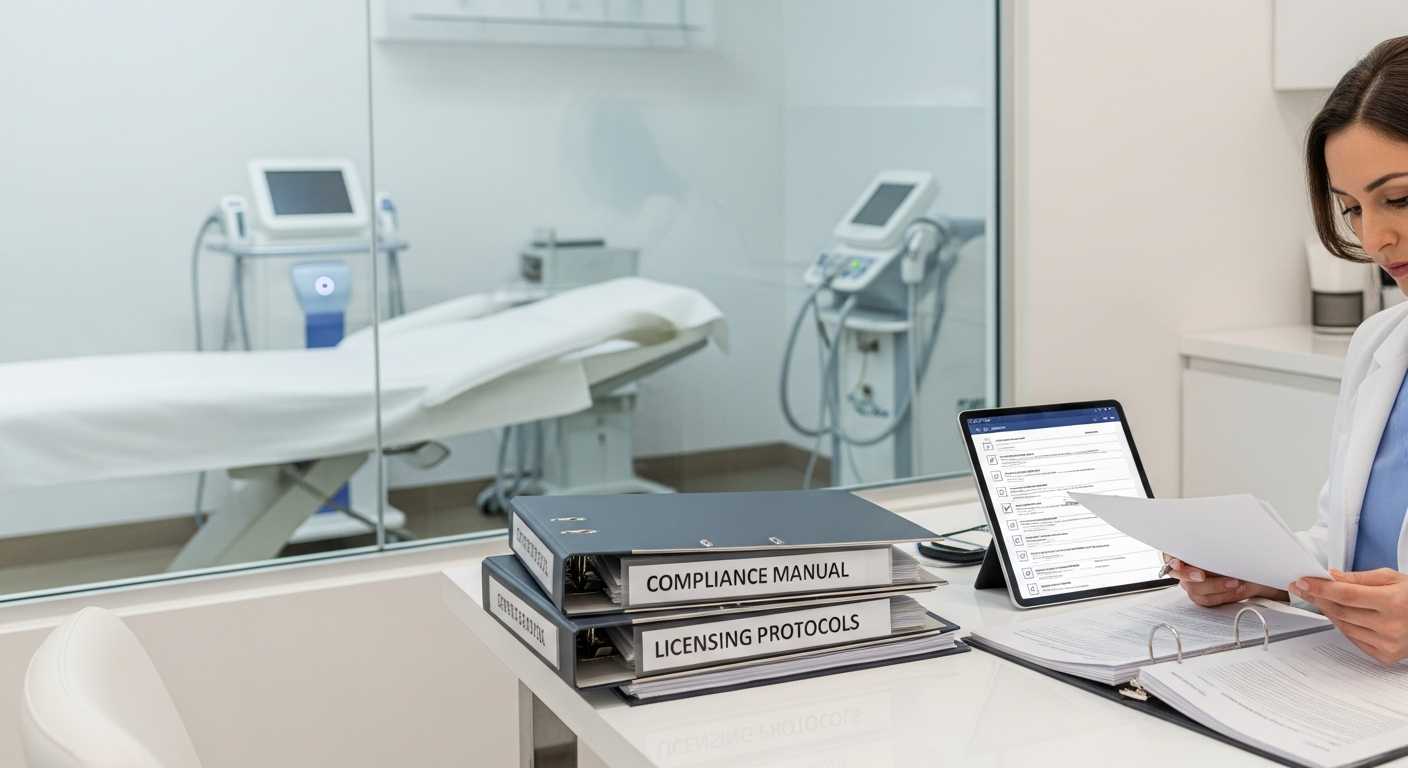
Understanding Med Spa Regulations and Legal Compliance
Med spa regulations are state-level legal requirements governing the ownership, supervision, and delivery of medical aesthetic treatments. These regulations define who can legally perform injections or laser procedures and often require a licensed physician to serve as a medical director to oversee all clinical operations and patient safety protocols.
The Corporate Practice of Medicine Doctrine
Many states follow the Corporate Practice of Medicine (CPOM) doctrine, which prohibits non-physicians from owning a medical practice. In these jurisdictions, a med spa is legally classified as a medical office rather than a retail business.
Business owners often utilize Management Services Organizations (MSOs) to remain compliant with CPOM rules. This structure allows a non-medical entrepreneur to handle administrative tasks while a physician-owned professional corporation manages the clinical services.
Failing to adhere to ownership laws can result in heavy fines or the loss of medical licenses. It is critical to consult state-specific statutes to determine if a physician must hold 100% or a majority of the equity.
Medical Supervision and Licensing Requirements
Med spa regulations strictly dictate the level of oversight required for aesthetic procedures. Every facility must typically designate a Medical Director who is responsible for all clinical outcomes and delegated tasks.
Supervision requirements vary significantly between states like Texas, California, and Florida. Some states allow remote supervision, while others require the physician to be physically present on-site during certain procedures.
Medical Directors must ensure that all practitioners, including Nurse Practitioners (NPs) and Physician Assistants (PAs), operate within their legal scope. They are also responsible for the training and competency of the staff.
The Good Faith Examination
A “Good Faith Exam” is a mandatory initial assessment performed before a patient receives any medical treatment. This evaluation must be conducted by a physician, NP, or PA to establish a provider-patient relationship.
Performing injections or laser treatments without a documented exam is a common regulatory violation. This assessment ensures the treatment is medically appropriate and that the patient is a suitable candidate for the procedure.
Legal Scope of Aesthetic Practice
Determining who can legally perform specific treatments is a cornerstone of med spa regulations. Procedures like Botox injections, dermal fillers, and high-powered laser hair removal are classified as the practice of medicine.
- Registered Nurses (RNs): Often permitted to inject under physician supervision and after a proper exam.
- Aestheticians: Generally restricted to non-invasive surface treatments and cannot legally perform injections.
- Unlicensed Personnel: Strictly prohibited from performing medical procedures in nearly all US jurisdictions.
Scope of practice rules also apply to the use of medical-grade devices. Using a Class II or Class III medical device without proper licensure can lead to allegations of practicing medicine without a license.
Maintaining Inspection Readiness Standards
Regulatory bodies and medical boards may conduct unannounced inspections to ensure patient safety. Facilities must maintain a clean, clinical environment that meets OSHA and local health department standards.
Inspection readiness involves more than just cleanliness; it requires organized record-keeping and equipment maintenance logs. All medical devices must be serviced according to manufacturer guidelines to ensure they function safely.
Clinics must also have emergency protocols in place for adverse events. This includes having an emergency kit available and ensuring all staff members are trained in basic life support and complication management.
Compliance Documentation Basics
Documentation is the primary evidence used to prove compliance during a legal audit or investigation. Every patient file must contain a detailed medical history and a signed informed consent form.
Standard Operating Procedures (SOPs) must be written and signed by the Medical Director for every procedure offered. These protocols outline the specific steps, settings, and safety measures required for each treatment type.
HIPAA compliance is also mandatory for protecting patient health information in a med spa setting. This includes securing digital records and ensuring that patient privacy is maintained during all consultations and treatments.
