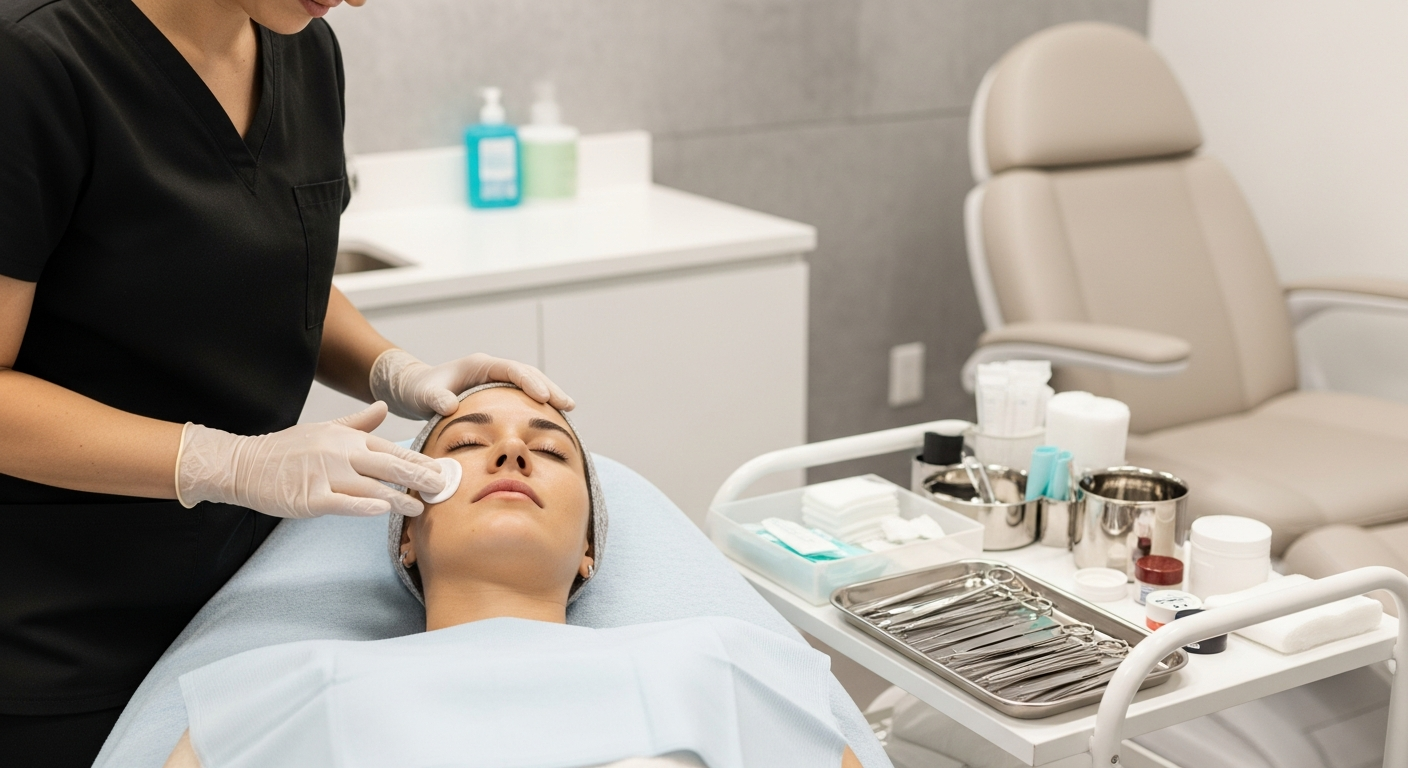
Post-Treatment Management in Med Spa Guidelines
Post-treatment management in med spa environments is the application of standardized clinical protocols designed to oversee patient recovery after aesthetic procedures. These systems focus on managing inflammation, protecting the skin barrier, and ensuring uniform follow-up care to reduce complications and downtime across all clinical service providers.
Standardized Post-Laser Recovery Protocols
Effective post-treatment management in med spa facilities begins with controlled thermal regulation. Clinical staff must follow established steps to dissipate residual heat and prevent prolonged erythema.
Standard protocols include the application of inert occlusive barriers to prevent transepidermal water loss. Providers should avoid active ingredients like retinoids or acids during the initial re-epithelialization phase.
- Thermal Regulation: Use of cold compresses or chilled air immediately following laser delivery.
- Barrier Support: Application of non-comedogenic ointments to protect the compromised epidermis.
- UV Protection: Mandatory physical sunblock application to prevent post-inflammatory hyperpigmentation.
Microneedling Downtime Management
Managing the recovery after collagen induction therapy requires a sterile approach to wound healing. Post-treatment management in med spa settings for microneedling focuses on rapid micro-channel closure.
Providers must standardize the timeline for when patients may resume topical applications. During the first twenty-four hours, the clinical focus remains on hydration and the avoidance of environmental contaminants.
Consistency in these protocols prevents secondary infections and ensures that the inflammatory response remains therapeutic rather than destructive to the dermal matrix.
Chemical Peel Aftercare Systems
Post-treatment management in med spa chemical peel protocols must account for varying depths of exfoliation. Standardized systems ensure patients do not prematurely disrupt the desquamation process.
Providers utilize specific workflows to monitor for excessive edema or unexpected vesiculation. Documentation of the shedding process is vital for adjusting future treatment concentrations and dwell times.
Managing Inflammation and Erythema
Erythema is an expected clinical endpoint, but its duration must be managed through standardized cooling and soothing agents. Standardized protocols help providers differentiate between therapeutic inflammation and adverse reactions.
Clinics should implement a visual assessment scale to track redness reduction over a seventy-two-hour period. This data ensures that the healing trajectory aligns with the expected clinical outcome for the specific energy or chemical used.
Standardized Recovery Workflows in Med Spas
Successful post-treatment management in med spa operations relies on protocol consistency over individual provider judgment. This creates a predictable recovery experience for every patient regardless of the treating technician.
Clinical supervisors should implement digital tracking systems to monitor post-procedure milestones. This include standardized follow-up calls and photographic documentation at specific recovery intervals.
- Immediate Post-Care: Direct application of soothing agents and discharge instructions.
- Patient Education: Delivery of printed, step-by-step recovery manuals to ensure compliance.
- Clinical Follow-up: Structured check-ins to verify the resolution of expected side effects.
The Role of Protocol Consistency
When every provider follows the same recovery system, the med spa can accurately predict downtime and safety profiles. This reduces the risk of patient error and improves the overall clinical reliability of the practice.
Consistency also simplifies the training of new aesthetic providers and clinical assistants. Standardized post-treatment management in med spa environments ensures that the standard of care remains high across the entire organization.
