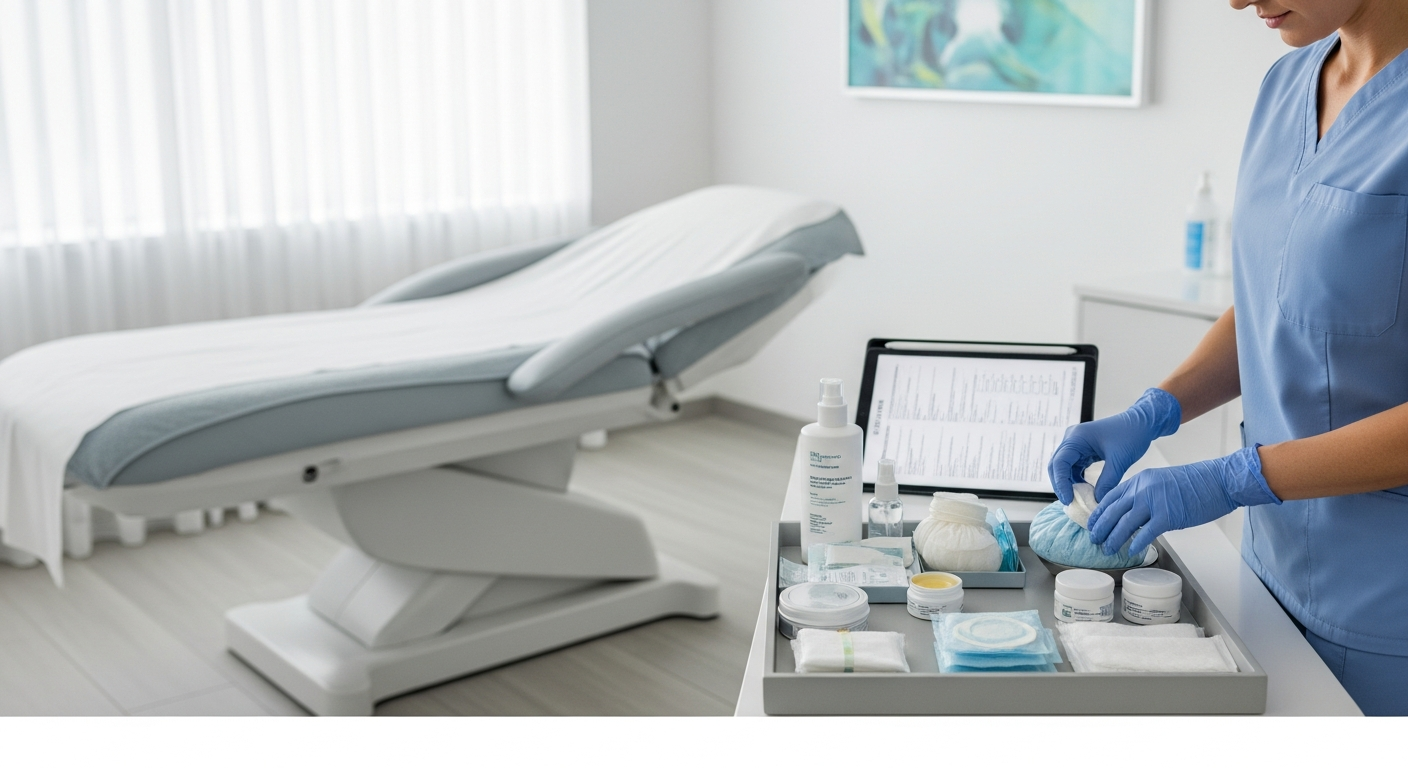
Standardizing Post-Treatment Management in Med Spas
Post-treatment management in med spa environments refers to the standardized clinical protocols used to control inflammation, minimize downtime, and ensure safe healing after aesthetic procedures. These systems involve regulated aftercare workflows for laser treatments, microneedling, and chemical peels to maintain procedural integrity and reduce the risk of adverse clinical outcomes.
Clinical Post-Laser Recovery Protocols
Laser treatments generate controlled thermal energy that requires specific cooling and barrier protection protocols. Med spa providers must focus on heat dissipation and the prevention of post-inflammatory hyperpigmentation.
Standardized workflows include immediate application of occlusive barriers and strict UV avoidance instructions. Providers use cold compresses to mitigate lingering heat and stabilize the skin temperature immediately following the session.
Managing the inflammatory response is critical during the first 48 hours. Clinical staff ensure patients understand the timeline for erythema resolution and the signs of normal thermal recovery.
Microneedling Downtime and Barrier Management
Microneedling creates micro-channels that temporarily compromise the epidermal barrier. Post-treatment management in med spa settings focuses on maintaining a sterile environment and preventing transepidermal water loss.
Recovery systems prioritize non-irritating hydration and the avoidance of active ingredients like retinoids or exfoliating acids. This period usually lasts three to five days as the skin re-epithelializes.
Clinical supervisors implement checklists to ensure every patient receives consistent instructions regarding touch avoidance. Reducing the risk of secondary infection is the primary goal of these standardized workflows.
Chemical Peel Aftercare Systems
Chemical peels involve the controlled destruction of skin layers to stimulate cellular turnover. Clinical management requires a deep understanding of desquamation timelines and pH balance restoration.
Standardized aftercare ensures patients do not prematurely remove peeling skin, which can lead to scarring. Providers emphasize gentle cleansing and heavy moisturization to support the new skin layer.
Monitoring the depth of the peel determines the intensity of the recovery protocol. Med spas use standardized charts to track healing progress and verify that the skin barrier is returning to a healthy state.
Managing Post-Procedure Inflammation and Erythema
Inflammation is a natural part of the wound-healing cascade, but it must be managed to prevent complications. Clinical protocols focus on soothing the skin while allowing the regenerative process to occur.
Erythema management involves the use of calming agents and environmental controls. Med spa staff are trained to distinguish between expected therapeutic redness and adverse reactive events.
Standardizing these observations ensures that every provider in the clinic offers the same level of care. Consistency in assessing inflammation levels prevents unnecessary intervention and promotes patient safety.
Implementing Standardized Recovery Workflows
Operational success in a med spa depends on protocol consistency over individual provider judgment. Standardized recovery workflows reduce the margin for error and ensure predictable clinical results.
Every procedure should have a matching post-treatment management kit and instruction set. This systematic approach ensures that clinical supervisors can audit recovery outcomes effectively across the entire staff.
- Standardized instructions: Printed or digital guides for every patient.
- Clinical follow-up: Scheduled check-ins to monitor healing milestones.
- Uniform products: Consistent use of recovery-focused topicals within the clinic.
- Documented protocols: Written manuals for all post-laser and post-peel care.
The Role of Clinical Supervision
Clinical supervisors oversee the execution of aftercare systems to maintain high standards. They ensure that all aesthetic providers follow the established medical director’s guidelines for recovery.
By removing individual guesswork, med spas create a safer environment for complex aesthetic procedures. This structured approach to post-treatment management in med spa facilities leads to higher patient satisfaction and fewer complications.
