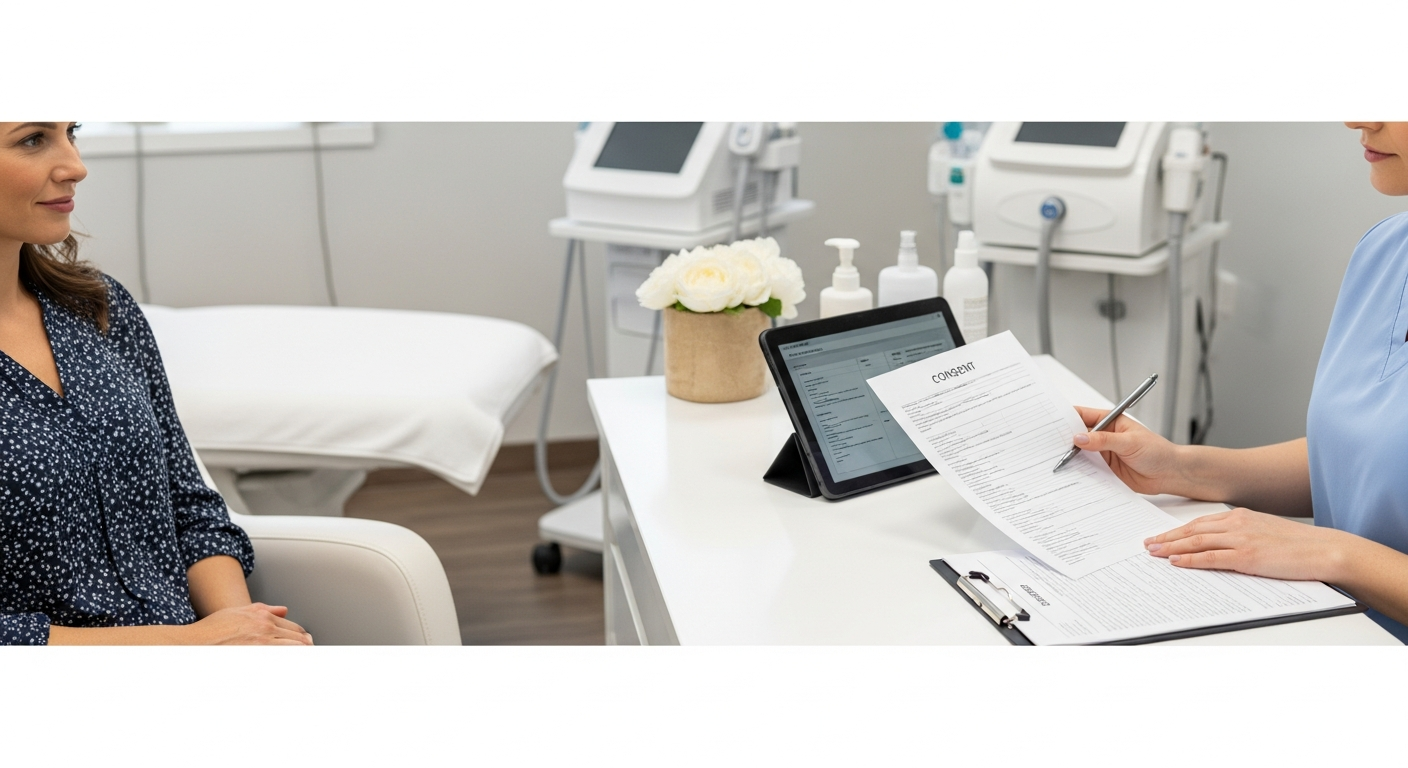
Med Spa Risk Management: Reducing Liability Exposure
Med spa risk management is the systematic practice of identifying and mitigating clinical and operational hazards to minimize liability in aesthetic clinics. This involves implementing standardized documentation protocols, ensuring robust informed consent processes, and establishing formal incident reporting systems to protect the practice while maintaining strict compliance with state medical regulations.
Foundations of a Liability Reduction Framework
A structured liability reduction framework identifies potential risks before they lead to malpractice claims or regulatory investigations.
U.S. med spas must synchronize clinical protocols with administrative oversight to ensure every practitioner adheres to safety standards.
Establishing these clear operational boundaries protects the medical director and the clinic’s overall business assets.
Standardized Informed Consent Documentation
Informed consent is a legal process where the patient acknowledges specific treatment risks before any procedure begins.
Documentation must detail potential side effects, alternative treatments, and the expected outcomes discussed during the consultation.
A signed consent form for every individual procedure helps demonstrate that the patient voluntarily assumed the inherent risks of the treatment.
Recordkeeping Standards for Regulatory Compliance
Med spa recordkeeping requires consistent, legible, and accurate charting for every patient interaction and treatment session.
Clinical notes should include specific device settings, injection sites, product lot numbers, and pre-treatment photographs.
Maintaining detailed records ensures the clinic can provide a clear timeline of care if a treatment outcome is ever challenged.
Managing Adverse Treatment Outcomes
How a med spa handles an adverse outcome significantly impacts the likelihood of a formal legal claim or board complaint.
Clinics should have a documented response plan that includes immediate medical assessment and professional communication with the affected patient.
Thorough documentation of the follow-up care provided after an adverse event is critical for demonstrating a proactive standard of care.
Implementing Internal Incident Reporting Systems
A formal incident reporting system allows med spas to track near-misses and actual complications within a centralized internal database.
Staff should be trained to report any deviation from standard protocol, even if the patient does not experience an immediate injury.
Analyzing these reports helps management identify patterns, update training protocols, and prevent the future occurrence of similar incidents.
Best Practices for Documentation Consistency
- Use standardized templates for every treatment type to ensure no data points are missed.
- Perform regular audits of patient charts to verify that all consent forms are fully executed.
- Timestamp all entries to maintain a chronological record that withstands legal scrutiny.
