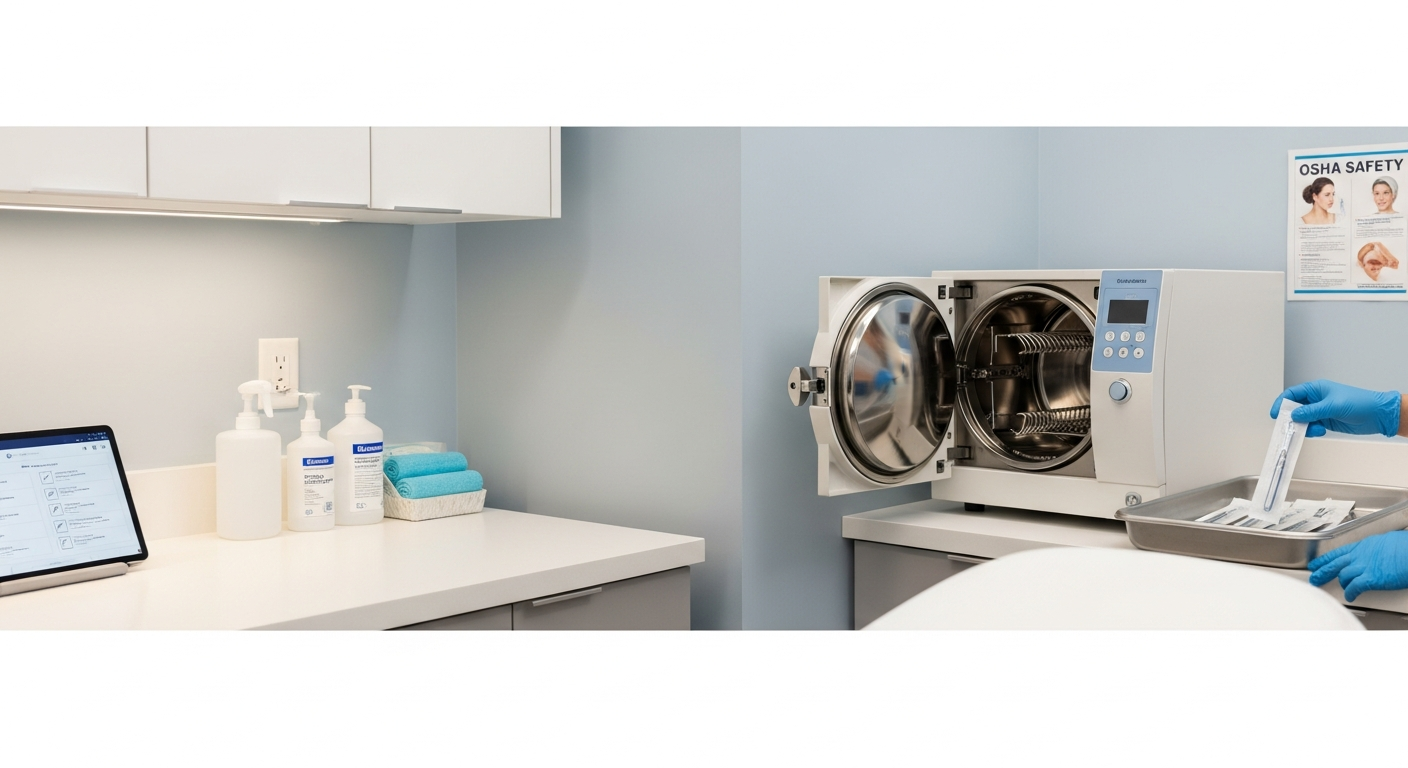
Essential Med Spa Infection Control and Safety Standards
Med spa infection control refers to the systematic implementation of sanitation, disinfection, and sterilization protocols designed to prevent healthcare-associated infections and cross-contamination within aesthetic clinics. These practices adhere to OSHA guidelines and state regulatory standards, ensuring that treatment rooms, equipment, and provider hygiene maintain the highest level of clinical safety for all clients.
OSHA-Aligned Sanitation Practices for Aesthetic Clinics
Maintaining a sanitary environment begins with rigorous hand hygiene and the appropriate use of personal protective equipment (PPE). Providers must perform handwashing with antimicrobial soap before and after every client contact.
Protective barriers, such as medical-grade gloves and masks, serve as the primary defense against pathogen transmission. These items must be changed between every treatment session to maintain a sterile field.
Workstations must remain clutter-free to facilitate effective cleaning. Using non-porous surfaces allows for more thorough decontamination between scheduled appointments and reduces the risk of bacterial buildup.
Comprehensive Treatment Room Disinfection Systems
Every treatment room requires a multi-tier disinfection process after each procedure. High-touch surfaces, including treatment tables, stools, and countertops, must be wiped down using EPA-registered, intermediate-level disinfectants.
The contact time specified by the disinfectant manufacturer is critical for ensuring the total elimination of pathogens. Surface areas must remain wet for the full duration to achieve effective germicidal results.
Standard operating procedures should include a daily deep-cleaning checklist. This ensures that less obvious areas, such as cabinetry handles and light switches, undergo regular decontamination to prevent environmental reservoirs.
Sterilization Standards for Reusable Instruments
Autoclave Protocols and Monitoring
Any reusable instrument that penetrates the skin or contacts mucosal membranes requires high-level sterilization. Steam sterilization via an autoclave is the industry standard for ensuring instrument sterility.
Sterilization cycles must be monitored using chemical indicators and periodic biological spore testing. Detailed logs should be maintained to document every cycle, ensuring all equipment meets safety requirements before use.
Management of Single-Use Items
Many med spa tools are designed for single-use only and must be disposed of immediately after a single application. Reusing disposable items is a direct violation of safety standards and poses a severe infection risk.
Inventory management systems should clearly separate sterile single-use items from reusable tools. Proper storage in closed cabinetry prevents environmental dust and contaminants from reaching sterile packaging.
Cross-Contamination Prevention Strategies
Aseptic technique is vital when preparing serums, injectables, or topical treatments. Providers must ensure that no part of the sterile delivery system touches a non-sterile surface during the preparation phase.
The use of multi-dose vials requires strict adherence to “one needle, one syringe, one time” protocols. This prevents the introduction of bloodborne pathogens into shared medication containers.
Biohazardous waste, including used needles and blood-contaminated materials, must be placed in puncture-resistant sharps containers. Proper disposal through licensed medical waste haulers ensures the safety of both staff and the public.
Systematic Safety Documentation
Consistent safety hinges on clear, written protocols that every staff member follows. An updated safety manual should be accessible to all clinical personnel, outlining the specific steps for every disinfection task.
Regular safety audits help identify potential gaps in the infection control chain. By reviewing these processes quarterly, med spa managers can ensure the facility remains compliant with evolving safety regulations.
Training programs for new hires must emphasize the link between protocol adherence and client safety. Continuous education ensures that all providers remain proficient in the latest sanitation technologies and methodologies.
