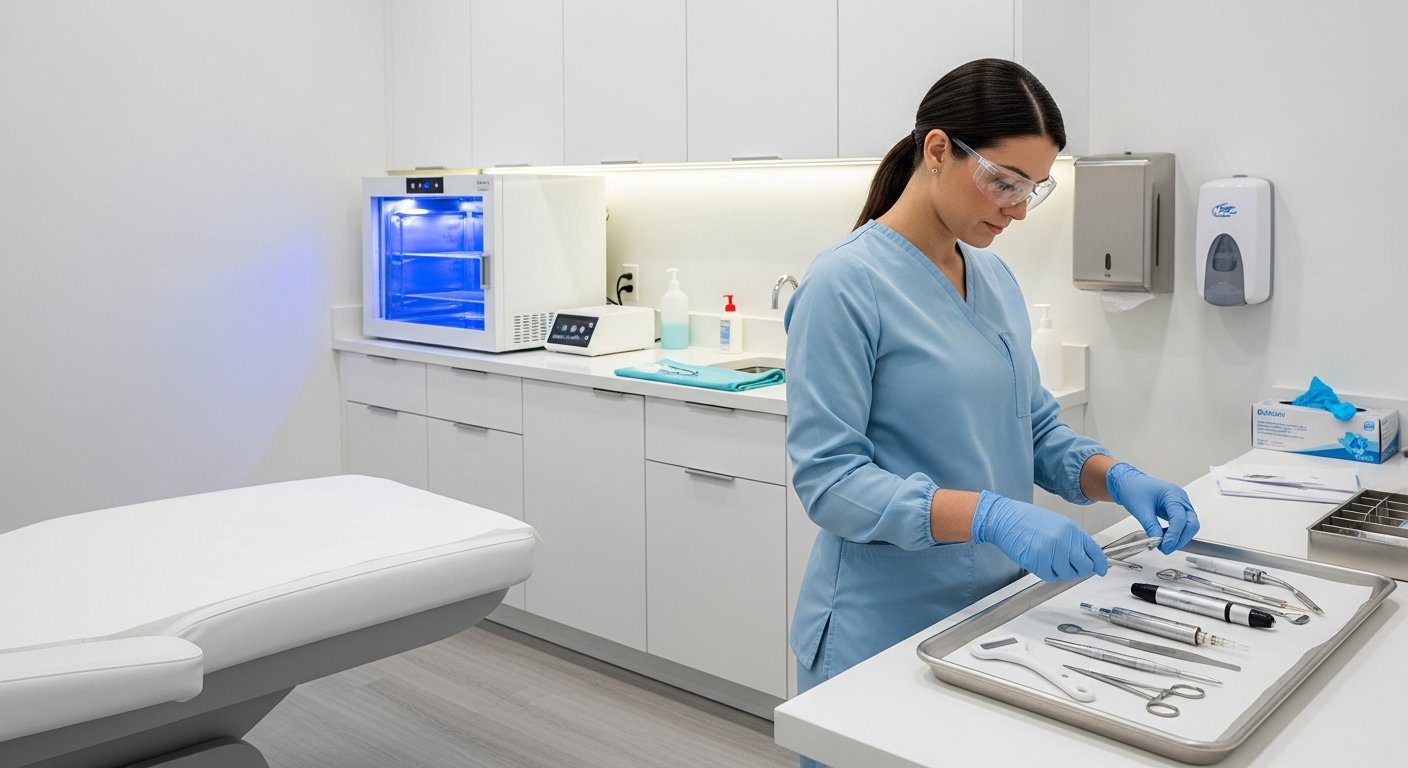
Med Spa Infection Control and Clinical Safety Protocols
Med spa infection control refers to the systematic application of sanitation, disinfection, and sterilization protocols designed to prevent pathogen transmission during aesthetic treatments. These clinical safety standards include OSHA-aligned bloodborne pathogen training, consistent hand hygiene, multi-level surface disinfection, and the use of personal protective equipment to ensure a sterile environment for both clients and practitioners.
Core Pillars of Med Spa Infection Control
Implementing rigorous infection control prevents the spread of bacteria, viruses, and fungi within the facility.
Med spa owners must establish written protocols that align with federal and state safety regulations for aesthetic practices.
Training clinical staff on bloodborne pathogens is a foundational requirement for maintaining facility compliance and client safety.
Standard Precautions and Hand Hygiene
Hand washing is the most effective way to break the chain of infection between different treatment sessions.
Staff should use antimicrobial soap or high-alcohol sanitizers before and after every client contact or procedure.
Gloves must be changed immediately if they become compromised or when moving between different treatment areas on a client.
Clinical Sanitation and Disinfection Systems
Surface disinfection involves using EPA-registered cleaners on all high-touch areas within the clinical treatment room.
This includes treatment tables, countertops, equipment controls, and any mobile carts used during aesthetic procedures.
Disinfectants must remain wet on surfaces for the full contact time specified by the manufacturer to be effective.
Treatment Room Turnaround Procedures
A systematic turnaround process ensures every new client enters a fully decontaminated and safe environment.
All disposable barriers and linens must be replaced, and hard surfaces must be wiped down after each session.
Clinicians should allow for adequate ventilation and drying time before bringing a new client into the space.
Sterilization Standards for Reusable Tools
Critical instruments that penetrate the skin require high-level sterilization, typically achieved through a calibrated autoclave.
Reusable tools must be thoroughly cleaned of all debris before undergoing the sterilization process to ensure total effectiveness.
Single-use items must be disposed of immediately and never repurposed for subsequent clients or different treatment areas.
Preventing Cross-Contamination in Aesthetic Settings
Cross-contamination occurs when pathogens are transferred between surfaces via contaminated hands, tools, or improperly stored supplies.
Designated “dirty” and “clean” zones within the med spa help minimize these operational risks during daily activities.
Proper personal protective equipment, such as masks and eye protection, shields practitioners from splashes or micro-particles during treatments.
Waste Management and Sharps Disposal
Sharps, including needles and lancets, must be placed in puncture-resistant, leak-proof containers immediately after use.
Biohazardous waste requires specific labeling and disposal through licensed medical waste haulers to meet strict OSHA standards.
Regular audits of disposal containers ensure the facility maintains a safe environment for both clinical staff and maintenance teams.
