Med Spa Infection Control and Clinical Safety Standards
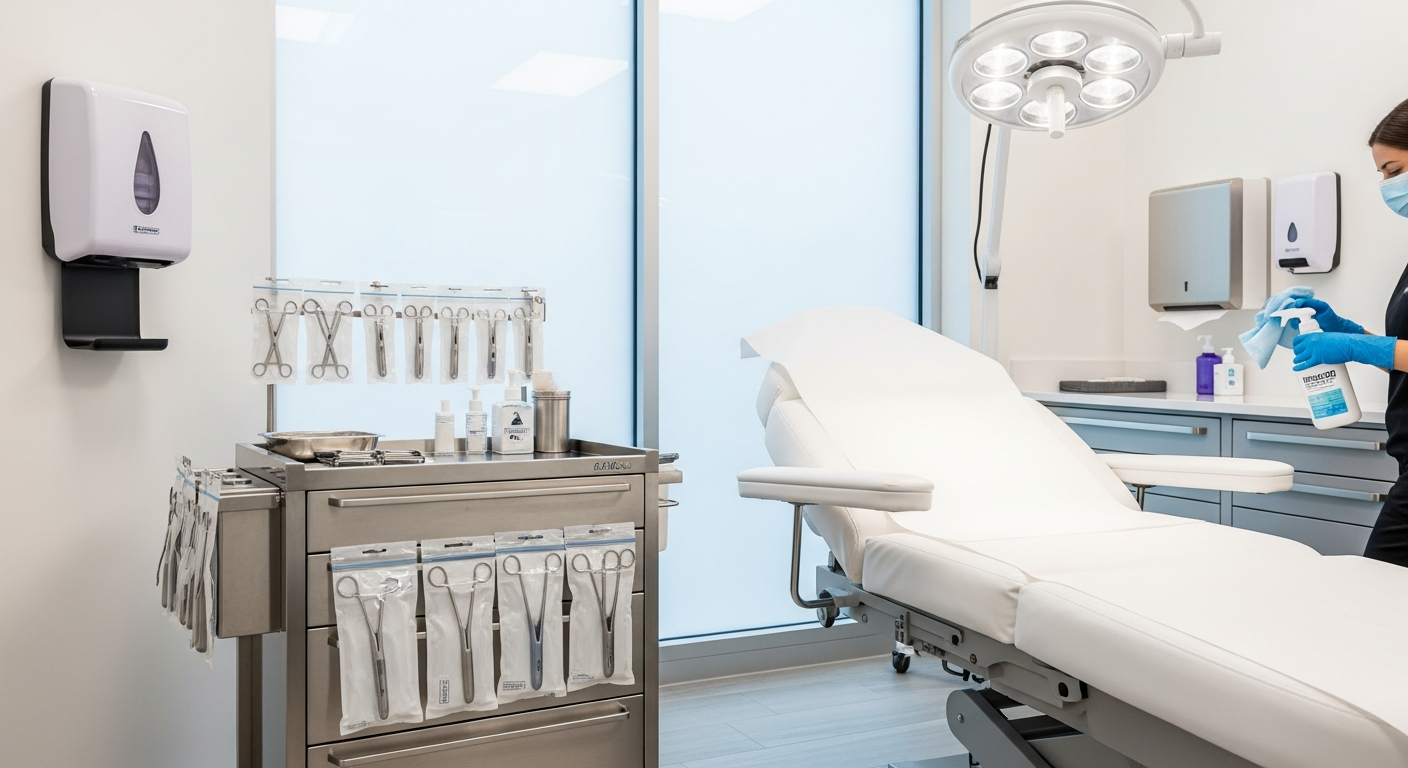
Med spa infection control refers to the systematic application of sanitation, disinfection, and sterilization protocols designed to prevent the transmission of pathogens during aesthetic treatments. These OSHA-aligned practices protect both clients and practitioners by maintaining a sterile environment, ensuring proper tool handling, and implementing rigorous treatment room decontamination procedures throughout the clinical facility.
OSHA-Aligned Sanitation and Facility Hygiene
Med spas must maintain environmental surfaces using EPA-registered disinfectants approved for clinical settings. These solutions effectively neutralize bloodborne pathogens and common bacteria found in treatment areas.
High-touch surfaces such as treatment beds, workstations, and door handles require disinfection after every client interaction. This prevents the transfer of microorganisms between individuals and staff members.
Hand hygiene stations equipped with antimicrobial soap and alcohol-based rubs must be accessible at every point of care. Proper handwashing remains the primary defense against clinical cross-contamination.
Sterilization Standards for Reusable Instruments
Any instrument that penetrates the skin or contacts mucosal membranes requires professional-grade sterilization. This process ensures all microbial life, including fungal spores, is completely eradicated.
Autoclaves must undergo regular biological and chemical indicator testing to verify effective performance. Detailed logs of these tests are required to maintain clinical compliance and safety records.
Proper packaging and storage of sterile tools prevent post-process contamination before use. Instruments must remain in sealed pouches until the moment the aesthetic procedure begins.
Treatment Room Disinfection Systems
Standardized room turnover protocols ensure every treatment space is fully decontaminated between clients. This systematic approach includes the removal of all soiled linens and disposable barriers.
Disposable barriers should cover equipment that cannot be easily submerged or saturated with liquid disinfectants. These barriers are replaced between every session to maintain a physical safety shield.
Waste management systems must separate sharps and biohazardous materials from standard clinical trash. Proper disposal in puncture-resistant containers is mandatory for needles and lancets used in the med spa.
Cross-Contamination Prevention Strategies
Practitioners must utilize appropriate Personal Protective Equipment (PPE) including gloves, masks, and eye protection. PPE acts as a critical barrier between the clinician and potential infectious materials.
The clean-to-dirty workflow prevents the spread of pathogens by organizing the treatment sequence. Staff must avoid touching clean supply cabinets with contaminated gloves during a procedure.
Single-use items must be discarded immediately after a single treatment session and never reused. This includes applicator tips, cotton swabs, and any non-sterilizable components used during the service.
