Med Spa Risk Management and Liability Protection
Med spa risk management is a systematic process used to identify, evaluate, and mitigate clinical and operational liabilities within a medical aesthetic practice. This framework utilizes standardized documentation, robust informed consent, and incident reporting protocols to protect patients and providers while reducing the legal exposure associated with adverse treatment outcomes.
Standardizing Informed Consent Documentation
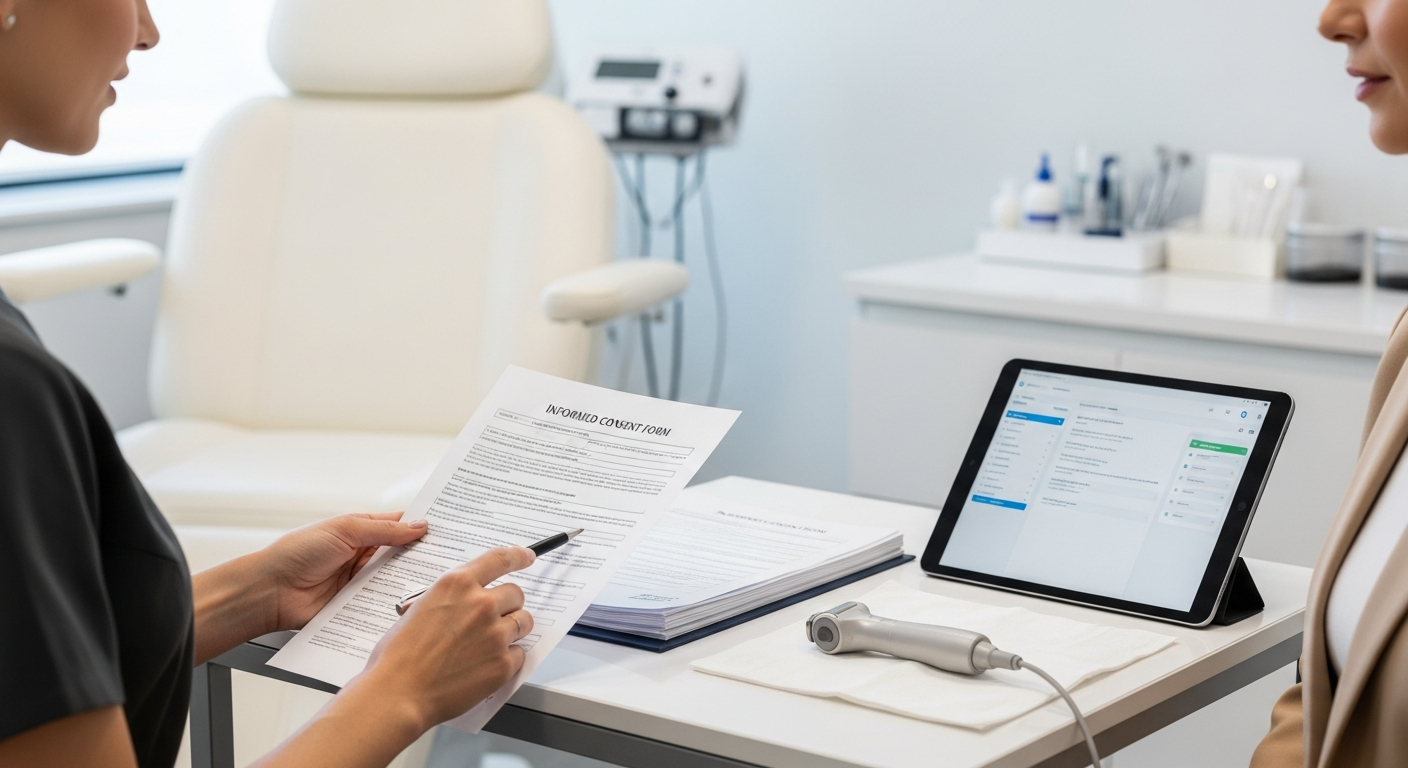
Effective informed consent is more than a signed form; it is a documented educational process.
Every med spa treatment must include a discussion of specific risks, benefits, and alternative options.
Documentation should reflect that the patient had the opportunity to ask questions and received clear answers.
To reduce liability, ensure consent forms are treatment-specific rather than generic templates.
Practitioners must document the patient’s understanding of potential side effects, such as burns or bruising.
Signatures should be captured for every new procedure or significant change in the treatment plan.
Implementing Incident Reporting Systems
An incident reporting system allows a med spa to track and analyze adverse events or near-misses.
Reports should be completed immediately following any unexpected outcome or patient injury.
These internal documents serve as a factual record of what occurred and what immediate actions were taken.
Training staff to report incidents without fear of retribution is vital for long-term safety.
Standardized reports should include the date, treatment type, practitioner name, and a factual description.
Avoid including subjective opinions or admissions of fault within the primary incident record.
Med Spa Recordkeeping and Compliance Standards
Consistent recordkeeping is the primary defense in any med spa liability claim or regulatory audit.
Every patient chart must include detailed treatment notes, including device settings and product batch numbers.
Incomplete or illegible records often imply a lack of professional care in a legal environment.
Follow a “if it was not documented, it did not happen” standard for all clinical interactions.
Ensure all records are stored securely and remain accessible only to authorized medical personnel.
Regular audits of patient files help identify gaps in documentation before they become legal liabilities.
Handling Adverse Treatment Outcomes
When a patient experiences a negative result, the med spa must follow a structured response framework.
Immediate clinical assessment and clear communication with the patient can prevent a minor issue from escalating.
Document all follow-up care provided and any instructions given to the patient for home management.
Maintain a neutral and professional tone during all interactions following an adverse event.
Detailed logs of phone calls and follow-up appointments demonstrate the clinic’s commitment to patient safety.
This proactive approach often reduces the likelihood of a patient seeking external legal intervention.
Frameworks for Liability Reduction
Liability reduction frameworks focus on the relationship between medical directors and mid-level providers.
Clearly defined protocols must outline who can perform specific treatments and under what level of supervision.
Establishing these boundaries ensures the med spa operates within the scope of state-specific regulations.
- Standard Operating Procedures: Document every clinical workflow for consistency.
- Staff Training Logs: Maintain records of all clinical competency assessments.
- Supervision Protocols: Clearly define the medical director’s role in daily operations.
- Device Maintenance: Keep logs of all equipment calibrations and safety checks.
A structured approach to med spa risk management creates a culture of safety and professionalism.
By prioritizing documentation and reporting, owners protect the business while enhancing patient care quality.
Continuous monitoring of these systems is essential for adapting to new aesthetic technologies and risks.
