Post-Treatment Management in Med Spa Operations
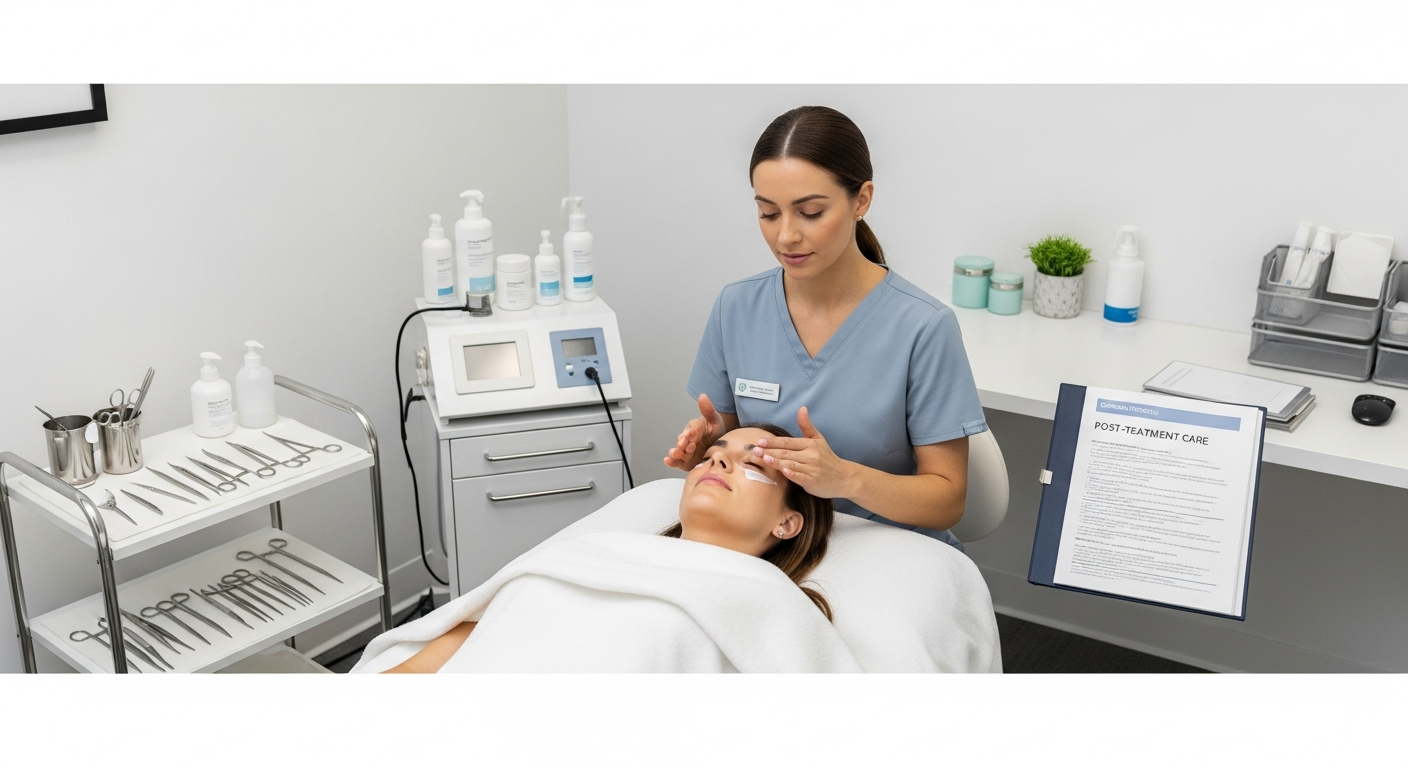
Post-treatment management in med spa settings involves implementing standardized clinical protocols to monitor recovery, mitigate side effects, and optimize patient outcomes after aesthetic procedures. These structured workflows ensure consistent care for inflammation, erythema, and barrier repair following energy-based, needle-based, or chemical-based treatments to minimize complications and downtime.
Standardized Recovery for Laser Procedures
Effective post-laser management focuses on thermal regulation and heat dissipation.
Clinical protocols must prioritize immediate cooling to reduce residual heat within the dermis.
Med spa providers should provide clear instructions on avoiding heat-inducing activities for 48 hours.
Standardized workflows include monitoring for prolonged erythema or edema beyond expected windows.
Clinicians must emphasize strict UV protection and the use of physical barriers to protect compromised skin.
Consistency in these steps prevents the development of post-inflammatory hyperpigmentation.
Microneedling Downtime Management
Post-treatment management for microneedling centers on infection prevention and inflammatory control.
The primary goal is maintaining a sterile environment while the micro-channels remain open.
Providers must ensure patients understand the timeline for barrier closure, typically within 24 hours.
- Hygiene: Hands must be washed before touching any treated areas.
- Irritants: Active ingredients like retinoids must be paused for at least 72 hours.
- Hydration: Maintaining a moist environment supports faster epidermal re-epithelialization.
Chemical Peel Aftercare Systems
Management after a chemical peel requires a systematic approach to controlled desquamation.
Providers must transition from the clinical neutralization of the acid to home-based moisture replenishment.
The protocol should strictly prohibit mechanical exfoliation or picking at shedding skin.
Clinicians should standardize the timeline for returning to a normal skincare regimen.
This typically occurs only after the peeling process is fully completed and sensitivity has subsided.
Documentation of the peeling duration is essential for adjusting future treatment strengths.
Managing Post-Treatment Erythema and Inflammation
Erythema and inflammation are expected physiological responses to most aesthetic interventions.
Post-treatment management in med spa environments requires distinguishing between normal healing and adverse events.
Standardized charts should be used to grade the severity of redness and swelling during follow-ups.
If inflammation exceeds the anticipated duration, the clinical supervisor must intervene with calming protocols.
These may include the application of cool compresses or specific soothing agents.
Consistent monitoring ensures that inflammatory responses do not progress into permanent scarring.
Implementing Clinical Workflows for Med Spa Staff
Success in a med spa depends on protocol consistency rather than individual provider judgment.
Every staff member must provide the same clinical instructions to every patient for every procedure.
Laminated recovery guides and digital checklists help maintain these standards across the clinic.
Clinical supervisors should conduct regular audits of post-treatment documentation.
This ensures that all adverse reactions are recorded and that the standard of care is met.
A unified recovery system reduces patient anxiety and improves the predictability of clinical results.
