Understanding Med Spa Regulations and Compliance
Med spa regulations are state-mandated legal frameworks that govern the ownership, supervision, and clinical operation of medical aesthetic facilities in the United States. These rules establish who can legally perform medical procedures, the level of physician oversight required, and the specific licensing standards necessary to maintain a compliant medical spa practice.
The Corporate Practice of Medicine
Many states enforce the Corporate Practice of Medicine (CPOM) doctrine, which generally prohibits non-physicians from owning a medical practice.
In CPOM states, a med spa must be owned by a licensed physician or a professional corporation owned by physicians.
Entrepreneurs often use Management Service Organizations (MSOs) to handle administrative tasks while ensuring clinical ownership remains compliant with state law.
Medical Director and Supervision Requirements
Every medical spa must have a designated Medical Director who is responsible for the clinical integrity of the facility.
State laws dictate whether the Medical Director must be on-site or if they can provide oversight through remote protocols and periodic reviews.
Supervision requirements vary significantly, with some states demanding a physician be present during all medical procedures, including laser and injectable treatments.
Scope of Practice for Aesthetic Clinicians
Compliance depends on ensuring that every provider operates strictly within their legally defined scope of practice.
Registered Nurses (RNs), Nurse Practitioners (NPs), and Physician Assistants (PAs) have different levels of autonomy based on state nursing and medical boards.
Estheticians are typically limited to non-invasive treatments and cannot perform medical-grade procedures like Botox or deep chemical peels without proper medical licensure.
The Good Faith Examination (GFE)
A “Good Faith Examination” is a mandatory initial assessment performed by a qualified provider before a patient receives medical treatment.
This exam must be conducted by a physician, NP, or PA to determine if the patient is a suitable candidate for the procedure.
Performing medical treatments without a prior GFE is a major regulatory violation that can lead to license suspension or clinic closure.
Essential Compliance Documentation
Maintaining rigorous documentation is the foundation of inspection readiness and legal defense for any aesthetic clinic.
- Standard Operating Procedures (SOPs): Written protocols for every medical treatment offered.
- Patient Consent Forms: Detailed disclosures of risks, benefits, and alternatives for each procedure.
- Medical Records: Accurate charts that meet HIPAA standards and detail every patient interaction.
Preparing for State Board Inspections
State medical and nursing boards have the authority to inspect facilities to ensure they meet health and safety standards.
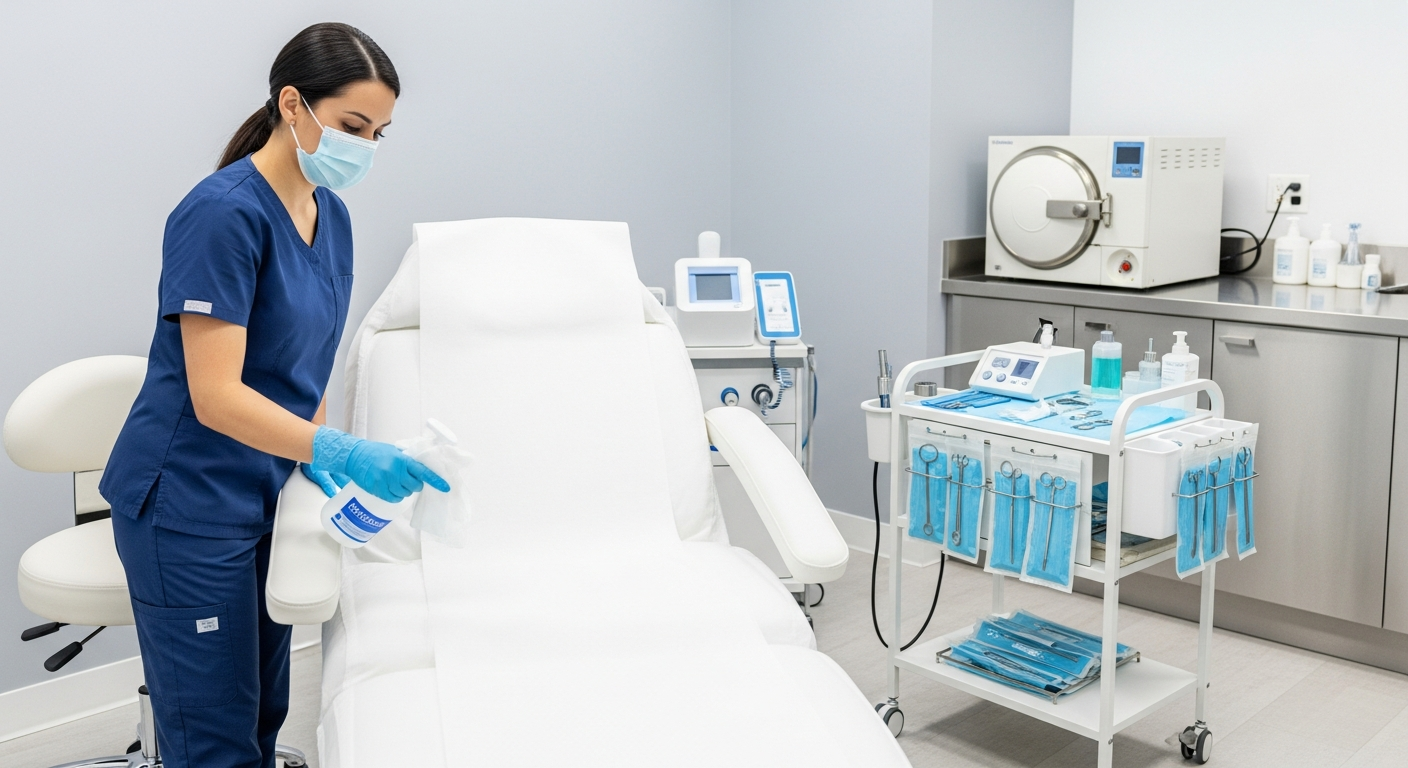
Inspectors look for proper medication storage, sterilization of equipment, and clear displays of professional licenses.
Ensuring that all staff members are trained on emergency protocols and that clinical logs are up to date is vital for passing these reviews.
