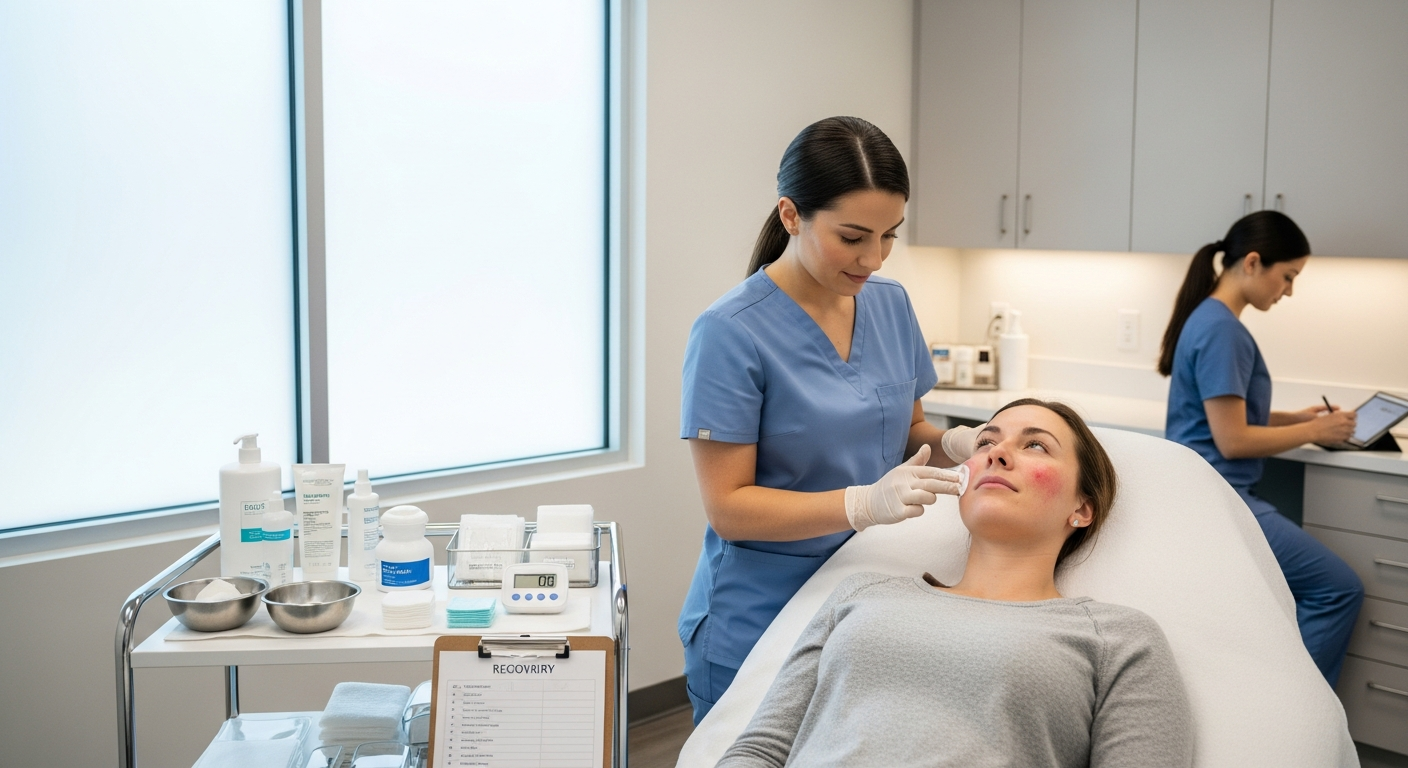
Standardizing Post-Treatment Management in Med Spas
Post-treatment management in med spas refers to the implementation of standardized clinical protocols designed to oversee patient recovery and minimize complications after aesthetic procedures. These systems prioritize consistent workflows for managing erythema, inflammation, and downtime following laser therapies, microneedling, and chemical peels to ensure predictable results and safety across clinical environments.
Clinical Post-Laser Recovery Protocols
Effective post-laser management focuses on thermal regulation and the reduction of persistent erythema. Med spa providers must implement immediate cooling steps to dissipate residual heat from the dermis.
Standardized workflows include monitoring the duration of redness and providing clear instructions on avoiding heat-inducing activities. This prevents secondary inflammatory responses that can lead to post-inflammatory hyperpigmentation.
Clinical supervisors should ensure that all providers follow a uniform assessment timeline. This allows the med spa to identify abnormal swelling or blistering early in the recovery phase.
Microneedling Downtime Management Systems
Managing recovery after microneedling requires a focus on epidermal barrier restoration and inflammation control. The clinical objective is to facilitate healing while preventing exogenous contamination of open micro-channels.
Providers must standardize the timeline for when patients can resume topical actives. Typically, a 24-to-48-hour window of simple hydration is required to prevent contact dermatitis or granulomas.
Consistency in microneedling aftercare reduces the risk of infection. Med spas should utilize pre-printed clinical checklists to ensure every patient receives identical instructions regarding environmental exposure and hygiene.
Chemical Peel Aftercare and Exfoliation Control
Post-treatment management for chemical peels centers on controlled desquamation and UV protection. Managing the depth of the peel requires strict adherence to post-procedure moisture protocols.
Med spa staff must educate patients on the physiological process of peeling to prevent premature mechanical exfoliation. Picking or pulling at skin can lead to scarring or uneven texture.
Standardized recovery systems for peels involve specific intervals for clinical follow-up. This ensures the new skin barrier is forming correctly and that erythema is subsiding at the expected rate.
Managing Inflammation and Erythema
Inflammation is a natural response to aesthetic procedures, but it must be managed to prevent patient discomfort and prolonged downtime. Med spas use standardized cooling and soothing protocols.
Clinical protocols should define the threshold between expected therapeutic inflammation and adverse reactions. This distinction is vital for maintaining safety standards in a procedure-based environment.
Establishing a baseline for erythema resolution helps providers identify patients who may require additional clinical intervention. Consistent documentation of these stages is essential for quality control.
The Role of Standardized Recovery Workflows
Standardized recovery workflows eliminate reliance on individual provider judgment, ensuring every patient receives the same level of clinical care. This reduces the margin for error in med spa operations.
A structured system includes digital or physical tracking of patient progress. It allows clinical supervisors to audit recovery outcomes and update protocols based on observed data.
By prioritizing protocol consistency, a med spa can maintain a high standard of safety. This operational approach ensures that post-treatment management remains a core component of the clinical mission.
