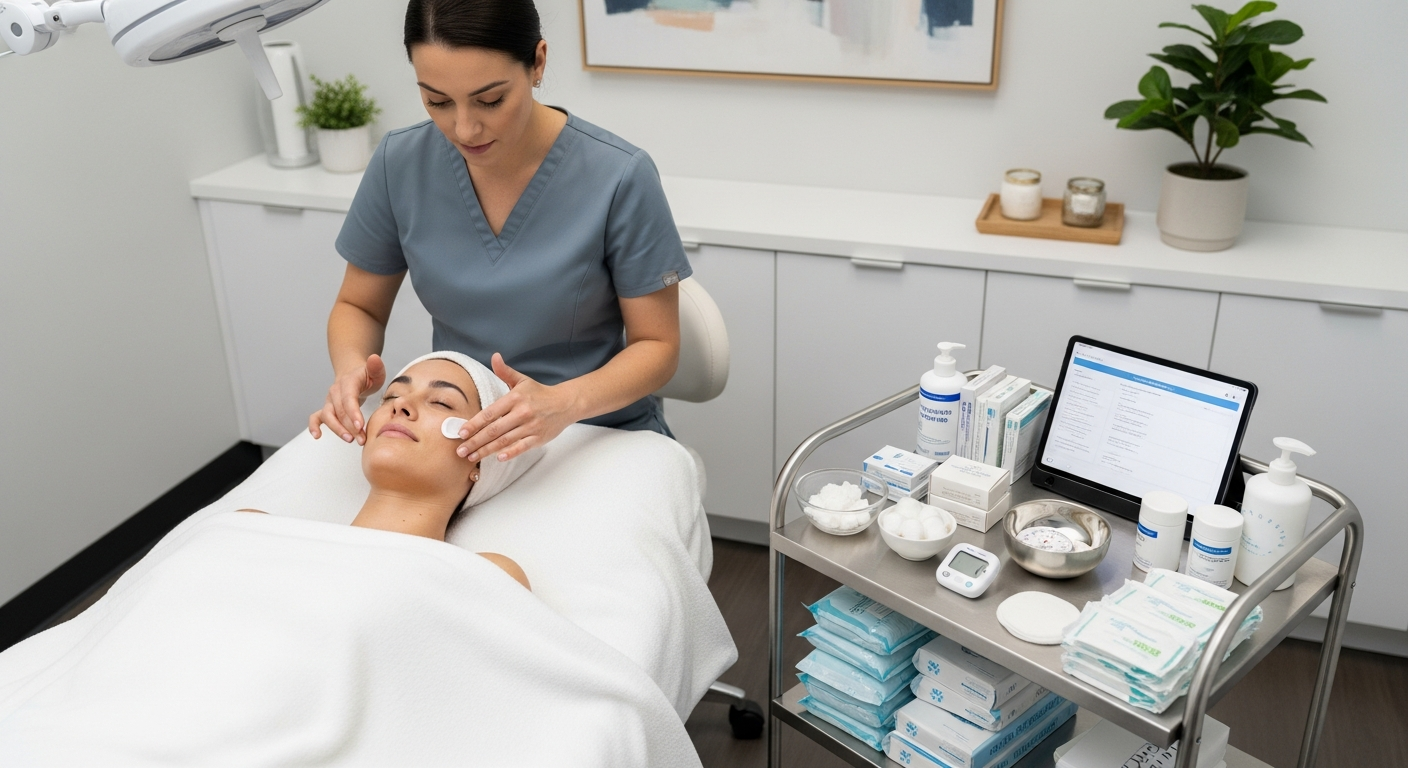
Post-Treatment Management in Med Spa Clinical Operations
Post-treatment management in med spa settings refers to the standardized clinical protocols used to oversee patient recovery after aesthetic procedures. These systems manage inflammation, minimize erythema, and reduce downtime through structured workflows. Consistent post-procedure care ensures predictable healing outcomes for services like laser resurfacing, microneedling, and chemical peels.
Standardizing Post-Laser Recovery Protocols
Clinical management after laser treatments focuses on heat dissipation and epidermal repair.
Providers must monitor for prolonged erythema and ensure the skin barrier remains intact.
Standardized cooling phases help stabilize the tissue temperature immediately after the procedure.
Workflows should include scheduled follow-up assessments to track the resolution of edema.
Consistency in post-laser instructions prevents patient confusion regarding sun exposure and activity.
A uniform approach reduces the risk of post-inflammatory hyperpigmentation across different skin types.
Microneedling Downtime and Inflammation Management
Managing downtime after microneedling requires a focus on controlled inflammatory responses.
The primary clinical goal is to support the closure of micro-channels while preventing infection.
Standardized protocols dictate when topical agents can be reintroduced to the treated area.
Providers must educate patients on the distinction between normal pinpoint bleeding and adverse reactions.
Standardized recovery timelines help clinical supervisors identify deviations from the expected healing path.
Clear workflows ensure that all practitioners provide identical guidance on cleansing and hydration.
Managing Post-Procedure Erythema
Erythema management is a critical component of post-treatment management in med spa environments.
Standard protocols should define the acceptable duration of redness for each specific treatment intensity.
Using standardized assessment scales allows the clinical team to document healing progress objectively.
Chemical Peel Aftercare Systems
Chemical peel recovery requires systematic monitoring of the exfoliation process and pH balance.
Clinical systems must emphasize the avoidance of manual peeling to prevent scarring or irritation.
Providers should follow a set checklist to verify the patient’s understanding of barrier protection.
Standardized Recovery Workflows for Clinical Staff
Operating a med spa requires shifting from individual provider judgment to institutional protocols.
Standardized workflows ensure that every patient receives the same level of post-treatment oversight.
This consistency is vital for maintaining safety standards and achieving reproducible clinical results.
Documentation should be uniform, capturing key recovery milestones and any interventions required.
Regular clinical audits of post-treatment records help identify areas for protocol refinement.
A structured approach to recovery minimizes complications and improves the overall clinical standard.
Training staff on these recovery systems ensures that patient questions are answered accurately.
When every provider follows the same post-treatment management steps, the clinic operates more efficiently.
Standardization is the foundation of safety in professional aesthetic medicine environments.
